 Save
Save One afternoon in late summer, I was standing in my kitchen staring at a half-empty pantry when I spotted a forgotten bag of farro tucked behind the rice. I'd bought it months earlier with vague intentions of trying something Mediterranean, and suddenly the heat made me crave something bright and cool. Within minutes, I'd pulled together whatever vegetables I had on hand—cherry tomatoes that were begging to be used, a crisp cucumber, some olives from the back of the fridge—and tossed it all together with a quick lemon dressing. That single bowl became my new go-to whenever I needed something that felt both nourishing and effortless.
I made this for a potluck once, skeptical that anyone would actually eat a grain salad when there were brownies and pasta dishes around. But halfway through the gathering, I watched people going back for thirds, and someone asked for the recipe before they'd even finished their plate. That's when I realized this salad has a quiet charm—it doesn't demand attention, but once you taste it, you understand why it belongs on the table.
Ingredients
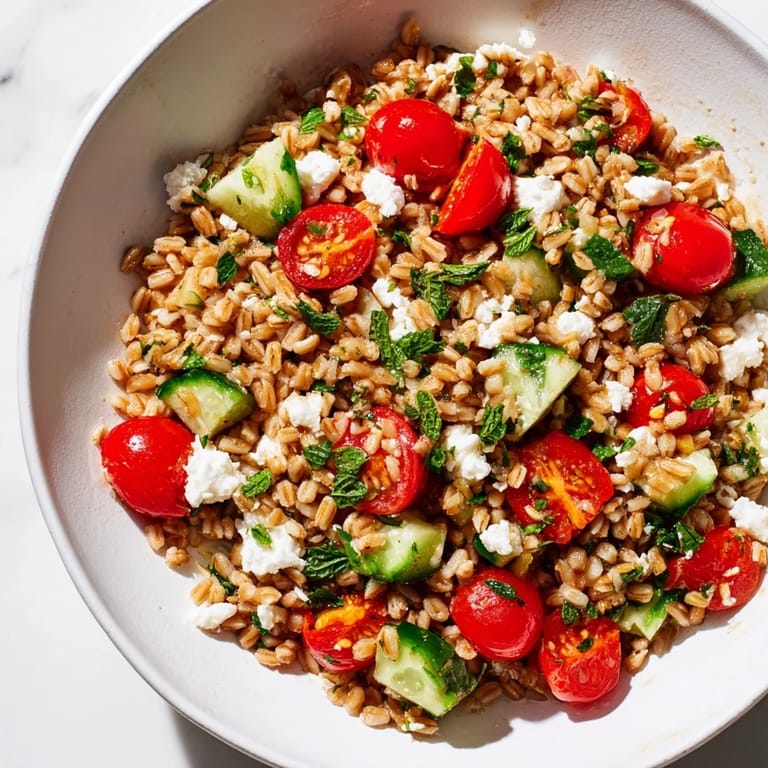
- Farro: This nutty grain holds its chewiness beautifully even when mixed with a wet dressing, which is why it works so much better here than regular pasta would.
- Cherry tomatoes: Halving them instead of chopping releases just enough juice to flavor the whole salad without making it soggy.
- Cucumber: Dice it just before assembling so it stays crisp and doesn't release water into the dressing.
- Red onion: The sharp bite mellows slightly as it sits, so don't be shy with it.
- Fresh parsley and mint: These aren't just garnish—they're what make this taste like you actually traveled somewhere.
- Kalamata olives: Their briny saltiness does half the seasoning work for you.
- Feta cheese: Crumble it by hand rather than chopping for a more elegant, rustic texture.
- Extra-virgin olive oil: This is where quality actually matters because the oil is doing the heavy lifting flavor-wise.
- Fresh lemon juice: Bottled just won't give you that same brightness, so squeeze it yourself if you can.
- Dried oregano: It blooms beautifully when whisked into the oil and lemon, becoming almost floral.
Tired of Takeout? 🥡
Get 10 meals you can make faster than delivery arrives. Seriously.
One email. No spam. Unsubscribe anytime.
Instructions
- Rinse and cook the farro:
- Run the farro under cold water until the water runs clear—this removes some of the starches and helps prevent mushiness. Bring your salted water to a rolling boil, add the farro, and let it simmer gently; you're aiming for tender but with a slight bite still there, not mushy paste.
- Let it cool and breathe:
- Spread the cooked farro on a plate or shallow bowl so it cools faster and the grains separate instead of clumping together. This takes about 10 minutes and is worth the patience.
- Build your salad base:
- In a large bowl, combine the cooled farro with all your vegetables, herbs, olives, and feta, but don't toss yet. This gives you a moment to see if the proportions feel right to you.
- Whisk the dressing with intention:
- In a small bowl, start with the garlic and salt, pressing them together slightly to release the garlic's oils, then whisk in the lemon juice and oregano before adding the olive oil. This order matters because it helps the flavors emulsify and become more cohesive.
- Toss gently and let it rest:
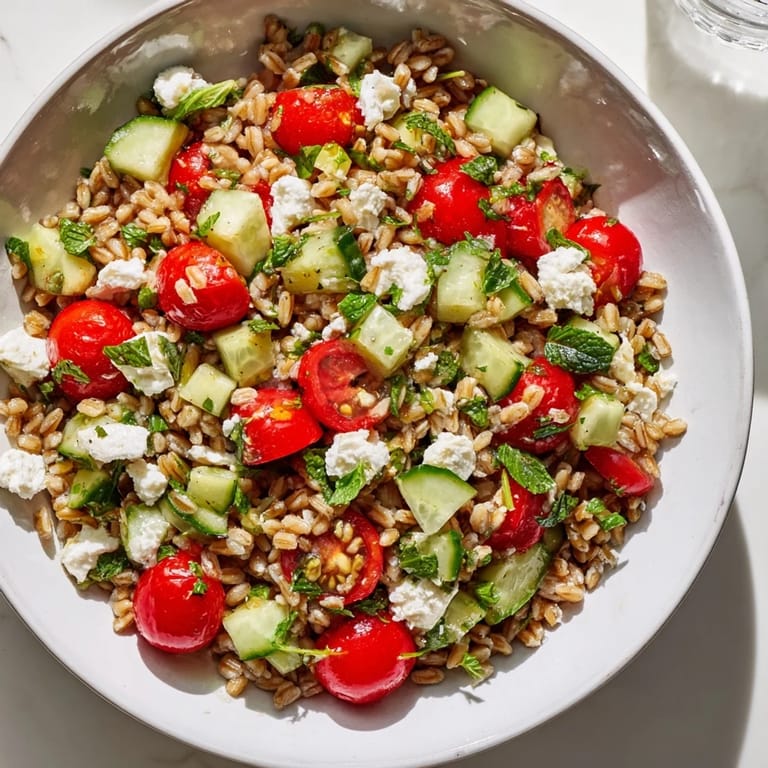
- Pour the dressing over everything and toss with a light hand so the feta doesn't break down into dust. Cover and refrigerate for at least 15 minutes, which allows the grains to absorb the dressing without becoming heavy.
 Save
Save My sister made this for her daughter's school lunch one week, and suddenly the kid was trading her farro salad for literally no one's food because she actually wanted to eat it. Watching a child voluntarily choose a grain salad over anything else taught me that sometimes the most impressive meals are the ones that feel effortless and taste honest.
What Makes This Different From Other Grain Salads
Most grain salads I've tried feel heavy or bland, like eating something virtuous rather than something joyful. This one lands differently because of how the salty olives, briny feta, and acidic lemon work in concert—every element has a reason for being there, and nothing is just taking up space. The fresh herbs are what tip it from good to memorable, so don't think you can skip them or substitute dried oregano for the mint and parsley.
Timing and Temperature Matters More Than You'd Think
I once made this salad and served it warm straight from assembling it, which was a mistake I won't repeat. The feta got a bit weepy, the vegetables lost their crunch, and the whole thing tasted flat and one-dimensional. The magic happens when everything is cold and the dressing has had time to soak into the farro while still keeping the vegetables bright. If you're in a rush, at least get it into the fridge while you finish whatever else you're making.
Variations and Flexibility
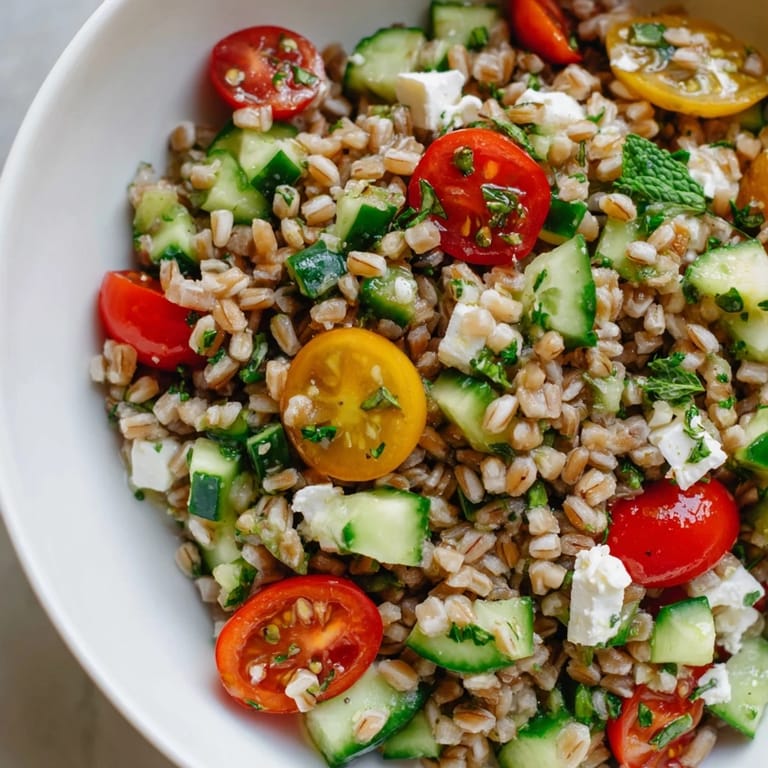
The beauty of this salad is that it's a template more than a rulebook, and you can adapt it based on what's in season or what you have on hand. I've made it with roasted red peppers instead of fresh tomatoes in fall, added crumbled goat cheese when I didn't have feta, and thrown in diced bell peppers for extra crunch. The core—the farro, the dressing, and the fresh herbs—those stay consistent because they're what define the dish.
- For a vegan version, skip the feta or swap in cashew cream mixed with lemon juice and salt for a surprisingly creamy texture.
- Artichoke hearts, roasted eggplant, or even sun-dried tomatoes all make excellent additions without overwhelming the original flavors.
- If you want to make it heartier, serve it alongside grilled chicken, fish, or crumbled white cheese—it's flexible enough to work as a side or a complete meal.
 Save
Save This salad has become my answer to the question of what to bring when I want to contribute something meaningful without spending all day in the kitchen. It's the kind of dish that makes you feel taken care of, whether you're eating it at your own table or someone else's.
Recipe FAQs
- → Can I make this salad ahead of time?
Yes, this salad actually tastes better when made ahead. Prepare it up to 4 hours in advance and refrigerate. The flavors meld together as it sits, creating a more cohesive taste. Add the dressing just before serving to keep vegetables crisp.
- → What can I substitute for feta cheese?
For a vegan version, use crumbled vegan cheese or simply omit it. Goat cheese, ricotta salata, or even mozzarella balls work as excellent alternatives. Choose based on the flavor profile you prefer.
- → How do I cook farro perfectly?
Rinse farro under cold water first to remove excess starch. Use a 3:1 water-to-farro ratio. Simmer for 20-25 minutes until tender but still chewy. Drain well and cool before mixing into your salad.
- → Can I add protein to make it a main course?
Absolutely. Top with grilled chicken breast, flaked salmon, or roasted chickpeas for added protein and substance. It's also delicious with grilled vegetables for a heartier vegetarian option.
- → What vegetables can I add for variation?
Feel free to customize with diced bell peppers, roasted artichoke hearts, roasted zucchini, or sun-dried tomatoes. Add fresh spinach or arugula just before serving for extra greens and nutrition.
- → How should I store leftovers?
Store in an airtight container in the refrigerator for up to 3 days. The salad will continue to absorb flavors, making it even more delicious on day two or three. Keep dressing separate if possible to maintain optimal texture.