 Save
Save My spiralizer sat in a kitchen drawer for months before my friend Maria showed up with a bag of farmers market vegetables and sheer determination to prove I was wasting counter space. She spiralized a sweet potato while I watched skeptically, then tossed it into a bowl with some greens and a tahini sauce that smelled incredible. One bite and I understood why she'd been so insistent—the whole thing tasted bright and alive, nothing like the sad desk salads I'd convinced myself were my only healthy option.
I made this for my partner when they were stressed about work, and watching them visibly relax as they ate seemed almost magical. The act of tossing the vegetables together, hearing the gentle clink of sesame seeds hitting the bowl, and then that first forkful of tender sweet potato noodles coated in sauce—it felt like we were taking care of ourselves in the most straightforward, uncomplicated way possible. That's when I realized this wasn't just dinner; it was permission to pause.
Ingredients
- Medium zucchini, spiralized: Raw zucchini keeps a delicate crunch, but if you prefer something softer, a quick 2–3 minute sauté transforms it without turning it mushy—I learned this after one bowl where I accidentally left it raw and my partner gently suggested "maybe next time we cook it a little?"
- Medium sweet potato, spiralized: These stay slightly firm and add natural sweetness that balances the savory tahini; they're worth spiralizing fresh rather than buying pre-cut because the texture makes such a difference.
- Cherry tomatoes, halved: Their burst of acidity cuts through richness and brings unexpected brightness to every bite.
- Baby spinach: Wilts just slightly from the warm noodles and sauce, adding earthiness without overwhelming the bowl.
- Small carrot, spiralized or julienned: Optional but recommended because it adds color and a subtle sweetness that rounds everything out.
- Grilled chicken breast or firm tofu, 200 grams: This is your anchor protein; marinating it beforehand, even for just 15 minutes, makes the entire bowl taste intentional rather than assembled.
- Tahini: The foundation of your sauce—buy good quality because you taste it directly, and the difference between grocery store tahini and better stuff is genuinely noticeable.
- Lemon juice and olive oil: These two are what keep the sauce from becoming heavy; they're your secret to making something feel fresh rather than creamy-heavy.
- Garlic, minced: One clove is enough to make people ask what you're cooking; more than that and it overpowers everything else.
- Maple syrup or honey: Just a teaspoon balances the tartness of lemon and adds complexity that makes people want to keep eating.
- Fresh parsley or cilantro: Choose based on your mood—parsley is subtle and classic, cilantro is bold and opinionated.
- Toasted sesame seeds: Toast them yourself if possible; the difference between raw and toasted is the difference between a garnish and an actual flavor moment.
Tired of Takeout? 🥡
Get 10 meals you can make faster than delivery arrives. Seriously.
One email. No spam. Unsubscribe anytime.
Instructions
- Spiralize Your Vegetables:
- Run your zucchini and sweet potato through the spiralizer, aiming for thin, delicate noodles that cook evenly. If you're cooking them, do it in a nonstick skillet over medium heat with just a drizzle of olive oil for 2–3 minutes until they're tender but still have a slight bite to them.
- Make the Tahini Sauce:
- Whisk tahini, lemon juice, olive oil, minced garlic, and a teaspoon of maple syrup together in a small bowl until it looks thick and slightly grainy. Add water a tablespoon at a time, whisking between additions, until you reach a consistency that's pourable but still has body—you want it to coat the noodles, not run off the plate.
- Taste and Adjust:
- This is the moment that changed everything for me: taste the sauce and be honest. Does it need more salt? More lemon brightness? A touch more garlic? Season generously because these flavors will be distributed across two bowls.
- Assemble Your Bowls:
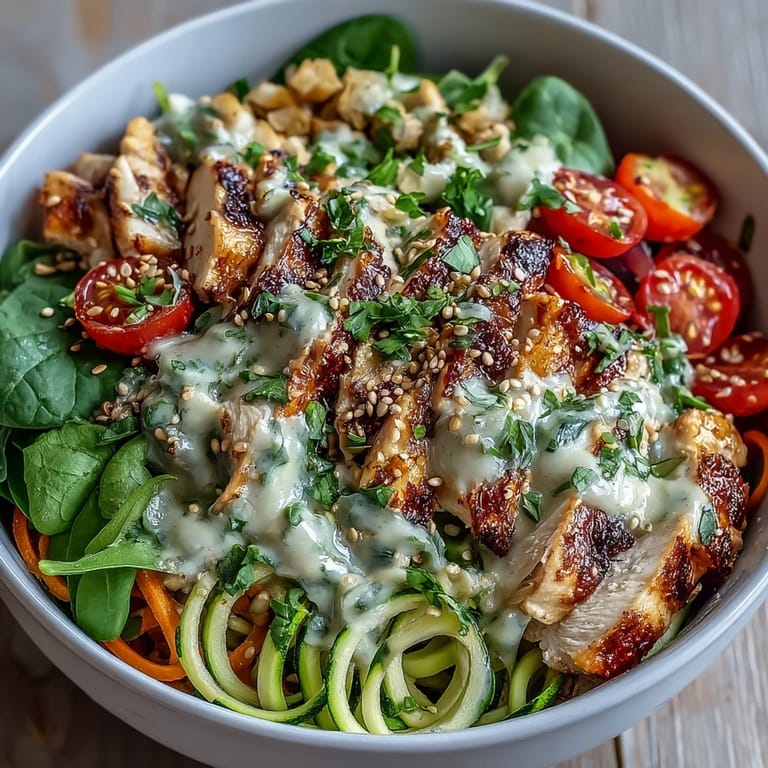
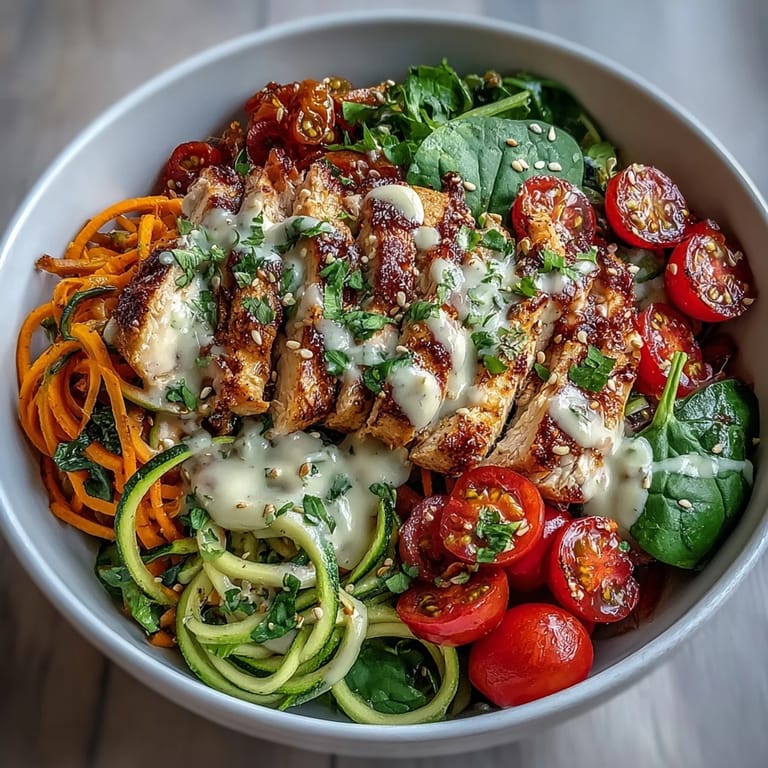
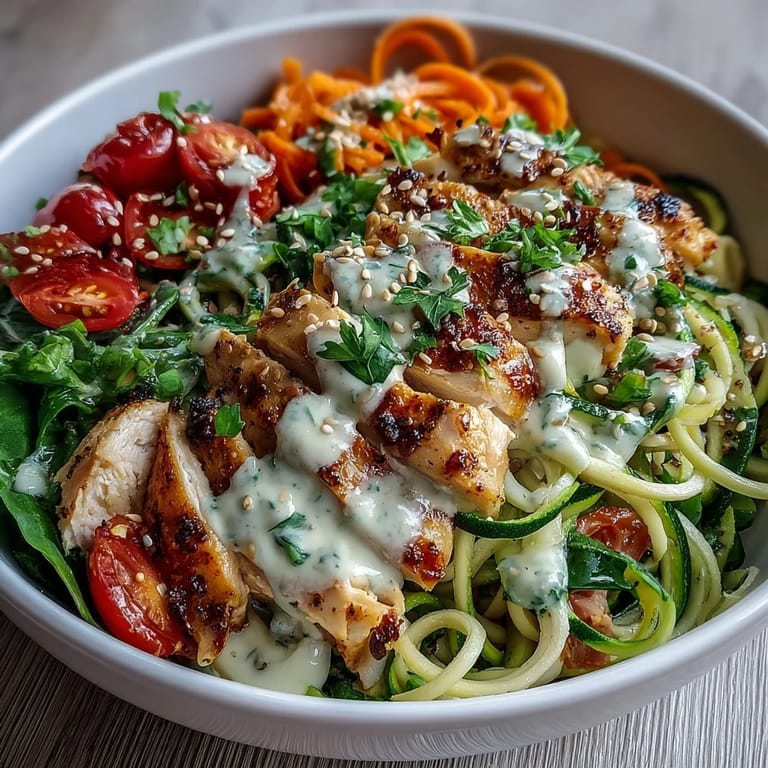
- Divide the spiralized vegetables between two bowls, arranging them so colors pop and the composition feels intentional. Pile the spinach and cherry tomato halves on top, then place your sliced protein—whether it's warm chicken or golden tofu—right in the center where it catches your eye first.
- Sauce and Garnish:
- Drizzle the tahini sauce generously over everything, starting in the center and letting it cascade across the vegetables. Finish with a scatter of fresh herbs and a generous pinch of toasted sesame seeds, then eat it immediately while the warm noodles are still slightly steaming and the greens haven't completely wilted.
 Save
Save There was a Saturday morning when I made three of these bowls for friends who had stayed over, and somehow in the act of whisking sauce and arranging vegetables on three different plates, the entire dynamic of our friendship felt clarified. We were caring for each other in the most basic, honest way possible—with good food made quickly, without pretense, and with enough color and flavor that everyone felt seen.
Why Raw Versus Cooked Matters
Cooking the spiralized zucchini and sweet potato changes the entire texture of this bowl—it becomes softer, warmer, almost risotto-like when it touches that tahini sauce. Raw vegetables, by contrast, keep their snap and make the bowl feel lighter and more salad-like. I tend to cook them in cooler months when I want something more substantial, and keep them raw in summer when the thought of eating something cool and crisp is more appealing. There's no wrong choice; it just depends on what your body is asking for that day.
The Protein Question
Whether you use chicken or tofu genuinely doesn't matter here—this bowl doesn't privilege one over the other the way some recipes do. The tahini sauce is rich enough that it carries either protein with equal confidence. If you're using chicken, cooking it beforehand means you can slice it while you're assembling everything else, keeping the whole process streamlined. If you're using tofu, pressing it first and then either grilling or pan-searing it until the edges are slightly crispy makes it substantially more interesting than soft tofu would be.
Sauce Tricks and Flavor Moments
The tahini sauce is where this bowl becomes memorable rather than just competent. The secret isn't complicated—it's tasting constantly and adjusting boldly. I've learned to taste after I add salt, after I add lemon, after I add garlic, because each addition changes what the sauce needs next. Sometimes I add an extra half teaspoon of honey if I've been too heavy-handed with lemon. Sometimes I add more garlic because it faded faster than I expected. The water is what gives you control—add it gradually and you'll find the exact consistency that makes sense for your vegetables and your appetite.
- If tahini seems expensive, you can substitute peanut or almond butter and the bowl will taste completely different but equally delicious.
- Make extra sauce and keep it in the fridge for the next day, though note that it will thicken as it sits, so add a splash of water before using again.
- The sauce is good enough to drizzle over almost anything, which is how I accidentally invented a new favorite way to eat roasted broccoli.
 Save
Save This bowl taught me that some of the best meals are the ones you don't overthink, made with whatever looks good at the market and whatever protein you have on hand. It's become my template for feeding people when I'm not sure what they want to eat but I'm confident they'll feel better after.
Recipe FAQs
- → Do spiralized vegetables need to be cooked?
Spiralized vegetables can be enjoyed raw for a crisp texture or lightly sautéed for 2-3 minutes to achieve tenderness. Raw zucchini and sweet potato noodles work well in cold bowls, while brief cooking softens them without making them mushy.
- → Can I make this bowl ahead of time?
The tahini sauce can be prepared up to 3 days in advance and stored refrigerated. Spiralized vegetables are best prepared fresh or within 24 hours to prevent sogginess. Assemble the bowls just before serving for optimal texture.
- → What other vegetables work well for spiralizing?
Butternut squash, beets, cucumber, carrots, and bell peppers all spiralize beautifully. Each vegetable offers different textures and flavors—raw cucumber and bell add crunch, while squash and beets benefit from light cooking.
- → How do I store leftover spiralized vegetables?
Store spiralized vegetables in an airtight container with a paper towel to absorb excess moisture. They typically keep for 2-3 days refrigerated. Note that water-rich vegetables like zucchini may release liquid over time.
- → Is tahini sauce suitable for meal prep?
The tahini dressing thickens when refrigerated but thins easily with a splash of water or lemon juice. Make a larger batch and store it separately from the vegetables to maintain the best texture throughout the week.