 Save
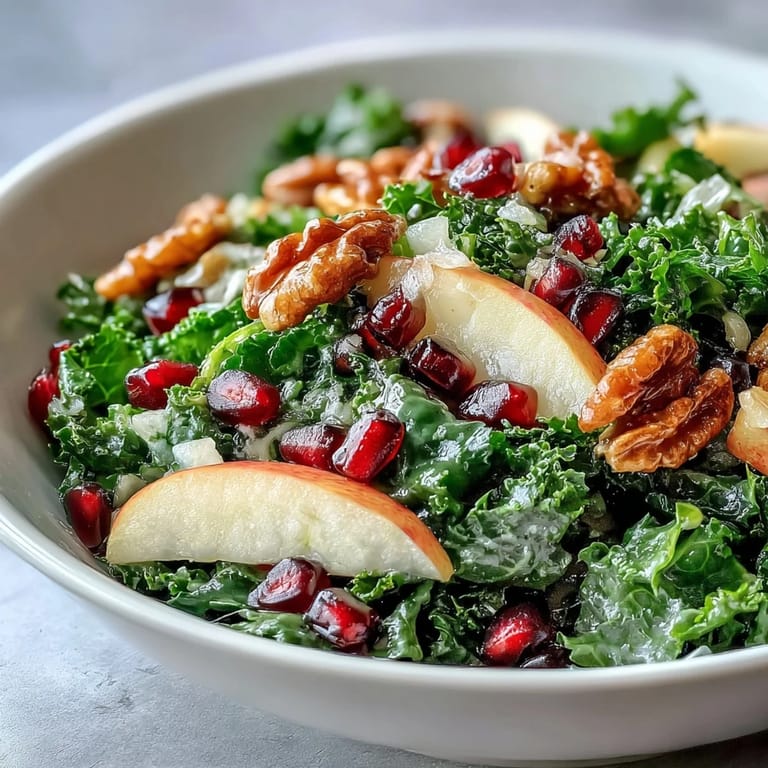
Save There's something about the sound of kale crinkling under your palms that signals you're doing something right in the kitchen. I discovered this bowl on a gray Wednesday afternoon when my fridge had exactly three things calling for attention: a bunch of kale that was starting to get lonely, pomegranate seeds I'd impulse-bought at the market, and a apple rolling around in the crisper drawer. What started as a quick lunch became a quiet moment of discovery, the kind where you taste something and immediately think, why don't I make this more often?
I made this for my sister last spring when she was trying to convince herself that salads could be exciting, not just something you eat because you feel obligated to. The moment she took her first bite, her eyes went wide—it was the pomegranate seeds, she said, how they burst with sweetness against the vinegary dressing. Now she texts me for the recipe at least once a month, usually when she's tired of restaurant salads and wants something that tastes like someone actually cared about putting it together.
Ingredients
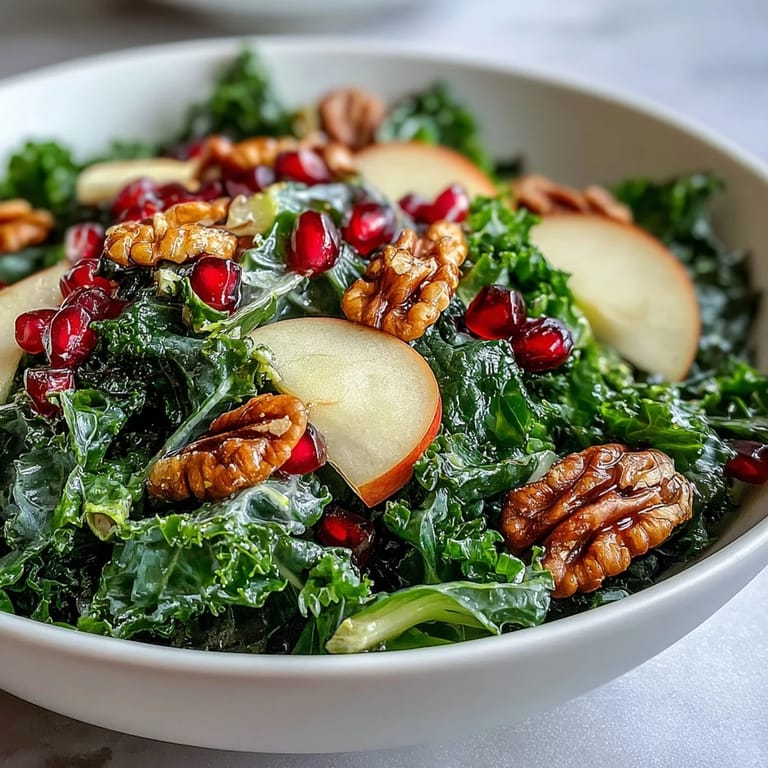
- Kale leaves, stems removed and chopped (4 cups): The hearty backbone of this bowl—choose lacinato or curly kale, whichever you prefer, and don't skip the massage step because it genuinely changes the texture from tough to tender.
- Apple, cored and thinly sliced (1 medium): The brightness here matters, so pick a crisp variety like Honeycrisp or Granny Smith, and slice it just before assembling so it doesn't oxidize and turn brown.
- Pomegranate seeds (1/2 cup): These jewels of flavor are the show-stoppers—if you can't find fresh ones, frozen work beautifully and sometimes taste even sweeter.
- Walnuts, roughly chopped (1/3 cup): The textural anchor that makes each bite satisfying; toast them lightly in a dry pan for five minutes if you want to wake up their nutty flavor.
- Extra-virgin olive oil (2 tablespoons): Use one tablespoon for the kale massage and the rest for the dressing—quality matters here because you taste it directly.
- Apple cider vinegar (1 tablespoon): The tartness that ties everything together; don't substitute with regular vinegar or you'll lose that subtle apple note.
- Honey or maple syrup (1 teaspoon): Just enough sweetness to balance the vinegar and create a dressing that feels complete rather than one-note.
- Dijon mustard (1 teaspoon): The secret ingredient that adds depth and helps the dressing cling to the leaves instead of pooling at the bottom.
- Salt and freshly ground black pepper, to taste: Always finish with fresh pepper—it makes a genuine difference in how alive the flavors feel.
Tired of Takeout? 🥡
Get 10 meals you can make faster than delivery arrives. Seriously.
One email. No spam. Unsubscribe anytime.
Instructions
- Massage and soften the kale:
- Place your chopped kale in a large bowl, drizzle with one tablespoon of olive oil and a pinch of salt, then massage it with your hands for one to two minutes until the leaves darken and become pliable. Your hands will work better than any tool for this—you'll feel when the leaves release their bitter compounds and transform into something silky.
- Whisk the dressing to life:
- In a small bowl, combine the remaining olive oil, apple cider vinegar, honey, Dijon mustard, salt, and pepper, whisking until the mustard emulsifies and the dressing becomes cohesive. This takes just about thirty seconds of focused whisking—you want it smooth, not separated.
- Assemble the components:
- Add the sliced apple, pomegranate seeds, and chopped walnuts to your massaged kale, tossing everything gently to distribute evenly. Go easy here so the pomegranate seeds stay intact and the apple slices don't break apart.
- Dress and toss:
- Pour the dressing over the salad and toss everything together with your hands or a spoon until every piece of kale gets coated. If you like, let the bowl sit for ten minutes to allow the flavors to meld and the kale to soften further, though it's equally delicious served right away.
 Save
Save There was a Tuesday when I made this for myself with no intention of sharing, just wanting something nourishing before a long afternoon. The quiet moment of chopping, massaging, whisking—it felt meditative in a way that scrolling through recipes never does. By the time I sat down to eat, the whole mood of my day had shifted, and I realized that sometimes the best gift you can give yourself is a bowl of food that actually tastes like you care about what you're putting in your body.
The Massage Method That Actually Matters
Most people hear massage and think it sounds strange or unnecessarily complicated, but it's genuinely the difference between kale you tolerate and kale you crave. When you massage the leaves, you're breaking down the cell walls and releasing the natural juices, which softens the texture and mellows out the bitterness that makes people claim they hate kale. I learned this the hard way after making a raw kale salad that felt like eating cardboard, then trying again with the massage technique and wondering why I'd been eating it wrong for so long.
Why Pomegranate Seeds Make Everything Better
Beyond the obvious burst of flavor and those gorgeous crimson pops of color, pomegranate seeds bring a tartness that makes the vinegar in your dressing less necessary, which means you get a brighter-tasting overall bowl. They're also ridiculously fun to eat—there's something almost playful about biting into them and having them release their juice across your palate. I used to think they were just a fancy garnish until I tasted them in a salad where they mattered, and now I keep pomegranate seeds in my freezer year-round because the flavor justifies the small effort it takes to extract them.
Building Flavor Layers That Last
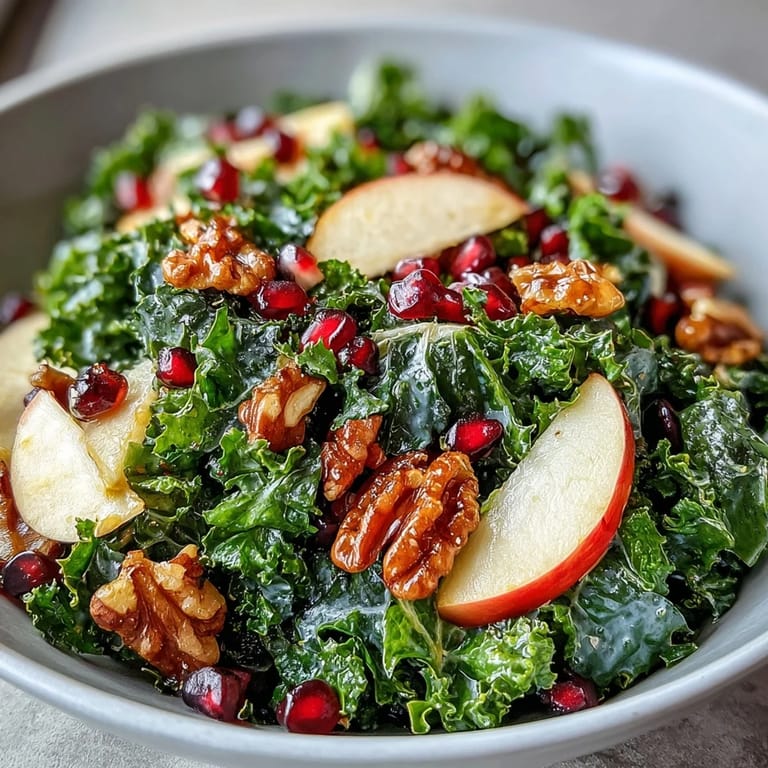
The reason this bowl doesn't taste one-dimensional is because every element brings something different—sweetness from the apple and honey, tartness from the vinegar and pomegranate, earthiness from the kale, richness from the olive oil and walnuts, and a subtle umami kick from the Dijon mustard. It's the kind of balance that makes you want another bite immediately after finishing the first one. When you're assembling this, think of it like building a chord rather than stacking ingredients, where each component plays off the others to create something greater than the sum of its parts.
- Toast your walnuts lightly if you want to amplify their nutty depth and add another layer of flavor complexity.
- Add the dressing just before eating if you're making this in advance, because wet kale and apple slices can get soggy over time.
- Taste as you go and adjust the salt, vinegar, and honey to match your personal preference—this dressing is forgiving and flexible.
 Save
Save This bowl has quietly become the thing I reach for when I want to feel nourished and satisfied without any fuss, and the fact that it takes fifteen minutes to create something this delicious feels like a small miracle. Whether you're eating it alone as a moment of self-care or sharing it with someone who needs reminding that salad can be exciting, it's the kind of simple dish that tends to disappear from the bowl faster than you'd expect.
Recipe FAQs
- → Why massage the kale?
Massaging kale with olive oil and salt breaks down tough fibers, making the leaves tender, less bitter, and more enjoyable to eat raw.
- → Can I make this ahead?
Yes! The dressed bowl actually improves after 10-15 minutes as flavors meld. Store leftovers in the refrigerator for up to 2 days, though the walnuts may soften.
- → What other fruits work well?
Pear slices, segmented oranges, or fresh cranberries make excellent substitutes or additions to the apple and pomegranate.
- → How do I easily remove pomegranate seeds?
Cut the pomegranate in half, hold it seed-side down in your hand, and tap firmly with a wooden spoon. The seeds will fall out into a bowl beneath.
- → Can I add protein?
Crumbled feta, goat cheese, or grilled chicken complement these flavors beautifully. Roasted chickpeas also work well for a plant-based protein boost.