 Save
Save The first time I assembled a Turkish meze platter, I was nervous—not because of technique, but because I wanted to create something that felt alive on the table. My neighbor had just returned from Istanbul and mentioned how mezze wasn't really about perfection; it was about generosity and the way dishes clustered together seemed to invite conversation. That afternoon, I realized she was right the moment my guests leaned in, reaching across bowls of hummus, grabbing olives, breaking bread together. It wasn't fancy, but it felt like an embrace on a plate.
I remember my friend Sarah setting down her wine glass and saying, "This is what I've been craving without knowing it." She meant that specific comfort of spreading hummus on warm pita, the creamy resistance giving way to the bread's steam, the way a single olive could taste like entire afternoons in sun-soaked markets. That's when I understood—a meze platter isn't a starter, it's a permission to slow down and taste things deliberately.
Ingredients
- Chickpeas (1 can, drained): The foundation of silky hummus; rinsing them thoroughly removes the starchy liquid that can make the texture grainy.
- Tahini (2 tbsp): This sesame paste is the secret to hummus depth—not just nutty flavor but a slight bitterness that balances the lemon beautifully.
- Extra-virgin olive oil: Use one you'd actually taste alone; it becomes the voice of your hummus and the final drizzle that catches light on the platter.
- Garlic (1 clove, minced): Fresh garlic matters here because you're not cooking it—be subtle, or it'll dominate instead of whisper.
- Fresh lemon juice (2 tbsp): Bottled juice won't have the same brightness; fresh lemon is non-negotiable for that tang that wakes everything up.
- Ground cumin (1/2 tsp): Warm, earthy, almost sweet—it's what makes hummus taste like itself and not just blended chickpeas.
- Feta cheese: Salty, crumbly, essential; the way it crumbles in your mouth reminds you these are real ingredients, not processed bites.
- Beyaz peynir or halloumi: White cheese brings a different texture and a higher melting point, so it stays distinct on the platter instead of turning into a sad puddle.
- Turkish olives (mixed green and black): The variety matters—green olives are briny and firm, black ones are mellow and soft, and together they tell a story.
- Fresh vegetables (cucumber, tomato, lemon): These aren't just decoration; they're palate cleansers and flavor breaks that make you want another bite.
- Fresh parsley: Chopped fine, scattered over everything at the end—it's the final note that says this wasn't rushed, that someone cared.
- Warm pita or flatbread: Serve it warm; cold bread on a meze platter feels like a broken promise.
Tired of Takeout? 🥡
Get 10 meals you can make faster than delivery arrives. Seriously.
One email. No spam. Unsubscribe anytime.
Instructions
- Blend your hummus base:
- Combine chickpeas, tahini, olive oil, minced garlic, lemon juice, cumin, salt, and pepper in a food processor. Pulse and blend until the mixture transforms from grainy to cloud-like and smooth. If it feels too thick, add a splash of water—just a teaspoon at a time—until you reach that creamy consistency that makes people close their eyes when they taste it.
- Season and taste:
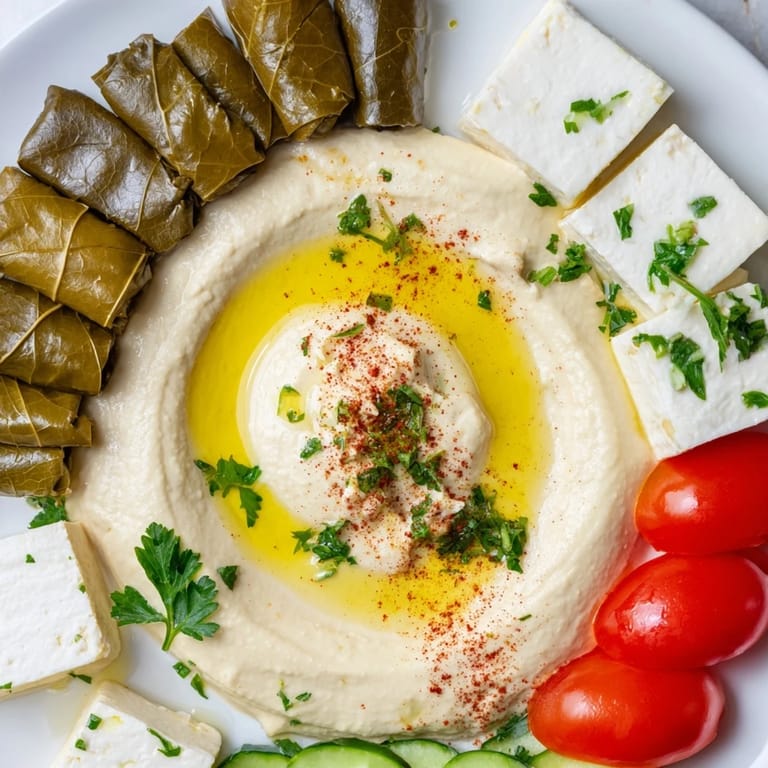
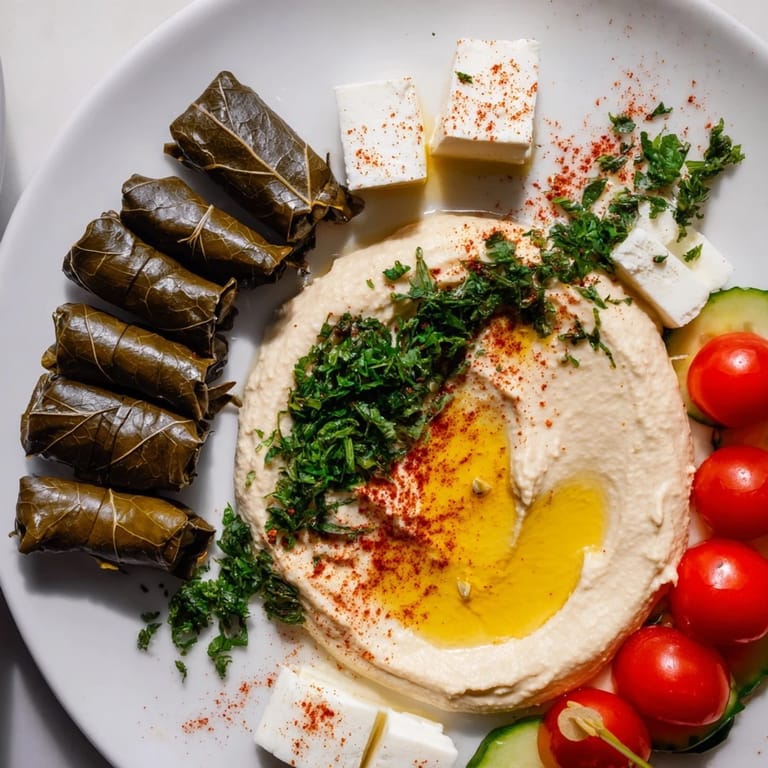
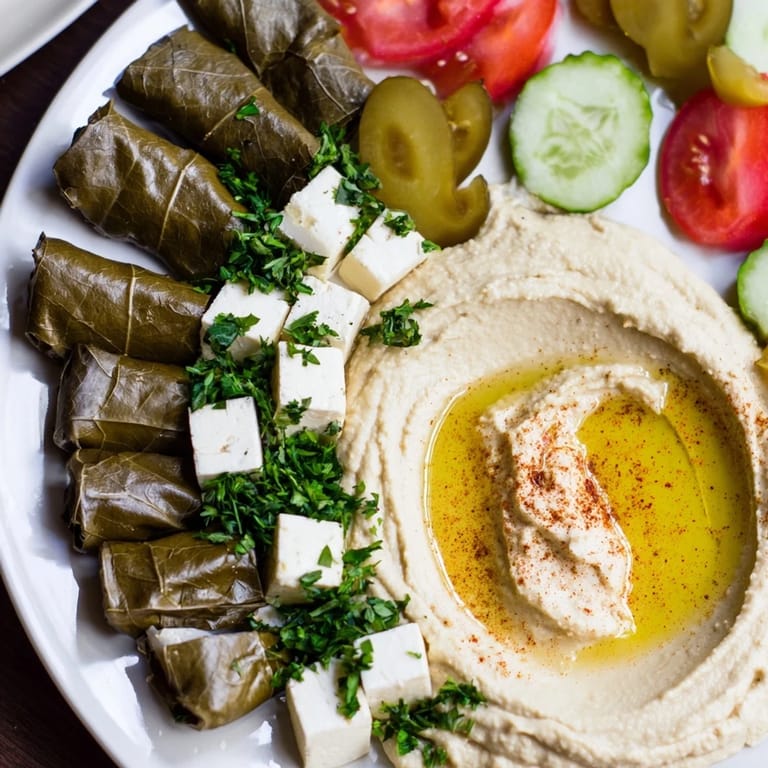
- This is where hummus stops being boring. Taste it, adjust the lemon if it needs brightness, add more cumin if it feels flat, pinch of salt if the flavors seem muted. Transfer to your serving bowl and create a shallow well in the center with the back of a spoon, then drizzle with olive oil and a whisper of paprika or sumac.
- Arrange the dolmas with intention:
- Don't just dump them on the platter—nestle them so they look purposeful, perhaps in a small cluster or along one edge. They're jewels, not fillers.
- Cut and gather your cheeses:
- Cube the feta into rough, irregular pieces (perfect size is somewhere between a postage stamp and a sugar cube), slice the harder cheeses into thick ribbons. Group cheeses by type on the platter so guests understand the options at a glance.
- Toss olives with their finishing oil:
- In a small bowl, stir olives with a tablespoon of olive oil and dried oregano until each one glistens. Let them sit together for a minute so the oregano wakes up and starts smelling like Mediterranean hillsides.
- Build the rest of your landscape:
- Arrange cucumber slices in an overlapping line, tomato wedges in a separate cluster, lemon wedges scattered where they catch the light. Sprinkle parsley over the whole arrangement like you're blessing it. Everything should look generous and unhurried.
- Warm and serve:
- Wrap pita in a clean kitchen towel and warm it in a low oven for five minutes, then place it on the table still wrapped so it stays steaming. Let everyone tear off pieces and build their own bites.
 Save
Save What surprised me most about serving a meze platter was how it changed the energy of the table. People stopped eating in a rush and started savoring—a bite of cheese, a green olive, a moment of quiet chewing, then conversation. It became less about filling stomachs and more about creating pauses, the kind where someone tells you something true, or you notice how golden the light looks on the hummus.
Why Turkish Meze Matters
In Turkey, meze isn't an afterthought—it's the entire philosophy of a meal. It's about abundance without heaviness, about small tastes that satisfy more than large portions ever could. When you build a platter like this, you're not just serving food; you're inviting people into a slower way of eating where every element matters equally. The hummus doesn't outshine the cheese, the olives don't overwhelm the vegetables, the bread is there to build bridges between everything else. It's democracy on a plate.
Making It Your Own
This is the beautiful part—a meze platter is less a recipe and more a starting point. Some days I add roasted red peppers for sweetness, other times I include grilled eggplant slices brushed with garlic oil, or candied walnuts for crunch. I've seen people add marinated artichokes, labneh (strained yogurt), or even a small bowl of muhammara (roasted red pepper and walnut dip). The framework stays the same; the details become your signature.
Pairing and Serving Strategy
Serve this with a crisp white wine—Turkish Narince if you can find it, or even a Greek Assyrtiko, something with enough acidity to cut through the richness of the cheese and the earthiness of the hummus. If wine isn't your thing, raki diluted with water (that traditional cloudy mixture) feels right, or simply cold sparkling water with fresh mint and lemon. The drink matters because it completes the rhythm of eating—taste, pause, sip, reset, taste again.
- Chill your serving platter in the freezer for ten minutes before assembling so everything stays fresh-feeling longer.
- If you're making hummus more than a few hours ahead, press plastic wrap directly onto its surface to prevent a papery skin from forming.
- The most important thing: let your guests shape their own experience—don't narrate what they're eating, let the flavors speak first.
 Save
Save A meze platter is a small act of generosity that says, "I want to feed you, but more than that, I want to feed how you like to eat." It's one of the kindest meals you can make.
Recipe FAQs
- → What ingredients make up the hummus on the platter?
The hummus combines chickpeas, tahini, extra-virgin olive oil, garlic, fresh lemon juice, ground cumin, salt, and pepper, blended until smooth.
- → Can I use store-bought dolmas for this platter?
Yes, ready-made stuffed grape leaves can be used for convenience, or you can prepare them from scratch for a fresher taste.
- → Which cheeses are included in the cheese selection?
The platter features feta, beyaz peynir, and kasseri or halloumi, sliced or cubed for easy serving.
- → What types of olives are recommended for the platter?
A mix of Turkish green and black olives, pitted if desired, marinated with olive oil and dried oregano enhances the flavors.
- → What garnishes accompany the meze platter?
Fresh cucumber and tomato slices, lemon wedges, and chopped parsley add color and brightness to the platter.
- → How is the platter typically served?
The ingredients are arranged on a large serving platter and complemented with warm pita or flatbread cut into triangles.