 Save
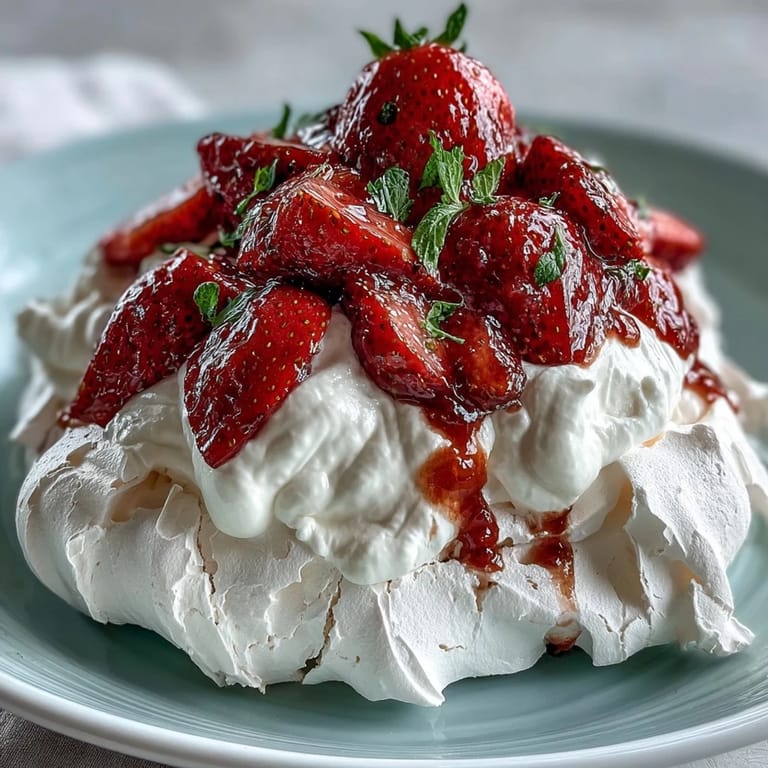
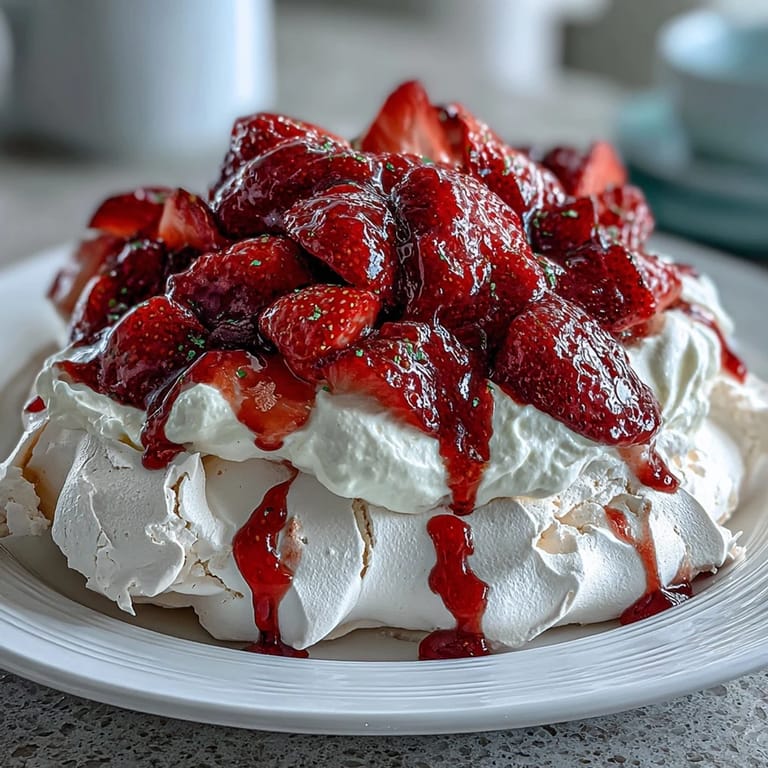
Save Few desserts capture the magic of celebration quite like a pavlova. Born from the rivalry between Australia and New Zealand over its origins, this stunning creation was named after the Russian ballerina Anna Pavlova, whose grace and lightness inspired a dessert equally ethereal. With its crisp meringue shell that shatters at the touch of a spoon, giving way to a marshmallowy interior, and crowned with billowy whipped cream and jewel-like strawberries, the pavlova is a masterpiece of contrasts. The sweet meringue base meets the tart burst of fresh berries, while the rich cream ties everything together in perfect harmony. Whether you're hosting a summer garden party or marking a special milestone, this gluten-free showstopper proves that simple ingredients, when treated with care, can create something truly unforgettable.
Save The secret to a perfect pavlova lies in patience and precision. Room temperature egg whites whip to their highest volume, while the gradual addition of superfine sugar ensures those coveted glossy, stiff peaks. The addition of cornstarch and vinegar might seem unusual, but they work together to create that signature marshmallow-soft interior while maintaining the crisp exterior. The slow baking followed by cooling in the oven prevents cracks and ensures even texture throughout. When topped just before serving, the pavlova maintains its textural integrity – a crisp base that yields to reveal clouds of cream and the bright, fresh taste of strawberries.
Ingredients
Tired of Takeout? 🥡
Get 10 meals you can make faster than delivery arrives. Seriously.
One email. No spam. Unsubscribe anytime.
- Meringue: 4 large egg whites at room temperature, 1 cup (200 g) superfine sugar, 1 tsp cornstarch, 1 tsp white vinegar, 1 tsp vanilla extract
- Whipped Cream: 1 cup (240 ml) heavy cream chilled, 2 tbsp powdered sugar, 1 tsp vanilla extract
- Topping: 2 cups (300 g) fresh strawberries hulled and sliced, 1 tbsp granulated sugar optional for macerating, fresh mint leaves optional for garnish
Instructions
- Step 1: Prepare the Oven and Pan
- Preheat the oven to 275°F (135°C). Line a baking sheet with parchment paper and draw a 9-inch (23 cm) circle as a guide.
- Step 2: Beat the Egg Whites
- In a clean, dry bowl, beat the egg whites with an electric mixer on medium speed until soft peaks form.
- Step 3: Add Sugar Gradually
- Gradually add the superfine sugar, 1 tablespoon at a time, beating on high until stiff, glossy peaks form (about 7–10 minutes).
- Step 4: Fold in Stabilizers
- Gently fold in the cornstarch, vinegar, and vanilla extract using a spatula.
- Step 5: Shape the Meringue
- Spoon the meringue onto the prepared baking sheet, using the circle as a guide. Shape into a disc with slightly raised edges to form a nest.
- Step 6: Bake and Cool
- Bake for 1 hour 15 minutes. Turn off the oven and let the meringue cool completely inside the oven with the door slightly ajar.
- Step 7: Prepare Whipped Cream
- Meanwhile, in a chilled bowl, whip the heavy cream with powdered sugar and vanilla until soft peaks form.
- Step 8: Macerate Strawberries
- In a separate bowl, toss the sliced strawberries with granulated sugar if desired; let sit for 10 minutes to macerate.
- Step 9: Assemble the Pavlova
- Once the meringue is cool, carefully transfer it to a serving plate. Spread the whipped cream evenly over the center.
- Step 10: Top and Serve
- Top with the strawberries and garnish with mint leaves if using. Serve immediately.
Zusatztipps für die Zubereitung
Success with pavlova begins with completely clean equipment – even a trace of fat will prevent egg whites from reaching their full volume. Make sure the bowl and beaters are completely clean and free of any fat when whipping egg whites. Use room temperature eggs as they whip more easily and create more stable peaks. Superfine sugar dissolves more readily than granulated, preventing a grainy texture. If you only have granulated sugar, pulse it in a food processor for 30 seconds. The slow cooling inside the oven is crucial – opening the door too quickly can cause cracks from temperature shock. For the best texture contrast, assemble the pavlova just before serving, as the cream will soften the meringue over time.
Varianten und Anpassungen
While strawberries are classic, this pavlova welcomes creative variations. You can use a mix of berries for the topping – try raspberries, blueberries, or blackberries for color and flavor diversity. For a tropical twist, top with passion fruit pulp, kiwi slices, and mango. In autumn, roasted stone fruits like peaches or plums make an elegant alternative. Add a drizzle of berry coulis or chocolate sauce for extra indulgence. For a lighter version, fold Greek yogurt into the whipped cream. Individual mini pavlovas can be made by piping smaller meringue nests, reducing baking time to about 45 minutes. Those avoiding refined sugar can experiment with coconut sugar in the meringue, though the color will be more caramel-toned.
Serviervorschläge
The pavlova shines as a centerpiece dessert, best presented whole at the table before slicing to showcase its dramatic layers. Serve it as the grand finale to a summer barbecue, afternoon tea, or holiday feast. Pair it with champagne, prosecco, or a sweet dessert wine to complement the fruit and cream. For a brunch setting, serve alongside fresh coffee or berry-infused iced tea. Present it on a cake stand to elevate the visual appeal, and provide a pie server for clean slicing through the meringue. Leftovers can be stored in the fridge but the meringue will soften over time, transforming into a different but still delicious Eton mess-style treat. Consider serving with extra fresh berries on the side for guests who want more fruit.
 Save
Save This strawberry pavlova with whipped cream represents the perfect marriage of technique and simplicity. While the method requires attention to detail, the ingredients are refreshingly straightforward, and the result is nothing short of spectacular. At 185 calories per serving, it offers a lighter alternative to many cream-based desserts without sacrificing indulgence. The natural gluten-free nature makes it inclusive for various dietary needs, while the vegetarian profile appeals to a wide audience. With its crisp exterior, marshmallow center, billowy cream, and fresh fruit, each bite delivers multiple textures and complementary flavors. Whether you're a seasoned baker looking to master a classic or an ambitious beginner ready for a rewarding challenge, this pavlova promises to deliver both pride in the making and joy in the sharing. Serve it with confidence, knowing you've created something truly special.
Recipe FAQs
- → How do I achieve stiff peaks when whipping egg whites?
Ensure the bowl and beaters are completely clean and free of oil or fat. Beat the whites at medium speed until soft peaks form, then increase speed gradually while adding sugar slowly until stiff, glossy peaks appear.
- → Why add cornstarch, vinegar, and vanilla to the meringue?
Cornstarch stabilizes the meringue texture, vinegar helps maintain its structure and prevents collapsing, while vanilla adds a subtle aromatic flavor.
- → Can I prepare the pavlova in advance?
Bake and cool the meringue ahead of time, but add whipped cream and strawberries just before serving to keep textures fresh and crisp.
- → What is the best way to macerate strawberries?
Toss sliced strawberries with a small amount of sugar and let sit at room temperature for about 10 minutes to release their natural juices and soften slightly.
- → How should leftovers be stored?
Store leftovers in an airtight container in the refrigerator. Note that the meringue may soften over time due to moisture.