 Save
Save The sound of rain against the kitchen window made everything feel cozier, the kind of Sunday when trying something bright and new breaks through the gray. Blood oranges piled on the counter looked too beautiful to ignore, and the prospect of baking a cake laced with their dramatic color felt almost mischievous. My hands got stained pink as I zested and juiced them, and I couldn't help but sneak a taste—tangy, floral, and slightly sweet, just right for pairing with almond and polenta. By the time the batter was in the oven, the fragrant clouds of orange and butter had already lifted my spirits. There’s something oddly satisfying about watching a cake rise while outside, the world is wet and quiet.
I remember the first time I brought this cake to a brunch. I had to walk carefully across the park, cake tin wrapped in a tea towel, raincoat flapping in the wind, my excitement mixing with hope that the glaze would survive the journey. Gathering around coffee and chatter, when someone sliced through that blush-colored drizzle, the oohs made the effort worth it—everyone wanted to know what made it so pink and bright.
Ingredients
- Unsalted butter: Softened butter makes the creaming effortless, and I always grease the tin generously for an easy release.
- Caster sugar: Fine sugar dissolves quickly, giving the batter an airy lightness that helps the cake rise.
- Eggs: Room temperature eggs blend into the batter for a uniform, glossy texture.
- Blood orange zest and juice: The star of the show—zest brings floral aroma, juice adds tang and that arresting color. Strain juice for a glaze that looks glossy, not streaky.
- Fine polenta (cornmeal): Gives a distinctive golden crumb and subtle crunch—use fine, not coarse, for the perfect texture.
- Ground almonds: Keep the cake moist and gluten-free, and the flavor deepens with a quick sniff before stirring them in.
- Gluten-free baking powder: Double-check the label to make certain there's no hidden gluten.
- Salt: Just a pinch sharpens all the other flavors—don’t skip it.
- Vanilla extract: Even a small splash helps all the other flavors blend and sing together.
- Powdered sugar: Sifted for a lump-free glaze with beautiful consistency.
- Edible flowers and blood orange slices: Not necessary, but they turn the finished cake into a centerpiece—rush of color and charm.
Tired of Takeout? 🥡
Get 10 meals you can make faster than delivery arrives. Seriously.
One email. No spam. Unsubscribe anytime.
Instructions
- Ready the baking stage:
- Set your oven to 170°C (340°F) and butter a 20 cm cake tin, then line the base with parchment—it makes lifting the cake a breeze.
- Cream and dream:
- Whip the butter and sugar until you hear the gentle swoosh and see the mix visibly pale; it's truly the secret to a light crumb.
- Eggs take the stage:
- Add them one at a time, mixing slowly until each is completely blended—even the last streak of yolk vanishes.
- Lace with zest and vanilla:
- The blood orange zest and vanilla fill the whole bowl with perfume, fold them in until it seems too fragrant to be cake batter.
- Combine the dry:
- In another bowl, lightly toss polenta, almonds, baking powder, and salt—just blending until evenly colored.
- Bring it all together:
- Tip the dry ingredients into the wet bowl, then stir gently; don’t overwork or you’ll lose tenderness.
- Add a blush:
- Pour in blood orange juice, stirring until the batter just comes together with a subtle pink glow.
- Smooth and bake:
- Pour into the tin and smooth the top—little swirls with a spatula add a pretty finish before baking.
- The waiting game:
- After about 45 minutes, a skewer should slide out clean and the top will be golden and springy.
- Let it rest:
- Let the cake cool in its tin for 10 minutes, then tip it onto a wire rack so the edges stay neat.
- Paint the glaze:
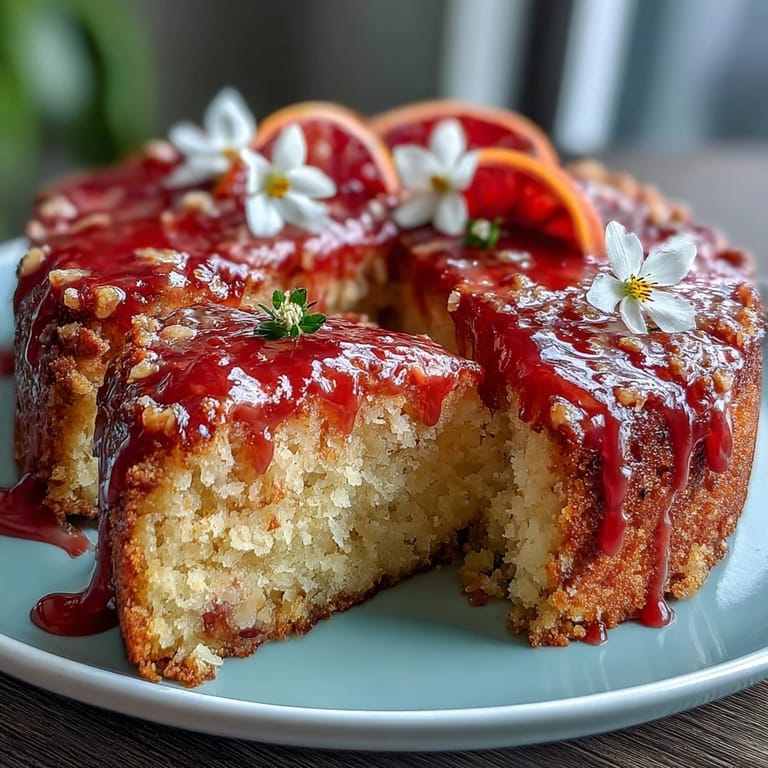
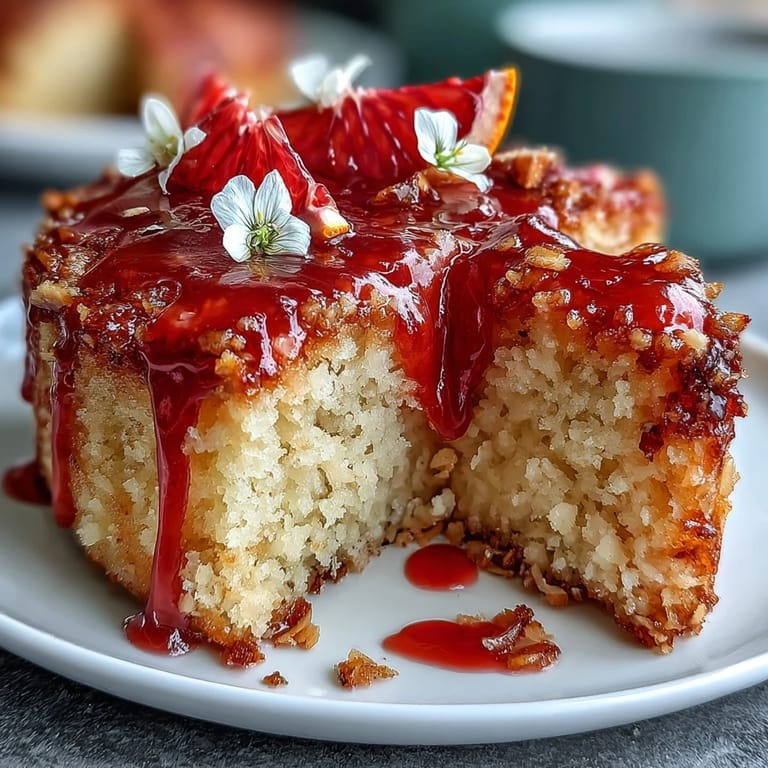
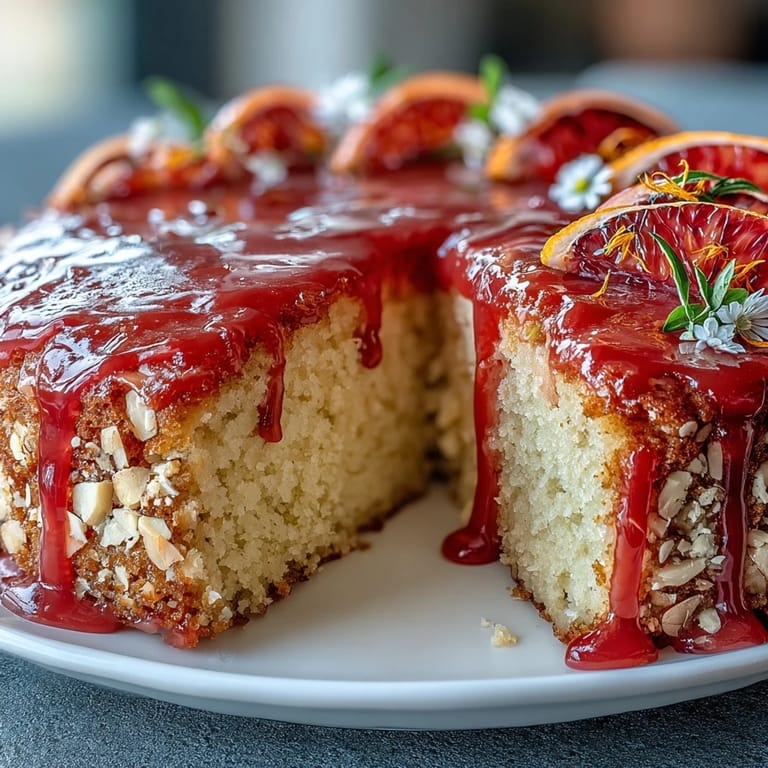
- Mix powdered sugar with blood orange juice to make a thick, glossy glaze; drizzle generously over the cake, letting it drip down the sides in rose-pink rivulets.
- Dress it up:
- Lay blood orange slices and edible blooms on top for a moment of artistry before serving, if you wish.
 Save
Save Serving up the first slice, I watched a friend sneak an extra drizzle of glaze, her fork swirling through pink and gold. The laughter around the table and the way folks lingered over seconds remind me that food can start simple, but become a little ceremony all its own.
Brighten Your Table with Citrus
On days when the world needs a little color, this cake is my answer. The rosy hue of the glaze always gets people guessing, and the taste is sunshine in every bite—tart, sweet, and somehow cozy and festive at once.
Swaps and Serving Suggestions
Can't find blood oranges? Regular oranges work perfectly well; just expect a paler glaze. For a dreamy finish, I sometimes serve thick slices with a dollop of Greek yogurt or crème fraîche to play off the tang.
Favorite Kitchen Moments
There's a quiet kind of pride in sliding a homemade cake onto a stand, especially one this cheery. The best part might just be watching the glaze set, catching the light, while you nibble stray bits of orange zest.
- Make sure the cake is fully cooled before glazing so it doesn't slide off.
- If you don't have edible flowers, a sprinkle of citrus zest looks just as pretty.
- Leftovers keep well—hide a slice for breakfast.
 Save
Save Bake it once, and this blood orange polenta cake is bound to join your list of repeat-worthy desserts. There's something lovely about sharing a slice that brightens even the rainiest day.
Recipe FAQs
- → Can I use regular cornmeal instead of fine polenta?
Fine polenta (or fine cornmeal) gives a softer, more tender crumb. If you only have coarser cornmeal, pulse it briefly in a spice grinder for a finer texture, or accept a heartier crumb and reduce mixing to avoid toughness.
- → What can I substitute for ground almonds?
Toast and finely grind blanched almonds for best flavor. For nut-free alternatives, try oat flour or extra plain almond-free flour blends, but expect a slightly different texture and less moistness.
- → How do I ensure the glaze stays pink?
Use strained blood orange juice for a clear pink hue and add it gradually to powdered sugar until you reach a thick, pourable consistency. Regular oranges will lighten the color; a splash more juice helps deepen the tone without thinning the glaze too much.
- → How can I check doneness without overbaking?
Insert a skewer into the center—if it comes out with a few moist crumbs (not wet batter), it's done. The top should be golden and spring back lightly. Tent with foil toward the end if the surface browns too quickly.
- → Best way to keep the cake moist after baking?
Brush the warm cake with a little strained blood orange juice before glazing to lock in moisture. Store in an airtight container at room temperature for 1–2 days, or refrigerate layered with parchment between slices to prevent sticking.
- → Can I make this ahead for entertaining?
Bake and cool completely, then keep the plain cake wrapped at room temperature. Glaze and decorate just before serving to preserve the fresh pink sheen and any edible flowers or slices used for garnish.