 Save
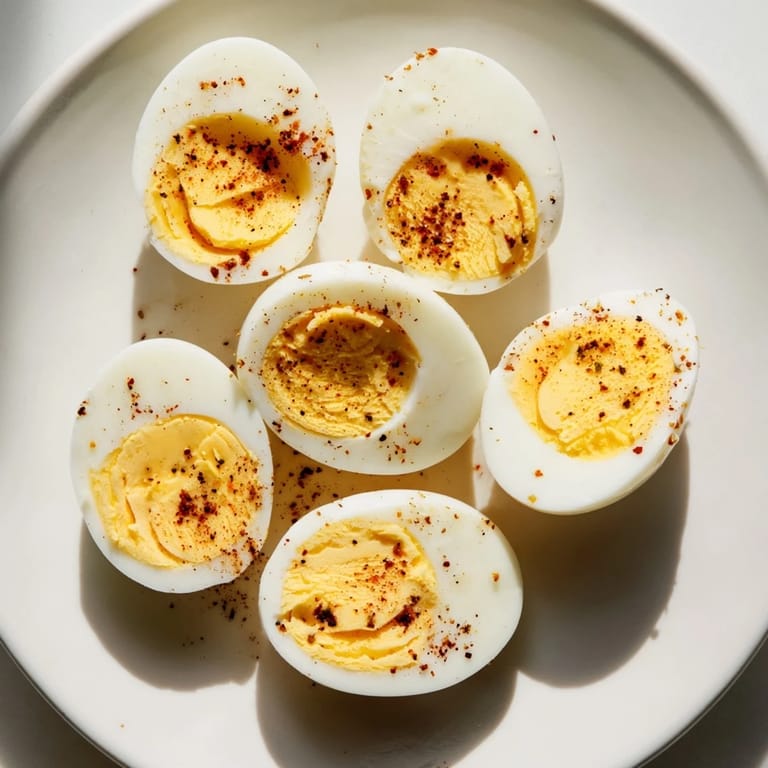
Save Achieve flawlessly cooked hard-boiled eggs with tender whites and creamy yolks—ideal for snacks, salads, or sandwiches.
This method has been my go-to for years to ensure consistent results whether I need eggs for breakfast or a snack.
Ingredients
- Eggs: 6 large eggs
- Water & Seasoning: Cold water enough to cover eggs by 1 inch, 1 teaspoon salt (optional helps prevent cracking)
Tired of Takeout? 🥡
Get 10 meals you can make faster than delivery arrives. Seriously.
One email. No spam. Unsubscribe anytime.
Instructions
- Place eggs in saucepan:
- Place eggs in a single layer in a saucepan. Add enough cold water to cover eggs by at least 1 inch.
- Add salt (optional):
- Add salt to the water to help prevent cracking and make peeling easier.
- Boil water:
- Place the pan over medium-high heat and bring the water to a rolling boil.
- Remove from heat:
- Once boiling, immediately cover the pan with a lid and remove it from the heat.
- Let sit:
- Let the eggs sit covered for exactly 10 12 minutes (10 minutes for slightly creamy centers 12 minutes for fully set yolks).
- Prepare ice bath:
- While the eggs are resting prepare a large bowl of ice water.
- Cool eggs:
- After the resting time transfer the eggs to the ice water bath using a slotted spoon. Cool for at least 5 minutes.
- Peel eggs:
- Gently crack and peel the eggs under running cold water for the easiest peeling.
 Save
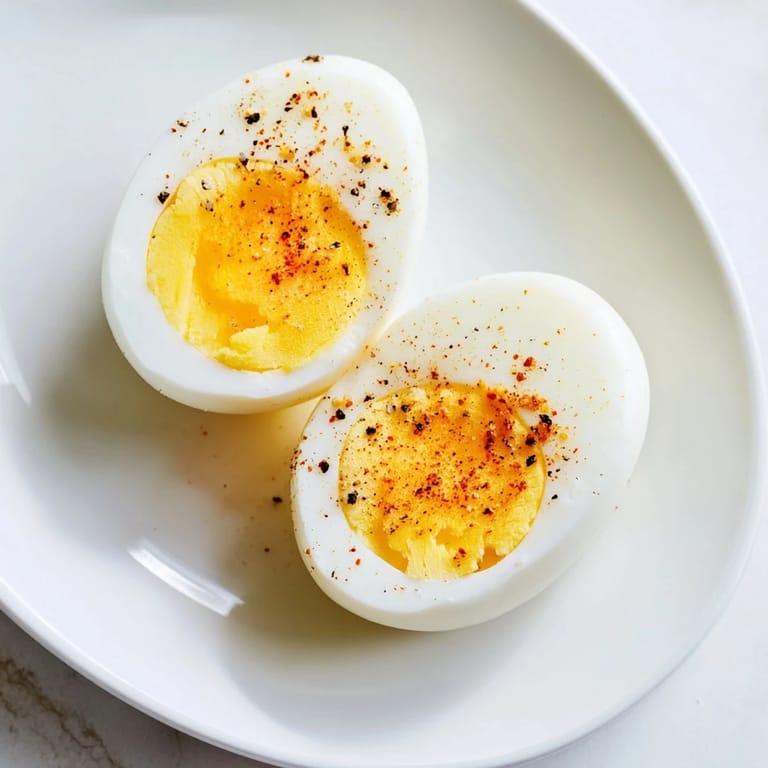
Save My family always enjoys these eggs for quick breakfasts and they never complain about peeling!
Required Tools
Saucepan with lid slotted spoon large bowl timer
Nutritional Information
Calories 70 Total Fat 5 g Carbohydrates 1 g Protein 6 g per serving (1 egg)
Allergen Information
Contains eggs Individuals with egg allergies should avoid this recipe
 Save
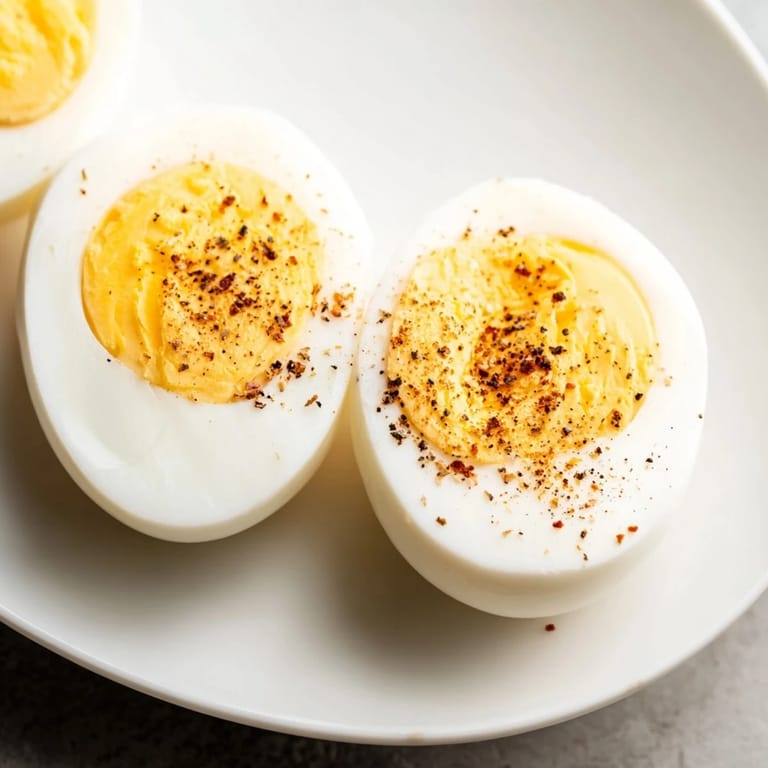
Save Follow these steps and enjoy perfect hard-boiled eggs every time with minimal effort.
Recipe FAQs
- → How long should eggs sit after boiling?
Let eggs rest covered off heat for 10–12 minutes, depending on desired yolk consistency.
- → Why add salt to the water?
Salt helps prevent cracking and can make peeling easier by slightly firming the egg whites.
- → How does ice water affect the eggs?
Cooling eggs rapidly in ice water stops the cooking process and helps separate the membrane for easier peeling.
- → What is the best egg age for peeling?
Eggs that are 7–10 days old peel more easily than very fresh eggs due to changes in pH and membrane separation.
- → Can vinegar be used during cooking?
A splash of vinegar in the water can help prevent cracking and aid in peeling by softening the shell.