 Save
Save The first time I tasted shakshuka, it wasn't at a fancy restaurant or a cooking class—it was in a cramped Tel Aviv kitchen at 7 AM, watching a friend crack eggs into a bubbling tomato sauce like it was the most natural thing in the world. She moved with such ease, cupping each egg in her palm before letting it slide into those little wells she'd made, and I realized right then that some dishes don't need flourish, just intention. This has become my go-to when I want something that tastes like it took hours but actually takes less time than a good conversation.
I made this for my partner on a Sunday morning when we were both running on coffee and no sleep, and somehow the smell of cumin and cilantro made everything feel manageable. We tore pieces of pita and dragged them through the sauce like we were rescuing something delicious, and neither of us said much, but the whole kitchen felt warmer. That's when shakshuka stopped being a recipe for me and became a ritual.
Ingredients
- Olive oil: Use good oil here—it's not hidden under other flavors, so quality shows. Two tablespoons is enough to get everything golden without making it feel heavy.
- Yellow onion: The sweetness balances the spice and tomato acidity in a way that sneaks up on you.
- Red bell pepper: Adds body and a subtle sweetness that makes the sauce feel more like a meal than a condiment.
- Garlic: Three cloves minced fine so it dissolves into the base—this isn't a dish where you want chunks.
- Red chili: Optional but worth it; the heat builds gradually rather than hitting all at once.
- Crushed tomatoes: Use canned good ones; fresh tomatoes alone won't give you the depth you need.
- Fresh tomatoes: These add brightness that the canned ones can't quite reach on their own.
- Tomato paste: One teaspoon concentrated into the base makes the whole sauce taste like it's been simmering for hours.
- Ground cumin: The soul of this dish; warm, slightly nutty, absolutely non-negotiable.
- Sweet paprika: Creates color and a gentle sweetness that paprika does better than any other spice.
- Ground cayenne pepper: Optional, but if you like heat, this is where it goes—controlled and integrated, not an afterthought.
- Ground coriander: A quiet note that pulls all the spices together like they were meant to be friends.
- Salt and black pepper: Taste as you go; you'll need more than you think because the tomatoes absorb it.
- Large eggs: Room temperature if you can remember it, but honestly, cold eggs work fine too.
- Fresh parsley and cilantro: Chopped and added at the end so they taste bright, not cooked into submission.
- Feta cheese: Crumbled over the top, it's optional but adds a salty, creamy contrast that makes people ask for the recipe.
Tired of Takeout? 🥡
Get 10 meals you can make faster than delivery arrives. Seriously.
One email. No spam. Unsubscribe anytime.
Instructions
- Warm the oil and begin:
- Pour olive oil into your largest skillet over medium heat and let it shimmer for a moment—you'll smell it before you see it change. This is your cue that everything is about to get aromatic.
- Soften the vegetables:
- Add the chopped onion and red pepper and let them sit for 5 to 7 minutes, stirring occasionally, until they turn soft and the edges catch a little color. Don't rush this; it's building flavor.
- Add the aromatics:
- Stir in the minced garlic and chili (if using) and cook for about a minute until your kitchen smells like something special. The rawness leaves immediately.
- Build the sauce:
- Add the crushed tomatoes, fresh chopped tomatoes, and tomato paste, stirring to combine. The mixture will look loose at first, like it needs more time to find itself.
- Season and simmer:
- Sprinkle in the cumin, paprika, cayenne (if using), coriander, salt, and pepper, then let everything bubble gently for 10 to 12 minutes, stirring every few minutes. The sauce will thicken and deepen in color, and the spices will stop tasting separate and start tasting like one thing.
- Make the wells:
- Use the back of a spoon to create four small indentations in the sauce, spacing them so they don't touch. Each well should be just deep enough to cradle an egg.
- Crack and cook the eggs:
- Crack each egg into a small bowl first, then gently slide it into a well—this gives you control and prevents shell fragments. Cover the pan and cook for 6 to 8 minutes, checking after 6, until the egg whites turn opaque but the yolks still jiggle slightly when you nudge the pan.
- Finish and serve:
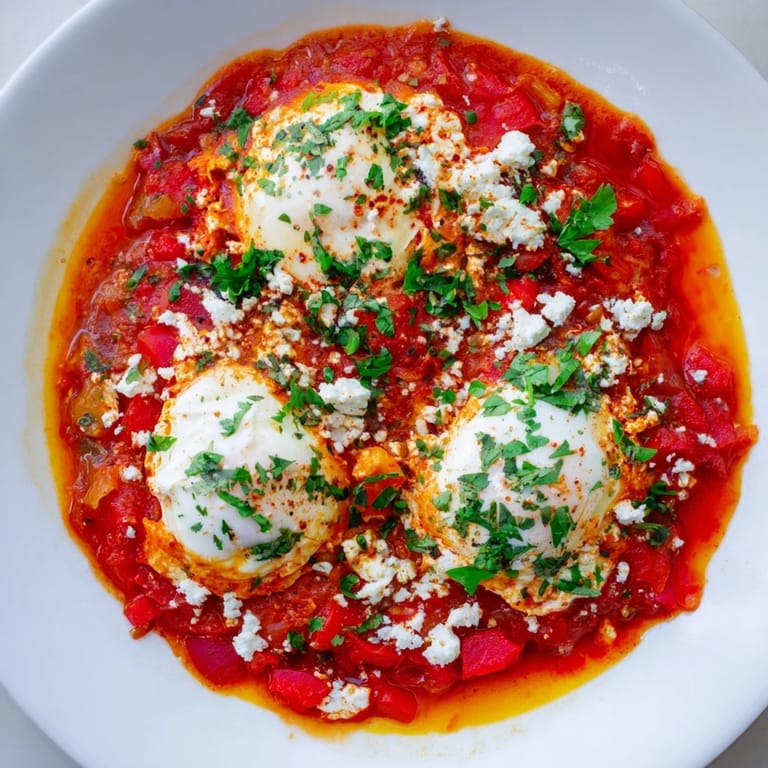
- Remove from heat, scatter the fresh parsley and cilantro over everything, add feta if you're using it, and serve immediately while the eggs are still warm and the sauce is still moving.
 Save
Save There's something about eating shakshuka that makes everyone slow down and pay attention—maybe it's because you have to use your hands, or because the eggs are still hot and the sauce is still bubbling, or maybe it's just that the flavors are bold enough that they deserve your focus. Either way, I've learned it's the kind of dish that turns a regular meal into something people remember.
Why Cast Iron Changes Everything
A regular skillet works fine, but cast iron holds the heat differently and makes the sauce feel deeper and richer somehow. The eggs also cook more evenly because the heat distributes so smoothly, and there's something about serving directly from the pan that makes the whole thing feel more generous. If you don't have cast iron, don't stress—just use your best large skillet with a lid.
Playing With Heat and Flavor
This is one of those recipes where you can taste your preferences into it. Some people love it smoking hot with extra cayenne, while others are happy just letting the cumin and coriander do the talking. I've added smoked paprika when I wanted something deeper, and I've toned down the chili entirely when cooking for people who are spice-sensitive. The baseline sauce is forgiving enough that it welcomes your adjustments.
Sides and Variations
Warm pita or crusty bread are the obvious moves because you need something to drag through the sauce, and labneh or Greek yogurt on the side adds a cooling note that keeps your mouth from getting overwhelmed. I've added sautéed spinach when I wanted more substance, and roasted eggplant when I wanted something sweeter—both disappear into the sauce beautifully. This recipe also scales up effortlessly if you're cooking for more people; just increase everything proportionally and give yourself a bigger pan.
- A squeeze of lemon juice over the finished dish adds brightness that makes people think you're a much more skilled cook than you are.
- Za'atar sprinkled on top brings an herby, tangy complexity that makes every bite feel intentional.
- If you have time, make the sauce up to a day ahead and reheat it gently before cracking the eggs in—the flavors meld overnight and taste even better.
 Save
Save Shakshuka has become the dish I make when I want to feel connected to something bigger than a Tuesday morning, or when I want to remind myself that the best meals don't have to be complicated. Every time I smell that cumin hitting the hot oil, I'm back in that Tel Aviv kitchen, watching someone cook like they weren't even trying.
Recipe FAQs
- → What type of pan is best for cooking this dish?
A large skillet or cast-iron pan with a lid works best to evenly cook the sauce and poach the eggs gently.
- → How can I adjust the heat level?
Add or omit chili and cayenne pepper according to your preferred spice intensity for a milder or spicier flavor.
- → Are there variations to the dish?
Try adding sautéed spinach or eggplant for extra texture and flavor variation, or sprinkle smoked paprika for a smoky touch.
- → What garnishes complement the dish?
Fresh parsley, cilantro, and crumbled feta cheese enhance the flavor and add freshness and creaminess.
- → What sides pair well with this dish?
Warm pita, crusty bread, labneh, or Greek yogurt make excellent companions for soaking up the rich tomato sauce.