 Save
Save There was a Saturday last winter when I opened the fridge and found three different kinds of cheese, all half-used and begging for a purpose. I grabbed my thickest sourdough and decided to stop overthinking it. What came out of that skillet was so absurdly good that I stood at the counter and ate both sandwiches myself, one right after the other. Sometimes the best recipes happen when you just let the ingredients do the talking.
I made this for my neighbor once after she had a rough week, and she called it the best grilled cheese of her life. We sat on her porch with mugs of tomato soup, and she told me she hadn't realized how much she needed something this simple and this good. Food has a way of saying things we can't always put into words.
Ingredients
- Thick sourdough bread: The sturdy texture holds up to all that melted cheese without falling apart, and the tangy flavor adds depth you won't get from regular sandwich bread.
- Sharp cheddar cheese: This brings the bold, punchy flavor that makes every bite interesting instead of just gooey.
- Provolone cheese: Smooth and mild, it balances the sharpness of the cheddar and melts like a dream.
- Shredded mozzarella cheese: The secret to that Instagram-worthy cheese pull, plus it adds a creamy, stretchy texture.
- Unsalted butter, softened: Spread it all the way to the edges so you get even browning and no sad pale spots.
- Mayonnaise (optional): A thin layer on the outside gives you an extra-crispy, golden crust that stays crunchy longer.
Tired of Takeout? 🥡
Get 10 meals you can make faster than delivery arrives. Seriously.
One email. No spam. Unsubscribe anytime.
Instructions
- Prep your bread:
- Lay out all four slices and spread softened butter evenly on one side of each. If you're using mayo, spread a whisper-thin layer on the opposite side for that extra crunch.
- Build the sandwiches:
- Place two slices buttered side down, then layer each with one slice of cheddar, one slice of provolone, and half the mozzarella. Top with the remaining bread slices, buttered side facing up.
- Heat your skillet:
- Set a large skillet or griddle over medium-low heat and let it warm up for a minute or two. Patience here prevents burning.
- Cook low and slow:
- Place both sandwiches in the pan and cook for three to five minutes per side, pressing gently with your spatula. You want deep golden color and fully melted cheese, not a charred outside with cold insides.
- Flip carefully:
- Use a wide spatula and flip in one confident motion to keep all that melted cheese from escaping. Keep the heat steady and don't rush it.
- Rest and serve:
- Transfer to a cutting board and let the sandwiches sit for one minute so the cheese sets just enough to slice cleanly. Cut in half and serve while still steaming hot.
 Save
Save The first time I made this for a group of friends, I watched them all go quiet after the first bite, and then someone said it tasted like childhood but better. We ended up making six more sandwiches that night, standing around the stove and taking turns at the skillet. It's amazing how something this simple can turn into a whole evening.
Serving Suggestions
This sandwich is perfect next to a bowl of creamy tomato soup for dipping, or alongside a crisp green salad with a tangy vinaigrette to cut through all that richness. I've also served it with dill pickles and kettle chips for a more casual lunch, and it's just as satisfying. Sometimes I'll add a few slices of ripe tomato inside before grilling, which adds a juicy brightness that balances the cheese beautifully.
Cheese Variations
Feel free to swap out any of the cheeses based on what you have or what sounds good. Gruyère adds a nutty, sophisticated flavor, Swiss brings a mild sweetness, and fontina melts incredibly smoothly. I've even used pepper jack when I wanted a little heat, and it was a welcome surprise. The key is to combine at least one sharp cheese with one that melts really well.
Storage and Reheating
Honestly, grilled cheese is always best fresh from the pan, but if you have leftovers, wrap them in foil and store in the fridge for up to two days. Reheat in a dry skillet over medium-low heat to crisp up the bread again, or use a toaster oven if you're short on time. Avoid the microwave unless you enjoy rubbery bread and sad, congealed cheese.
- Store wrapped tightly in foil to prevent the bread from drying out.
- Reheat in a skillet for best texture, flipping once to crisp both sides evenly.
- Eat within two days for the best flavor and texture.
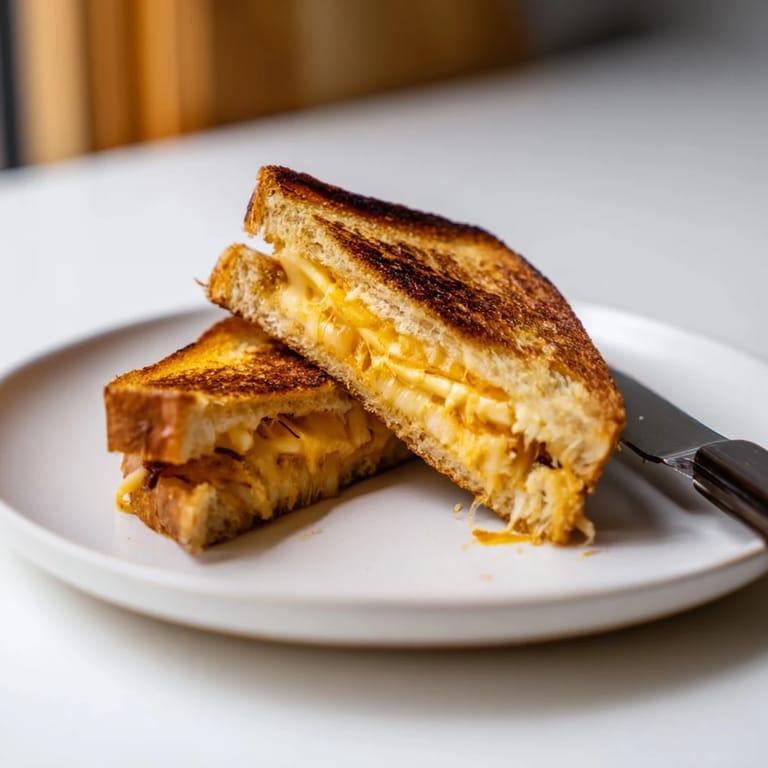 Save
Save This sandwich has become my go-to whenever I need something comforting, quick, and completely satisfying. I hope it brings you as much joy as it's brought me, whether you're eating it alone on a quiet afternoon or sharing it with someone who needs a little warmth.
Recipe FAQs
- → How do I prevent the bread from burning while the cheese melts?
Use medium-low heat and cook for 3–5 minutes per side. The lower temperature gives cheese time to melt thoroughly before the bread browns too quickly. A gentle press with your spatula helps distribute heat evenly.
- → Can I prepare this ahead of time?
Assemble the sandwiches with cheese layered between bread up to 2 hours ahead. Store in the refrigerator until ready to cook. This actually helps the cheese stay in place while cooking.
- → What's the best way to flip the sandwich without losing cheese?
Use a thin, sturdy spatula and flip confidently in one smooth motion. Let the sandwich cook 3–4 minutes before flipping so the bottom is set enough to hold together.
- → Why use mayonnaise instead of just butter?
Mayonnaise contains emulsifiers that help create a crispier, more golden exterior than butter alone. It's optional but recommended for texture lovers. Use sparingly—a thin layer is all you need.
- → What are good cheese substitutes for this sandwich?
Swiss, Gruyère, fontina, or aged gouda work beautifully. Avoid ultra-soft cheeses like brie that melt too quickly. Mix and match your favorites, keeping at least one sharp cheese for flavor balance.
- → Can I make this gluten-free?
Yes, substitute with gluten-free sourdough bread. The cooking method remains identical. Ensure all other ingredients like mayonnaise and cheese are certified gluten-free if you have celiac disease.