 Save
Save There's something about standing in front of an open oven with the smell of caramelizing pineapple and toasted coconut rolling out that makes you feel like you've accidentally stumbled into a tropical vacation. I discovered this recipe on an ordinary Tuesday when I had half a pineapple sitting in my fruit bowl and absolutely no idea what to do with it, but I knew honey and lime were friends with almost anything. Twenty-five minutes later, my kitchen had transformed into something that smelled like a beachside resort, and I couldn't believe how simple it was to create something that tasted like an actual dessert.
I made this for a dinner party where everyone was supposed to bring something, and I showed up with what looked like minimal effort but tasted like I'd spent hours planning. One guest asked if I'd learned to cook in Hawaii, and I didn't correct them. The best part was watching people reach for seconds even though we'd just finished the main course—something about warm roasted fruit with that toasty coconut just works on people.
Ingredients
- 1 fresh pineapple, peeled, cored, and cut into wedges: Choose one that's heavy for its size and has a sweet smell at the base, which means it's ripe and ready to caramelize beautifully under the heat.
- 3 tablespoons honey: This is what creates those golden, sticky edges, so don't skimp or substitute with something thin like agave, which won't caramelize the same way.
- 2 tablespoons fresh lime juice: Bottled lime juice will work in a pinch, but the fresh stuff brings a brightness that actually cuts through the sweetness and keeps this from feeling one-dimensional.
- 1 teaspoon lime zest: This tiny bit of zest delivers an aromatic punch that you won't taste in lime juice alone, so grate it just before you use it.
- 1 tablespoon unsalted butter, melted: The butter helps everything coat evenly and adds a richness that pure honey can't achieve on its own.
- Pinch of salt: Never skip this—salt is what makes the sweetness actually taste like something instead of just cloying and flat.
- 1/3 cup unsweetened shredded coconut: Toast it separately so it stays crispy on top instead of getting absorbed into the moisture of the roasted fruit.
Tired of Takeout? 🥡
Get 10 meals you can make faster than delivery arrives. Seriously.
One email. No spam. Unsubscribe anytime.
Instructions
- Get your oven ready and prep the pineapple:
- Preheat to 425°F and line a baking sheet with parchment paper to prevent sticking and cleanup headache. Arrange your pineapple wedges in a single layer so they have room to caramelize on the edges instead of steaming against each other.
- Make the glaze that changes everything:
- Whisk honey, lime juice, lime zest, melted butter, and salt together in a small bowl until it looks cohesive and smells bright. Don't overthink this—just combine until uniform.
- Coat the pineapple like you mean it:
- Brush the glaze generously over each wedge, making sure you get the cut sides where the caramelization magic happens. A pastry brush is your friend here, but your fingers work too if that's what you've got.
- Roast until the edges turn golden:
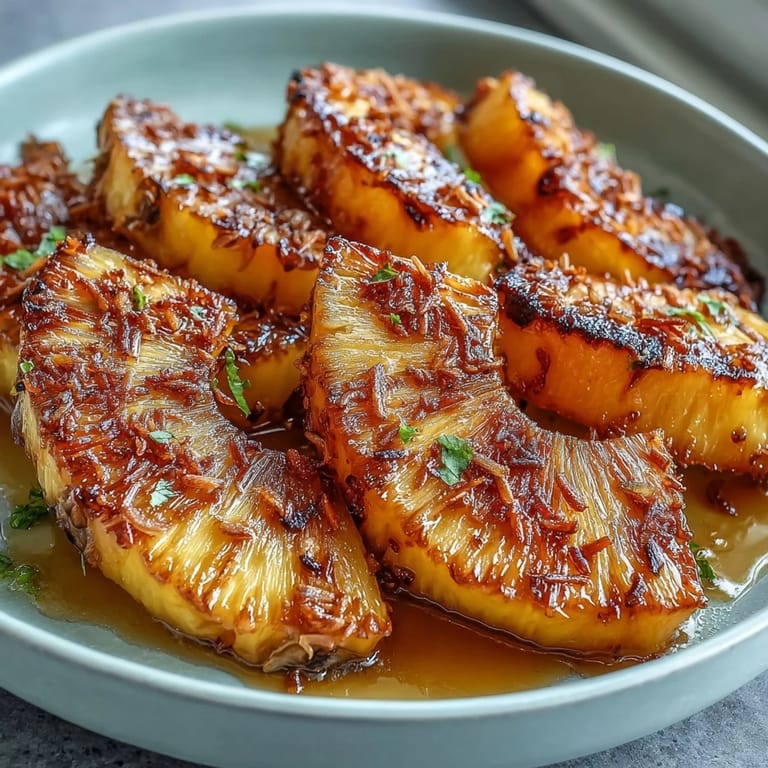
- Put the pineapple in the oven for 18 to 22 minutes, turning the wedges halfway through so everything caramelizes evenly. You'll know it's ready when the edges look golden and a bit crispy.
- Toast the coconut while the fruit roasts:
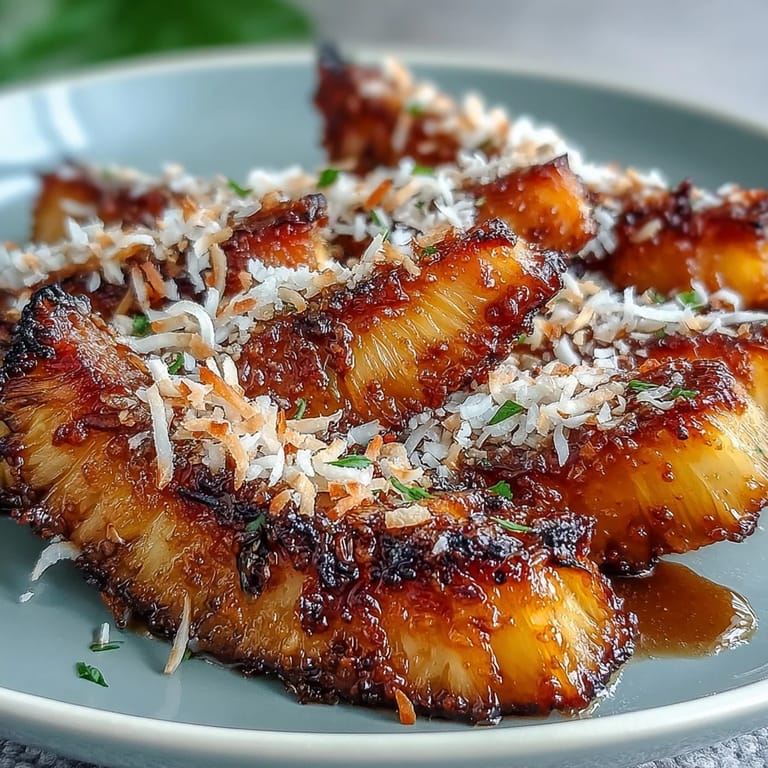
- Put shredded coconut in a dry skillet over medium heat and stir it constantly for about 2 to 3 minutes until it smells nutty and toasty and turns light golden. Transfer it immediately to a plate so it stops cooking and doesn't burn.
- Bring it all together on the plate:
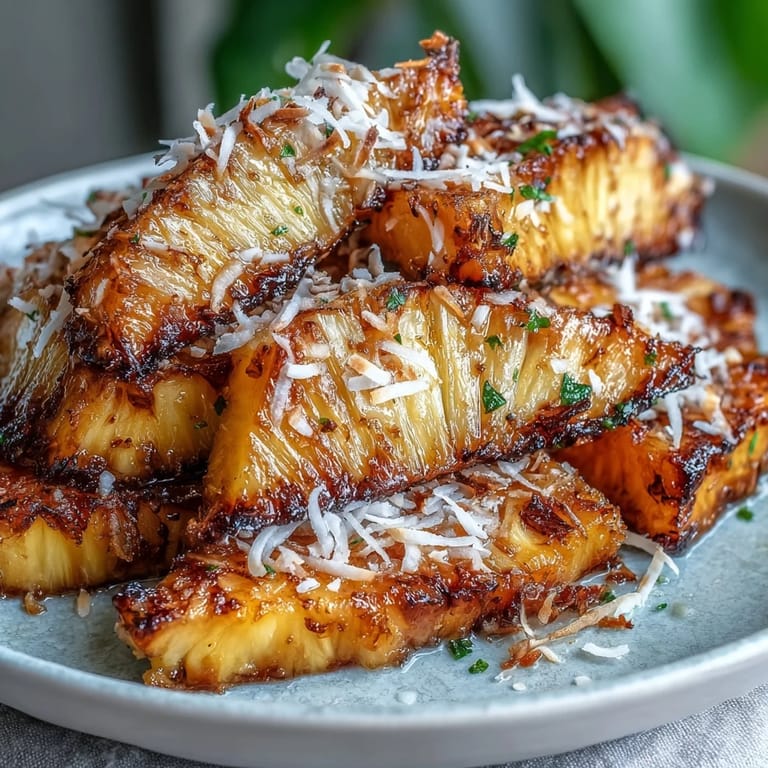
- Arrange the warm roasted pineapple on a serving platter and sprinkle that toasted coconut over top right before serving. Serve it warm or at room temperature—both work, but warm is definitely the move if you're feeling fancy.
 Save
Save There was a moment when my mom took a bite and closed her eyes, and I realized this dessert had transcended the simple ingredients it was made from and become something that made people slow down and actually taste their food. That's when I knew this recipe was worth keeping.
Why This Works as a Dessert
Roasted fruit develops natural sugars and caramelizes in a way that fresh fruit never can, so you get sweetness with depth instead of just sugar on top of fruit. The honey glaze doesn't just coat the pineapple—it actually bonds with the natural sugars and creates these crispy, almost candy-like edges that make people forget they're eating something technically healthy.
Serving Suggestions That Actually Matter
Vanilla ice cream melting into warm roasted pineapple is honestly transcendent, and Greek yogurt brings a tanginess that complements the sweetness without making it feel heavy. You could also serve this alongside a simple cookie or over a slice of cake if you're building a more elaborate dessert moment.
Make It Your Own
This recipe is a foundation, not a prison, so feel free to play with what you have on hand and what sounds good to you. The lime and honey are the stars, but everything else can shift based on your mood and your pantry.
- Try a tiny sprinkle of chili powder over the coconut for heat that wakes up your palate without overwhelming the tropical flavors.
- Maple syrup works beautifully in place of honey if that's what you have, and it brings a slightly deeper flavor that some people prefer.
- For a vegan version, use coconut oil instead of butter and maple syrup instead of honey, and suddenly this dessert works for anyone at your table.
 Save
Save This is the kind of dessert that feels like a gift to yourself without the guilt, and it proves that sometimes the simplest combinations are the ones that stick with you longest. Make it once and you'll find yourself thinking about it at random moments for weeks.
Recipe FAQs
- → What is the best pineapple to use for roasting?
Choose a ripe, fresh pineapple with a fragrant aroma and golden skin for optimal sweetness and texture.
- → How does the honey-lime glaze affect the pineapple?
The glaze caramelizes during roasting, enhancing natural sweetness and adding a tangy brightness from the lime.
- → Why toast the shredded coconut separately?
Toasting brings out the coconut's rich aroma and crunchy texture, providing a contrasting topping for the soft pineapple.
- → Can this dish be prepared vegan?
Yes, substitute butter with coconut oil and use maple syrup instead of honey to keep it plant-based.
- → How should the roasted pineapple be served?
Serve warm or at room temperature, optionally with vanilla ice cream or Greek yogurt for a creamy complement.