 Save
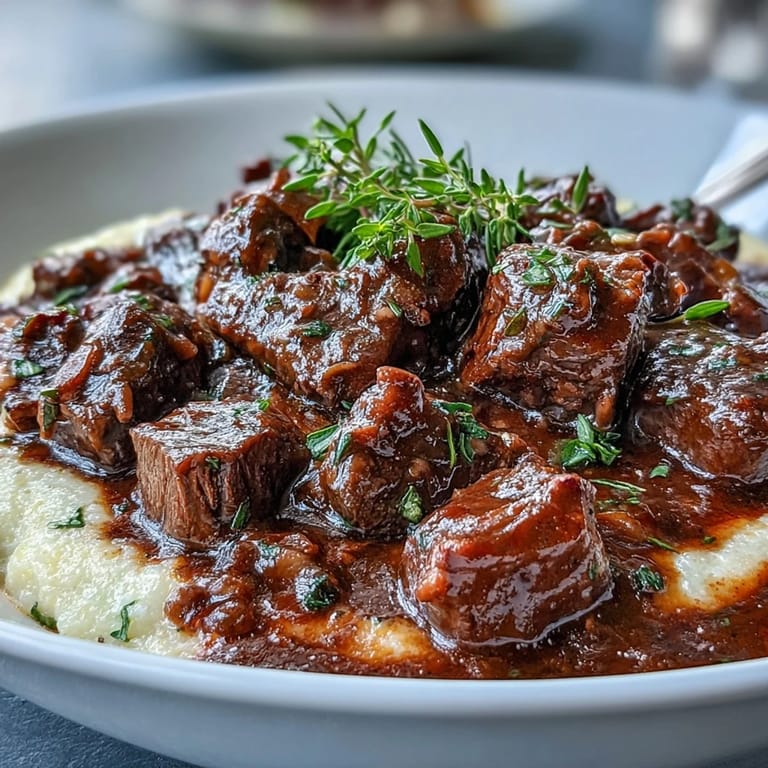
Save My neighbor dropped off a package of venison one December evening, wrapped in brown paper and tied with kitchen string. I had no idea what to do with it until I spotted the dusty bottle of sloe gin my aunt had made years ago, tucked behind the vinegar. The idea hit me all at once: something slow, something warm, something that would fill the house with the kind of smell that makes you cancel plans and stay home. That stew turned into the dish I make whenever winter feels too long.
I made this for a small dinner party once, and everyone went quiet after the first bite. One friend, who usually talks through entire meals, just looked up and said, that is really good. The polenta disappeared faster than I expected, and I had to scrape the pot to give everyone seconds. It was one of those nights where the food made the evening feel special without anyone trying too hard.
Ingredients
- Venison shoulder or stewing venison: This cut has enough fat and connective tissue to stay moist during the long braise, and it develops a deep, earthy flavor that lean cuts just cannot match.
- Olive oil: Use enough to get a proper sear on the meat, the browned bits stuck to the pan are where half the flavor lives.
- Onion, carrots, and celery: The classic trio that builds sweetness and body into the base, I chop them small so they melt into the sauce rather than sitting in chunks.
- Garlic cloves: Mince them fine and add them just before the tomato paste so they bloom without burning.
- Tomato paste: A spoonful adds umami and helps thicken the sauce, cook it for a full minute to lose the tinny taste.
- Sloe gin: This is the magic ingredient, tart and floral with a hint of almond, it cuts through the richness and makes the whole pot taste like something you cannot quite name.
- Beef or game stock: Use the best you can find or make, it becomes the backbone of the sauce and weak stock means weak stew.
- Redcurrant jelly: Just a spoonful brings a gentle sweetness and a glossy finish, it is not optional even though it sounds fancy.
- Bay leaves and fresh thyme: These add quiet herbal notes that deepen as the stew simmers, pull them out before serving or someone will bite into a leathery leaf.
- Juniper berries: Crush them lightly with the side of a knife to release their piney, gin like aroma, they pair beautifully with venison.
- Polenta: I use quick cooking because life is short, but traditional polenta has a creamier texture if you have the patience to stir it for half an hour.
- Whole milk and water: The milk makes the polenta rich and silky, water alone turns it grainy and sad.
- Unsalted butter and Parmesan: Stir these in at the end for a glossy, luxurious finish that tastes like you went to culinary school.
Tired of Takeout? 🥡
Get 10 meals you can make faster than delivery arrives. Seriously.
One email. No spam. Unsubscribe anytime.
Instructions
- Brown the venison:
- Heat the olive oil until it shimmers, then add the venison in batches without crowding the pan. Let each piece sit undisturbed for a minute or two until it develops a deep brown crust, then turn and repeat. Set the browned meat aside and do not worry if the pan looks messy, that is flavor waiting to happen.
- Soften the vegetables:
- Add the onion, carrots, and celery to the same pan and let them cook in the leftover oil and fond until they start to color at the edges. Stir in the garlic and tomato paste, cooking for another minute until everything smells sweet and concentrated.
- Deglaze with sloe gin:
- Return the venison to the pan and pour in the sloe gin, scraping up all the browned bits stuck to the bottom. Let it bubble and reduce for a couple of minutes until the raw alcohol smell fades and the liquid thickens slightly.
- Build the stew:
- Add the stock, redcurrant jelly, bay leaves, thyme, and crushed juniper berries, then season generously with salt and pepper. Bring everything to a gentle simmer, cover with a lid, and lower the heat until the surface barely trembles.
- Simmer low and slow:
- Let the stew cook gently for about two hours, stirring every half hour or so to make sure nothing sticks. The venison is ready when it pulls apart easily with a spoon and the sauce has thickened into something glossy and rich.
- Make the polenta:
- While the stew finishes, heat the milk and water in a saucepan until it just starts to steam. Pour in the polenta in a slow, steady stream while whisking constantly to prevent lumps, then keep stirring over low heat until it thickens and pulls away from the sides of the pan.
- Finish the polenta:
- Stir in the butter and Parmesan, tasting and adding salt as needed. The polenta should be creamy enough to pour slowly off a spoon, if it is too thick, whisk in a splash more milk.
- Serve:
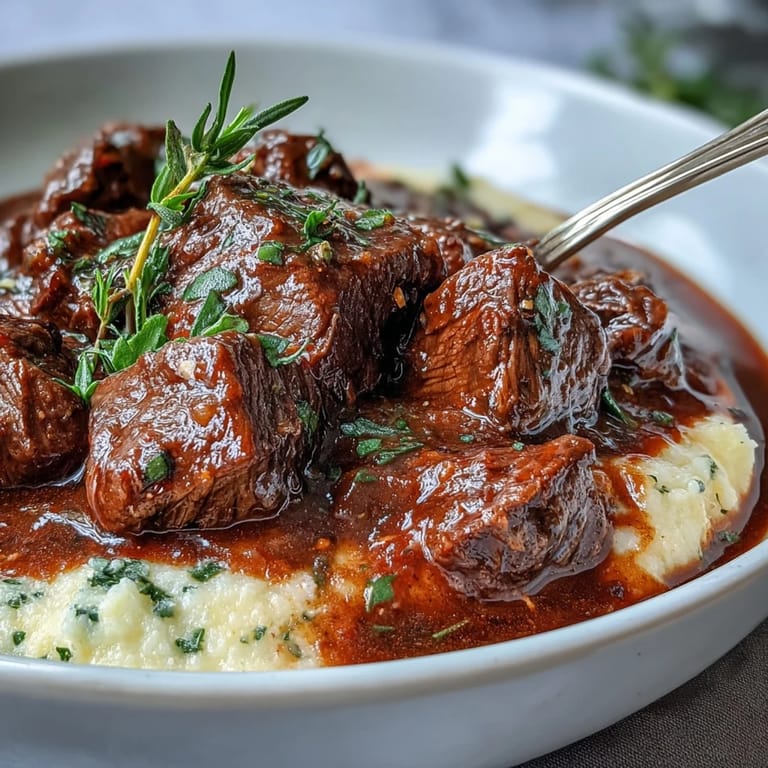
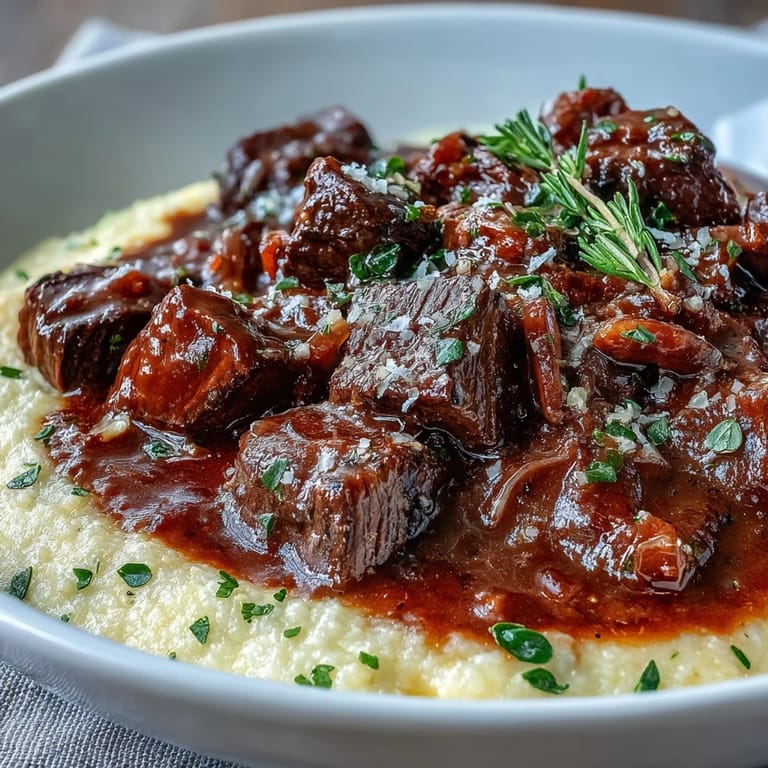
- Fish out the bay leaves and thyme sprigs from the stew, then ladle generous portions of polenta into shallow bowls and top with the venison and sauce. The polenta will soak up the juices and turn into something almost too good to share.
 Save
Save The first time I served this, I was worried the sloe gin would be too strong or too weird, but it melted into the background and just made everything taste deeper and more interesting. My dad, who usually sticks to plain roasts, asked for the recipe. That is when I knew it was a keeper.
Choosing Your Venison
Shoulder or stewing cuts are your best bet because they have enough marbling and connective tissue to stay moist during the long braise. Lean cuts like loin or backstrap will dry out and turn tough no matter how carefully you cook them. If you are lucky enough to have a hunter in the family, ask for the tougher cuts they might otherwise grind, those are perfect for stew and often free.
Getting the Most from Sloe Gin
Sloe gin is not as sweet as regular gin, it has a tart, almost plummy flavor that works beautifully with game. If you cannot find it, a good port or a berry liqueur like cassis will give you a similar depth, though the flavor will lean sweeter. I tried it once with regular gin and a spoonful of jam, and it tasted like a mistake, so stick with the real thing or a close substitute.
Storing and Reheating
This stew tastes even better the next day after the flavors have had time to settle and marry. Store it in the fridge for up to three days, or freeze it in portions for up to three months. Reheat gently on the stove with a splash of stock or water to loosen the sauce, and make fresh polenta when you are ready to serve.
- Let the stew cool completely before transferring it to airtight containers to prevent condensation and sogginess.
- Polenta does not freeze or reheat well, so always make it fresh and only cook as much as you need.
- If the reheated stew tastes a little flat, a small pinch of salt and a grinding of black pepper will bring it back to life.
 Save
Save This is the kind of meal that makes winter feel intentional instead of something to endure. Serve it to people you want to linger at the table with, and do not be surprised if they ask when you are making it again.
Recipe FAQs
- → Can I substitute the venison with another meat?
Yes, beef chuck or lamb shoulder work well as alternatives. Use the same cooking time and method for tender results.
- → What can I use instead of sloe gin?
Port, berry liqueur, or a combination of red wine with a tablespoon of blackcurrant jam makes an excellent substitute.
- → Can I make this ahead of time?
Absolutely. The stew actually improves when made a day ahead. Reheat gently and prepare fresh polenta just before serving.
- → How do I prevent the polenta from becoming lumpy?
Whisk constantly while adding the polenta to simmering liquid in a steady stream. Keep stirring throughout cooking for smooth, creamy results.
- → What's the best cut of venison for stewing?
Shoulder or haunch are ideal for slow cooking. These cuts have enough connective tissue to become tender and flavorful during braising.
- → Can I cook this in a slow cooker?
Yes, brown the meat and vegetables first, then transfer to a slow cooker with remaining ingredients. Cook on low for 6-8 hours.