 Save
Save There's a particular Wednesday evening I still think about when I smell cumin in the market—I was struggling with a dinner party, unsure what to make, when my neighbor appeared at the door with a small bag of bulgur and a handful of fresh mint from her garden. She mentioned her grandmother's köfte without ceremony, just handed me the ingredients and said "trust the mixture." Two hours later, my kitchen smelled like somewhere I'd never been but somehow remembered, and my guests were asking for the recipe before they'd finished eating.
I'll never forget the first time I served these at a casual Sunday lunch with friends who thought I was overcomplicating things—until one of them took a bite and went completely quiet. That silence, then the slow nod of recognition, told me everything. Now they appear at every gathering I host, and I've stopped pretending the credit belongs anywhere but with this deceptively simple formula of meat, bulgur, and herbs.
Ingredients
- Ground beef or lamb (500 g): Use a mix if you can—lamb brings richness while beef keeps things from becoming too heavy, and the combination feels closer to what you'd find in Istanbul or Ankara.
- Fine bulgur (100 g): This isn't filler; it's what makes the texture tender and gives the meatballs that slightly springy bite that sets them apart from dense ground meat alone.
- Small onion, finely grated (1): Grate it rather than mince it so the moisture distributes evenly through the mixture, and the onion almost disappears into the meat.
- Garlic, minced (2 cloves): Fresh is absolutely the way here—those tiny bits become sweet and mellow as the meatballs cook.
- Fresh parsley, finely chopped (2 tbsp): This is the backbone of the flavor, not just decoration, so don't skimp or substitute dried if you can help it.
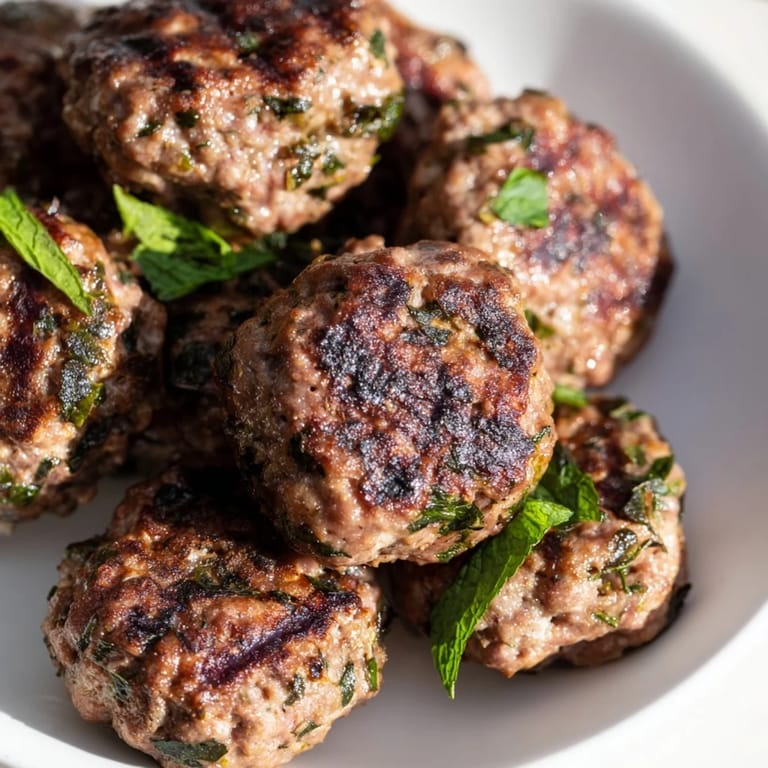
- Fresh mint, finely chopped (1 tbsp): It sounds delicate but it's crucial—it's what makes people pause mid-bite and wonder what they're tasting.
- Ground cumin (1 tsp): Toast it briefly in a dry pan before adding if you want to deepen the spice, though it's not strictly necessary.
- Paprika (1 tsp): This gives warmth and a gentle sweetness that balances the savory elements.
- Ground black pepper (½ tsp): Freshly ground makes a noticeable difference in brightness.
- Chili flakes (½ tsp, optional): These are for people who like their köfte with a whisper of heat; leave them out if you're cooking for anyone hesitant about spice.
- Salt (1 tsp): Start with this amount and taste the raw mixture before cooking to adjust—some people's hands are sensitive to salt so trust your instinct.
- Large egg (1): This is your binder, what holds everything together without making the mixture dense or gluey.
- Olive oil (2–3 tbsp for pan-frying, or oil spray for grilling): Don't use anything fancy here; save your good oil for drizzling at the end if you like.
Tired of Takeout? 🥡
Get 10 meals you can make faster than delivery arrives. Seriously.
One email. No spam. Unsubscribe anytime.
Instructions
- Soften the bulgur:
- Pour warm water over the bulgur in a bowl and let it sit undisturbed for 10 minutes. You're not cooking it, just waking it up so it absorbs the flavors of everything else and adds moisture to the final mixture.
- Build the mixture:
- Add the meat, onion, garlic, herbs, and spices to the bulgur along with the egg. Use your clean hands to combine everything, squeezing gently as you go until the mixture is uniform and slightly sticky to the touch—this is when you know the egg is binding everything properly.
- Shape with damp hands:
- Wet your hands slightly so the mixture doesn't stick to your palms, then form small ovals or rounds roughly the size of a walnut. If the mixture feels too sticky, dampen your hands rather than adding more flour.
- Pan-fry for crust:
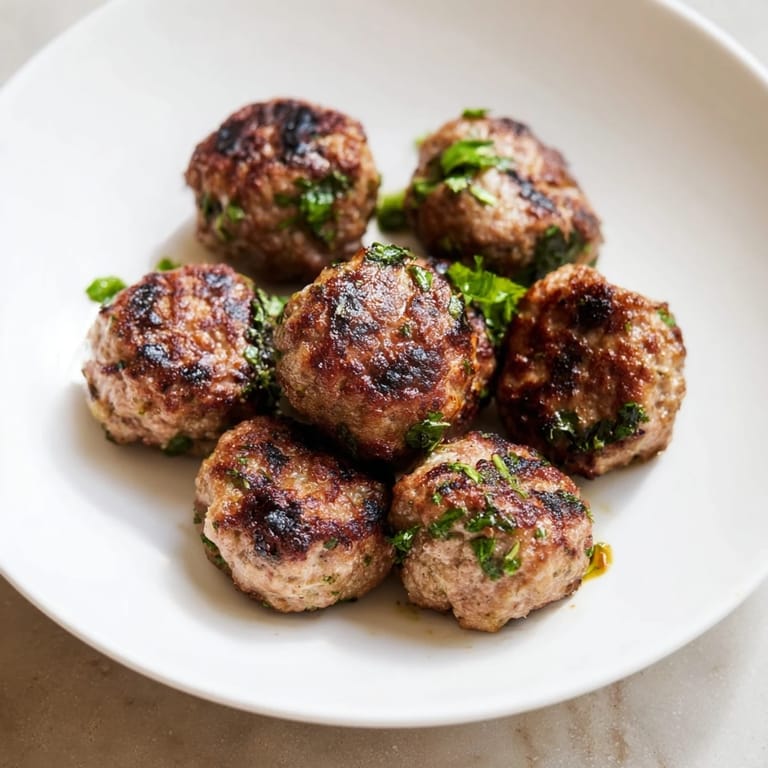
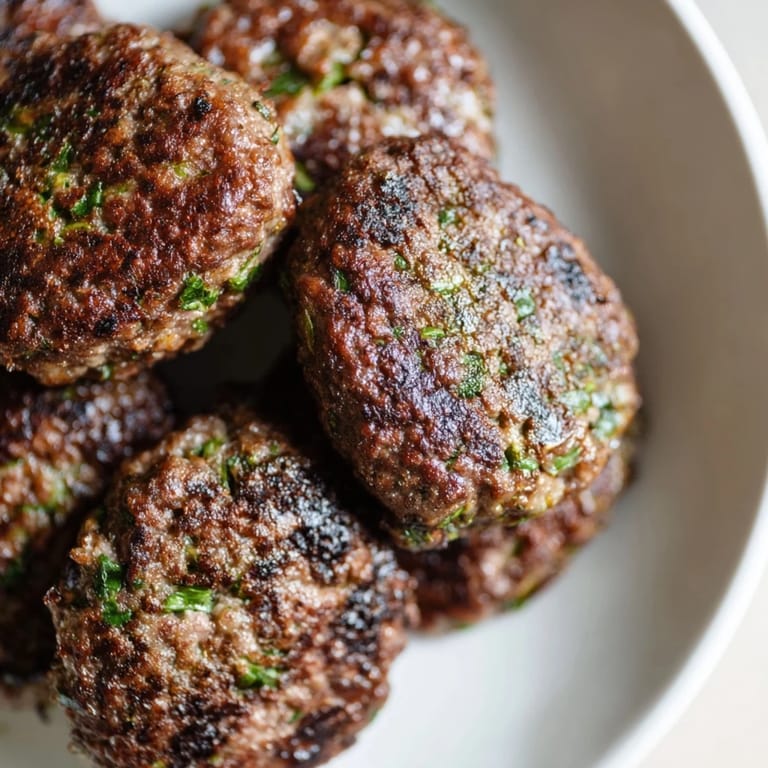
- Heat oil in a large skillet over medium heat until it shimmers slightly. Working in batches so you're not crowding the pan, add the meatballs and let them sit undisturbed for 3–4 minutes on the first side until they develop a deep golden color, then flip and cook the other side. The crust is what makes them feel special.
- Grill if you prefer:
- Preheat your grill to medium-high and lightly oil the grates or use oil spray. Grill the meatballs for 3–4 minutes per side, rotating just once, until they're nicely charred on the outside and cooked through.
- Serve while warm:
- These are best eaten soon after cooking while the exterior is still slightly crisp, served alongside rice, warm flatbread, or a bright salad that cuts through the richness.
 Save
Save There was an afternoon when I made these for my father, who'd mentioned missing the ones from a Istanbul street vendor he'd visited decades ago. Watching him close his eyes after the first bite, then slowly smile, I understood that food isn't really about technique or ingredients—it's about the moment it connects you to someone or somewhere you've missed.
The Bulgur Secret
Most people think meatballs are just meat, but bulgur is what separates these from the ordinary. It's a grain that's been parcooked and dried, so when you soak it, it swells with moisture and acts as both a binder and a lightener, keeping the meatballs tender rather than dense. The first time I understood this, I made a batch without it out of laziness, and they came out heavy and disappointing—the bulgur isn't padding, it's architecture.
Cooking Methods Matter
Pan-frying gives you control and a consistent golden crust on all sides, while grilling adds smoke and char that pushes the flavor in a different direction. I choose based on my mood and the season—pan-frying feels like a weeknight move, grilling feels like celebration. Both methods work beautifully; it's really about what kind of evening you're in the mood for and which tools are calling to you.
Serving and Variations
These meatballs adapt to whatever you're serving them alongside—they're equally at home on rice, nestled in warm pita with yogurt, or arranged on a platter with grilled vegetables for a lighter meal. The herbs are flexible too; if you find yourself without mint, you can lean a little heavier on the parsley, and if cinnamon or allspice is sitting in your spice cabinet, a pinch will add a subtle warmth that feels like a secret ingredient only you know about.
- For extra richness, serve with a simple yogurt sauce whisked with a touch of garlic and fresh lemon juice.
- These freeze beautifully raw—shape them, freeze on a tray, then transfer to a bag and cook directly from frozen, adding just a minute or two to the cooking time.
- Leftovers reheat gently in a warm oven or quick pan, though honestly they're wonderful cold the next day with a squeeze of lemon.
 Save
Save These köfte have become my answer to almost any question about what to cook, and I think that's because they're honest—just meat and herbs and intention, nothing hiding behind complexity. They remind me that sometimes the most satisfying meals are built from a handful of good ingredients and the willingness to get your hands a little messy in the kitchen.
Recipe FAQs
- → What gives Turkish köfte their unique flavor?
The combination of fresh herbs like parsley and mint, along with spices such as cumin and paprika, creates their distinctive aromatic taste.
- → Why is bulgur used in the mixture?
Bulgur adds texture and helps to bind the meat mixture, keeping the meatballs tender and juicy.
- → Can I choose between grilling and pan-frying?
Yes, both methods work well. Grilling adds a smoky char, while pan-frying gives a golden crisp exterior.
- → How do I prevent meatballs from falling apart during cooking?
Mix ingredients thoroughly and ensure the mixture is slightly sticky to help the meatballs hold their shape.
- → What are suitable side dishes to serve alongside?
Rice, fresh salads, flatbread, or grilled vegetables complement these meatballs perfectly.