 Save
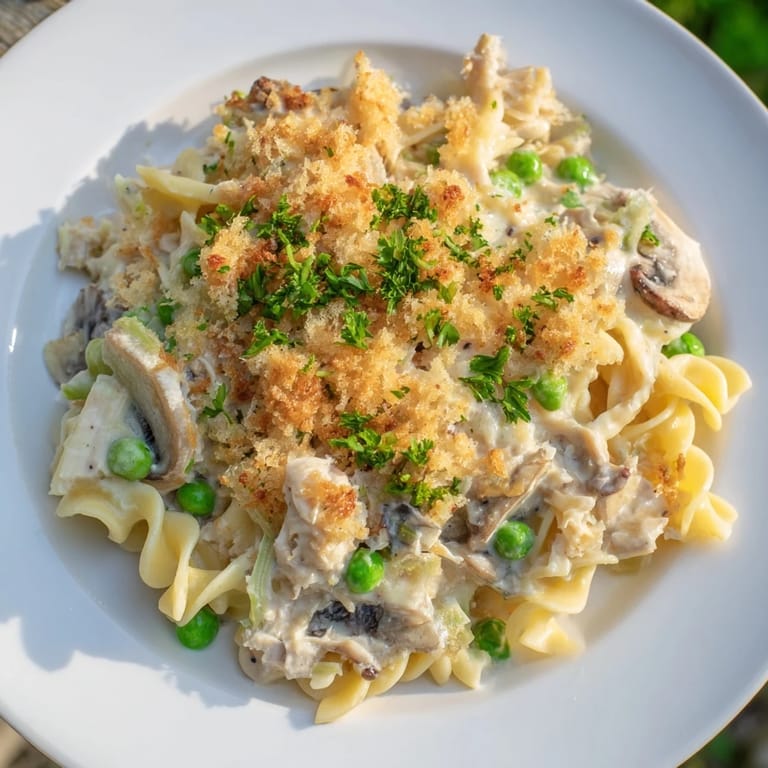
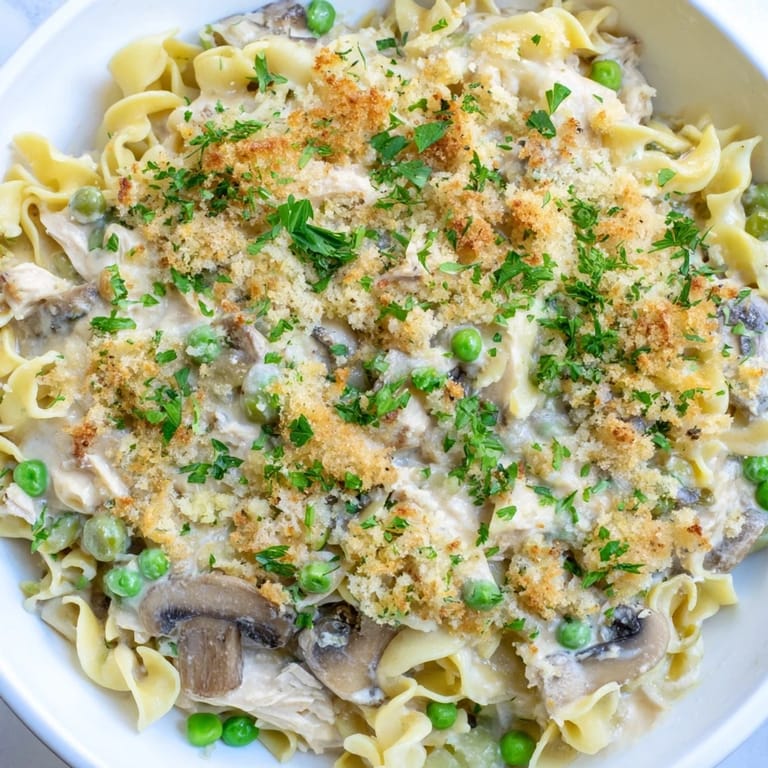
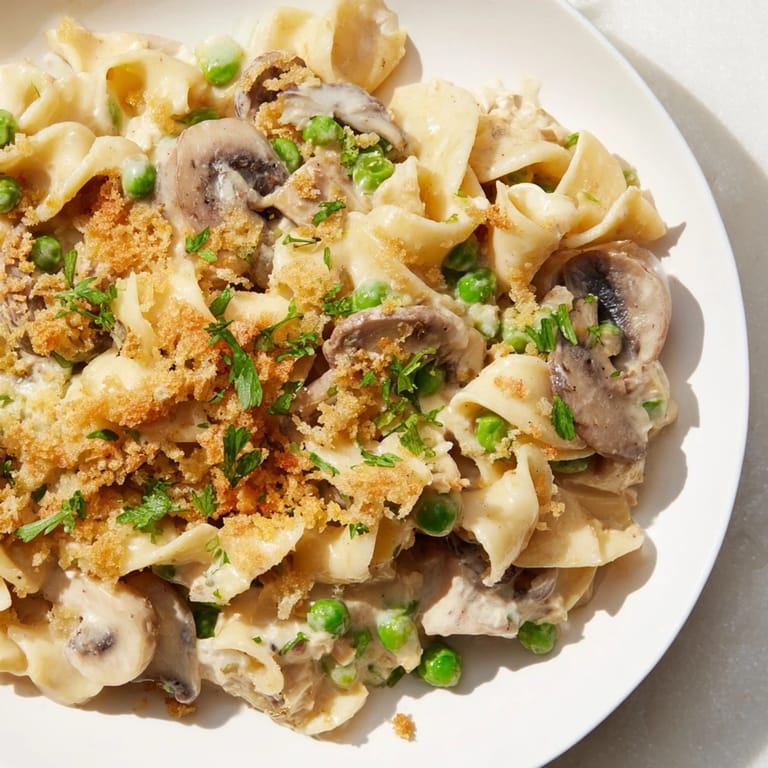
Save My mom called one Tuesday asking if I remembered her tuna noodle casserole from high school potlucks. I didn't, really—just a vague memory of something beige and forgettable. But when I made this version for friends last month, something clicked. The mushrooms got dark and tender in butter, the sauce turned silky instead of gluey, and that crispy panko top crackled when you broke through it. Suddenly I understood what she'd been trying to do all those years.
I made this for my partner's coworkers during a casual dinner, and watching them ask for seconds while sitting in my tiny kitchen felt like winning something. One person actually said it reminded them why they loved comfort food in the first place—not because it's indulgent, but because it genuinely satisfies.
Ingredients
- Egg noodles (12 oz): The short, curly kind matters here; they hold the sauce and don't disappear into mush like long pasta would.
- Solid white tuna (2 cans, 5 oz each): Drain it well or your casserole turns watery—this is non-negotiable.
- Frozen peas (1 cup): Thaw them first so they don't drop the temperature of your sauce and turn everything icy.
- Cremini mushrooms (1 cup, sliced): They brown better than white mushrooms and add an earthy depth that elevates the whole dish.
- Yellow onion (1 small, finely chopped): Small pieces dissolve into the sauce instead of being chewy and obvious.
- Celery (1 cup, diced): Sounds old-fashioned but it's the foundation of flavor—don't skip it.
- Garlic (2 cloves, minced): A quick bloom in hot butter releases its sweetness without any harsh bite.
- Unsalted butter (3 tbsp for sauce): You control the salt this way, which matters when the broth and cheese are already seasoned.
- All-purpose flour (3 tbsp): This makes the roux that thickens everything; whisk it in slowly to avoid lumps.
- Low-sodium broth (2 cups): Chicken or vegetable both work, but taste yours first because some brands are quite salty.
- Whole milk (1 cup): Don't use skim; it'll make the sauce thin and less forgiving.
- Sour cream (1/2 cup): Added off heat so it stays smooth and tangy, not broken and grainy.
- Dijon mustard (1/2 tsp): Just enough to brighten the sauce without tasting like mustard.
- Kosher salt and black pepper (1/2 tsp each): Season gradually and taste as you go.
- Panko breadcrumbs (3/4 cup): Toast them in melted butter so they turn golden instead of staying pale and bland.
- Grated parmesan (1/2 cup): Freshly grated, not the green can—it melts into the panko and gets crispy at the edges.
- Fresh parsley (2 tbsp, optional): A small handful scattered on top at the end adds color and a fresh note that cuts the richness.
Tired of Takeout? 🥡
Get 10 meals you can make faster than delivery arrives. Seriously.
One email. No spam. Unsubscribe anytime.
Instructions
- Set your oven and prep:
- Heat the oven to 400°F and lightly butter or oil a 9x13-inch baking dish. This matters because a cold dish in a hot oven creates uneven cooking.
- Cook the noodles:
- Get a large pot of salted water boiling and cook the noodles until they're just al dente—tender but still with a tiny bit of resistance when you bite them. They'll soften more in the oven, so don't cook them all the way.
- Build the vegetable base:
- Melt the butter in a large skillet over medium heat and add the onion and celery. Let them soften for about 3 minutes, then add the sliced mushrooms and cook another 4 minutes until everything is tender and the mushrooms have released their moisture. Stir in the garlic and cook just until fragrant, about 1 minute.
- Make the sauce:
- Sprinkle the flour over the vegetables and stir constantly for about 1 minute so it coats everything evenly and the raw flour taste cooks out. Slowly pour in the broth while stirring to avoid lumps, then add the milk and let the whole thing come to a gentle simmer. Keep stirring until it thickens, which takes about 3 to 4 minutes—you'll feel the resistance change as you whisk.
- Season and finish the sauce:
- Remove the skillet from heat and stir in the sour cream, Dijon mustard, salt, and pepper. Taste it and adjust—this is your chance to get the seasoning right before everything goes into the casserole.
- Combine everything:
- Fold in the drained tuna, thawed peas, and cooked noodles gently so the tuna stays in chunks instead of breaking apart. Pour the whole thing into your prepared baking dish and spread it evenly.
- Make the crispy topping:
- Mix the panko, grated parmesan, and melted butter together in a small bowl until the breadcrumbs are evenly coated and look like coarse sand. Sprinkle it over the casserole in an even layer.
- Bake:
- Slide the casserole into the oven for 20 to 25 minutes, until the topping is golden brown and the edges are bubbling slightly. You'll know it's done when you can see the cream sauce peeking out around the edges and the panko is crispy and tan.
- Rest and serve:
- Let it sit for 5 minutes before serving so it sets up just enough to scoop neatly. Scatter the fresh parsley over top if you're using it, and serve while it's still warm.
 Save
Save There's something almost magical about pulling a bubbling casserole out of the oven and having people lean in for seconds before it's even cooled. This dish stops conversations because it tastes like someone actually cared about making it good.
Why This Works Better Than You'd Expect
Tuna noodle casserole has a reputation for being a sad, watery afterthought, mostly because people make it the lazy way—dumping canned soup over noodles and calling it done. This version is different because you're building a real sauce from butter, flour, and milk, which means it's creamy and controlled. The vegetables aren't just there to look busy; they're sautéed first so they add flavor and texture. And the panko topping isn't a thin dusting—it's thick enough to get crispy and golden, giving you that crucial contrast between the soft casserole underneath and the crunch on top.
Making It Your Own
The bones of this recipe are solid, but it's also forgiving enough to play with. Add a handful of shredded cheddar or gruyère to the sauce if you want more richness and depth. Swap Greek yogurt for the sour cream if you're looking for something lighter, though the sour cream's tang is what keeps the whole dish from feeling heavy. Some people stir in a small handful of crispy bacon or diced ham, and honestly, it's not wrong—you're just making it more intentional.
What To Serve Alongside
This casserole doesn't need much—it's already a complete meal with protein, carbs, and vegetables all in one dish. A simple green salad with a sharp vinaigrette cuts through the richness and keeps things from feeling too heavy. If you want to drink something with it, a crisp white wine like Sauvignon Blanc or Pinot Grigio is perfect because the acidity wakes up your palate between bites.
- A fresh green salad with lemon vinaigrette balances the creamy casserole beautifully.
- Crusty bread is optional but nice for soaking up any extra sauce on your plate.
- Skip the heavy side dishes—the casserole is already rich and filling enough.
 Save
Save This is the kind of dish that reminds you why comfort food exists in the first place. Make it, watch people's faces when they taste it, and feel quietly proud of yourself.
Recipe FAQs
- → What type of noodles work best in this dish?
Egg noodles hold the sauce well and provide a tender bite, making them ideal for this creamy tuna and vegetable mix.
- → Can I substitute the dairy ingredients?
Yes, using Greek yogurt instead of sour cream can create a lighter texture while keeping creaminess intact.
- → What vegetables complement the flavors here?
Peas, mushrooms, celery, and onion add freshness and depth, balancing the rich sauce and tuna.
- → How is the crispy topping made?
A mixture of panko breadcrumbs, parmesan cheese, and melted butter forms a golden, crunchy layer when baked.
- → Can I prepare this in advance?
Yes, assembling ahead and baking just before serving helps meld flavors and achieve the best topping texture.