 Save
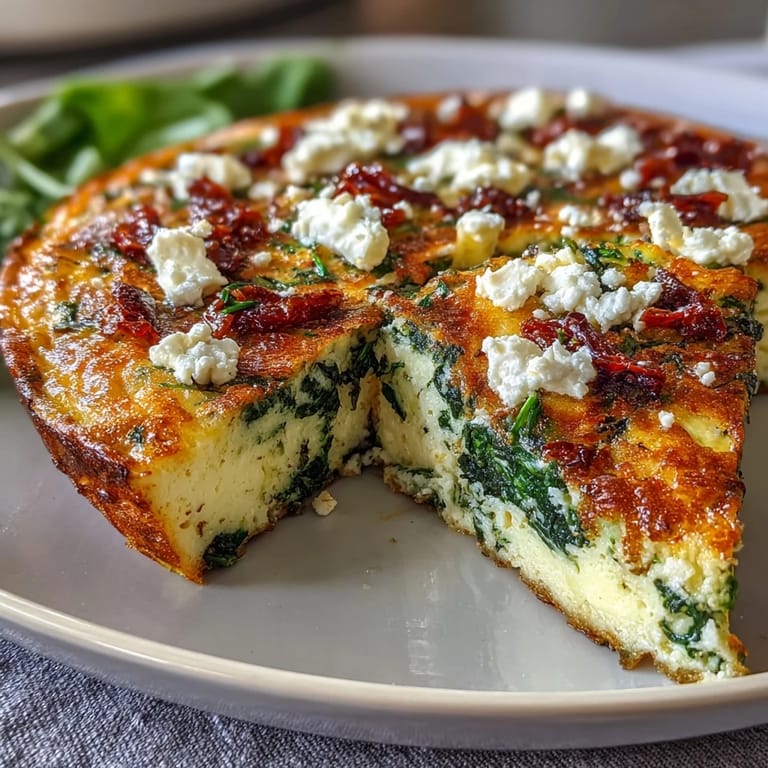
Save There's something magical about the moment when a frittata puffs up in the oven—that brief window where you peek through the glass and watch it transform from a runny custard into something substantial and golden. I discovered this particular version on a lazy Sunday when my fridge held spinach that needed using, a jar of sun-dried tomatoes I'd been saving, and half a block of feta that felt like it was calling out for purpose. What started as improvisation became the dish I now make whenever I need something that feels both indulgent and somehow virtuous at the same time.
I made this for my neighbor last spring when she'd just moved in, and I wanted to bring something that felt neighborly but not overly formal. Watching her face light up when she took that first bite—the way she immediately asked for the recipe—reminded me that food doesn't need to be complicated to be memorable. It's become our standing Sunday brunch now, and she's added roasted red peppers to hers while I've stuck with the original.
Ingredients
- Fresh baby spinach: Two cups might seem like a lot, but it wilts down dramatically—use it loosely chopped rather than finely minced so it maintains some texture.
- Sun-dried tomatoes: The ones packed in oil are essential here; they're already tender and bring concentrated sweetness that balances the salty cheese beautifully.
- Yellow onion: Dice it small so it cooks completely and distributes evenly throughout; raw onion bits would be jarring against the delicate custard.
- Garlic: One clove is honest—more would overpower the subtle Mediterranean vibe you're building.
- Large eggs: Six eggs creates that perfect custard-like texture; using smaller eggs would make it too custardy, using more would make it too dense.
- Whole milk: This prevents the eggs from setting too firmly; it keeps everything creamy rather than rubbery.
- Feta cheese: Crumble it by hand rather than using pre-crumbled if you can; the larger irregular pieces distribute more evenly and add textural interest.
- Parmesan cheese: Freshly grated makes a difference in how it melts and browns on top.
- Dried oregano: This is your Mediterranean anchor; it whispers rather than shouts, which is exactly what you want here.
- Olive oil: Use something you'd actually taste because you will taste it; this isn't the place for your cheapest bottle.
Tired of Takeout? 🥡
Get 10 meals you can make faster than delivery arrives. Seriously.
One email. No spam. Unsubscribe anytime.
Instructions
- Get your oven ready:
- Set it to 375°F (190°C) before you start anything else—this matters because you want it fully preheated when your frittata is ready for the oven.
- Build your base:
- Heat olive oil in your ovenproof skillet over medium heat, then add the diced onion and let it soften for 3 to 4 minutes until it's translucent and smells sweet. Add the garlic and cook for just a minute more—you're looking for that moment when it becomes fragrant but hasn't started to brown.
- Wilt the spinach:
- Stir in your chopped spinach and watch it shrink dramatically in about 2 minutes; you'll go from a skillet that looks overflowing to one that looks almost empty, which is exactly right. Add the sun-dried tomatoes and stir everything together for another minute so the flavors start mingling.
- Make your egg custard:
- In a separate bowl, whisk together the eggs and milk with the oregano, salt, and pepper until everything is fully combined and the mixture is pale and slightly frothy. Stir in your crumbled feta and grated Parmesan, and notice how the cheese doesn't fully melt into the eggs—those little pockets are where the flavor lives.
- Combine and set the edges:
- Pour the egg mixture over the vegetables in the skillet, give it one gentle stir so everything is distributed, then let it sit on the stovetop over medium heat for 2 to 3 minutes. You'll see the edges start to set while the center remains jiggly—this is perfect because the oven will finish the job.
- Finish in the oven:
- Transfer your skillet to the preheated oven (use an oven mitt because that handle is hot) and bake for 10 to 12 minutes until the center is just set and the top has turned a light golden brown. If you overbake it even slightly, the eggs become rubbery, so don't walk away—set a timer and check at 10 minutes.
- Cool and serve:
- Let it rest for a few minutes out of the oven so it firms up enough to slice cleanly without shattering; then cut it into wedges and serve warm or at room temperature.
 Save
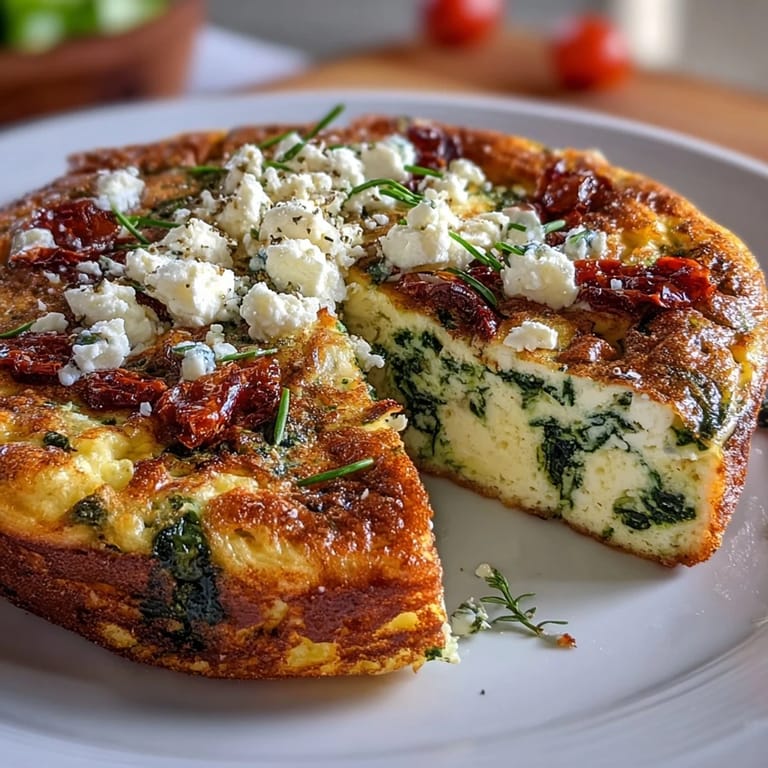
Save There's a moment of pure satisfaction when you pull that frittata from the oven and the whole thing jiggles slightly in the center—not in a scary way, just a gentle wobble that tells you it's cooked through but still tender. That's when I know I've made something worth sitting down for, whether it's just for me with coffee or for people who matter enough to invite over.
Why This Skillet Method Works
Starting on the stovetop sets the edges before you move to the oven, which means your frittata cooks more evenly and develops that slight textural difference between the cooked edges and the just-set center. It also means you get a bit of fond development in the pan where the eggs first touch the hot skillet, which adds depth. The oven then takes over for gentle, even heat that won't scramble the eggs or create hot spots that ruin the creamy texture you're after.
Flexibility and Variations
This frittata is endlessly adaptable once you understand the basic formula of six eggs, a quarter cup of milk, and about two cups of vegetables and cheese. You can swap the spinach for sautéed zucchini, replace sun-dried tomatoes with roasted red peppers, or use goat cheese instead of feta. The beauty is that you can't really mess it up as long as you don't overbake it and you keep your proportions roughly similar.
Serving and Storage Ideas
Serve this warm from the oven with crusty bread and a simple green salad, or bring it to room temperature and pack slices for lunch throughout the week—it actually gets easier to slice once it's fully cooled. A crisp white wine like Sauvignon Blanc pairs beautifully if you're eating this for brunch or dinner, and leftovers keep beautifully in the fridge for three days.
- Make it the night before and reheat gently in a 300°F oven for about 10 minutes if you're planning ahead.
- Try adding a handful of fresh herbs like dill or basil just before serving for brightness.
- If you're cooking for someone with dietary restrictions, this is naturally gluten-free and easily adaptable to dairy-free with the right cheese substitutes.
 Save
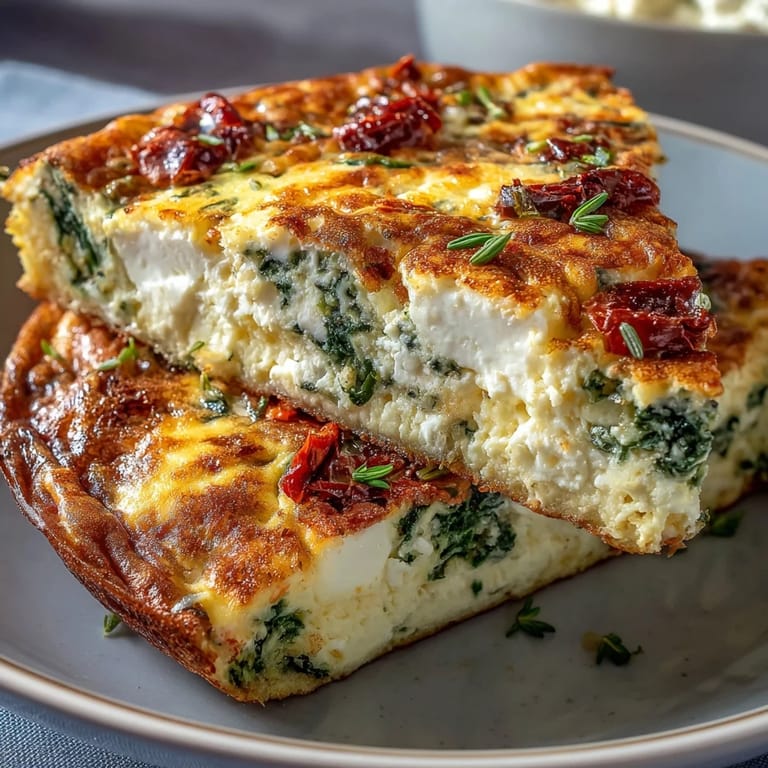
Save This frittata reminds me that some of the best meals come from listening to what's already in your kitchen rather than forcing an elaborate plan. It's the kind of dish that deserves a spot in your regular rotation.
Recipe FAQs
- → Can frozen spinach be used instead of fresh?
Yes, well-drained thawed frozen spinach works well and maintains the dish's texture and flavor.
- → How can I make this dish dairy-free?
Use plant-based feta alternatives and omit Parmesan cheese to keep similar flavors without dairy.
- → What is the best pan for cooking this frittata?
An ovenproof skillet about 10-inches wide is recommended for even cooking and easy transfer to the oven.
- → Can this dish be served cold?
While best served warm or at room temperature, it can also be enjoyed cold as a snack or light meal.
- → What wine pairs well with this dish?
A crisp white wine such as Sauvignon Blanc complements the tangy feta and savory vegetables nicely.