 Save
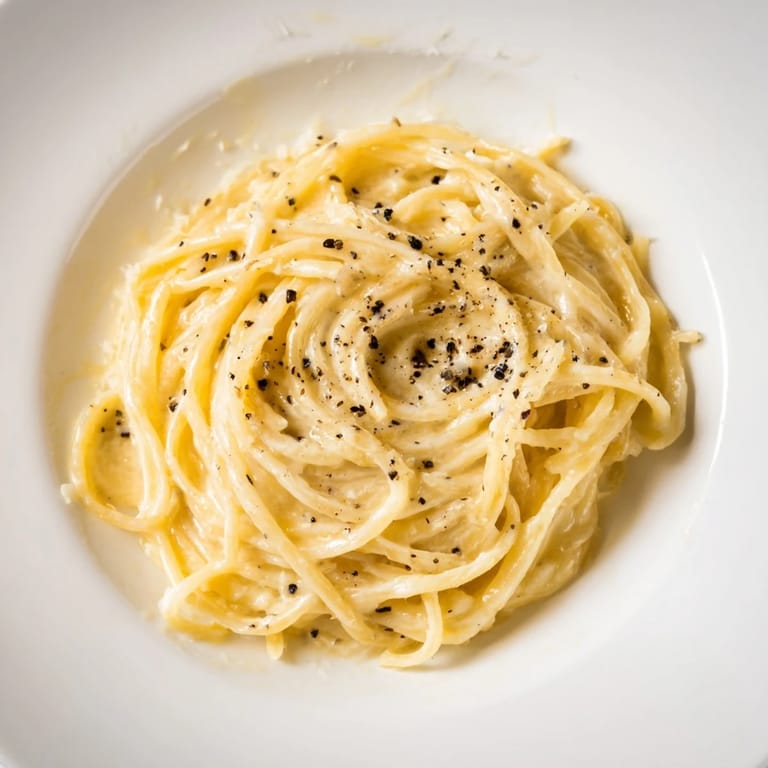
Save Discover the elegance of Roman simplicity with this authentic Spaghetti Cacio e Pepe. A true staple of Italian cuisine, this dish transforms humble pantry ingredients into a luxurious, creamy masterpiece that highlights the sharp tang of Pecorino Romano and the aromatic bite of freshly cracked black pepper.
Save The magic of this recipe lies in the emulsion of starchy pasta water and finely grated cheese. When combined correctly, they create a salty, peppery glaze that clings perfectly to every strand of spaghetti, offering a comforting yet sophisticated dining experience.
Ingredients
Tired of Takeout? 🥡
Get 10 meals you can make faster than delivery arrives. Seriously.
One email. No spam. Unsubscribe anytime.
- 400 g (14 oz) spaghetti
- 120 g (1 cup) Pecorino Romano cheese, finely grated
- 2 tsp freshly cracked black pepper, plus extra to serve
- Salt, for pasta water
Instructions
- Step 1
- Bring a large pot of salted water to a boil. Add the spaghetti and cook until just al dente, reserving 1 cup (240 ml) of the pasta cooking water before draining.
- Step 2
- Meanwhile, in a large skillet over low heat, toast the black pepper for 1–2 minutes until fragrant.
- Step 3
- Add about ½ cup (120 ml) of the reserved hot pasta water to the skillet with pepper and let it simmer.
- Step 4
- Add drained spaghetti to the skillet and toss to coat in the peppery water.
- Step 5
- Gradually sprinkle in the Pecorino Romano, tossing and stirring vigorously until the cheese melts and a creamy sauce forms, adding more reserved pasta water as needed to achieve a silky texture.
- Step 6
- Serve immediately, topped with extra Pecorino Romano and black pepper.
Zusatztipps für die Zubereitung
To ensure the best results, use only freshly grated Pecorino Romano. Pre-grated cheeses often contain anti-caking agents that prevent the cheese from melting smoothly. It is also crucial to work quickly when adding the cheese to the hot pasta to prevent clumping and ensure a silky finish.
Varianten und Anpassungen
If you prefer a milder flavor, you can substitute the Pecorino Romano with Parmigiano Reggiano. For those following a strict vegetarian diet, remember to double-check the cheese labels for vegetarian suitability, as traditional Pecorino often uses animal-based rennet.
Serviervorschläge
This Roman classic pairs beautifully with a crisp white wine such as Vermentino or Pinot Grigio, which provides a refreshing contrast to the salty cheese and spicy pepper. Serve immediately while the sauce is at its creamiest for the best texture.
 Save
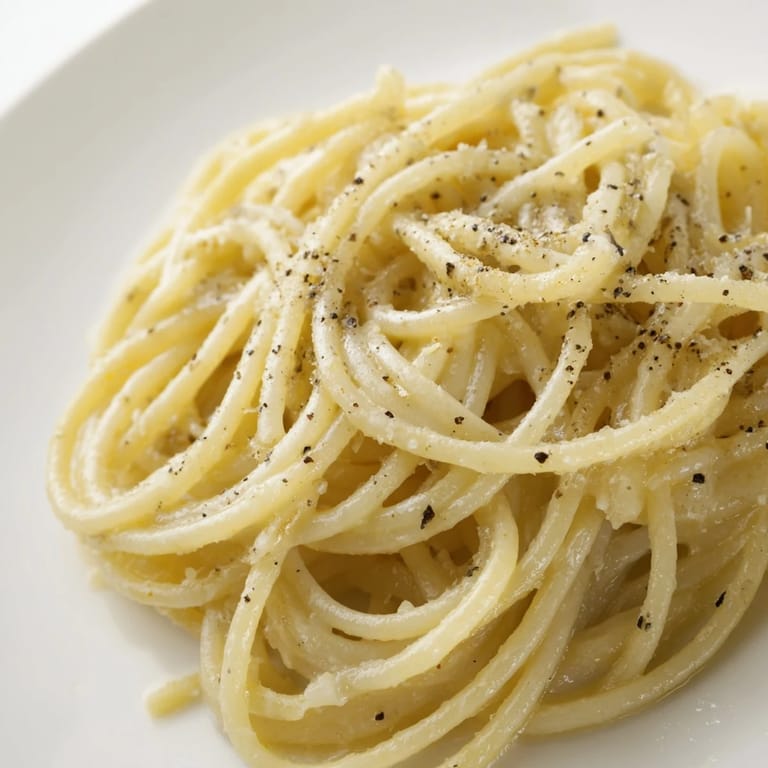
Save With these simple steps, you can bring the authentic taste of Rome into your own kitchen. Whether it's a quick lunch or a dinner party starter, Spaghetti Cacio e Pepe never fails to impress with its bold flavor and velvety finish.
Recipe FAQs
- → Why is pasta water important in this preparation?
Pasta water contains starch that emulsifies with the cheese and pepper, creating a silky sauce without cream. The starch acts as a binder, helping the Pecorino Romano coat the spaghetti evenly and achieving the signature creamy texture.
- → What type of Pecorino Romano should I use?
Use authentic Pecorino Romano that is freshly grated just before cooking. Pre-grated cheese contains anti-caking agents that prevent proper melting. Genuine Pecorino Romano has a sharp, salty flavor essential to this dish.
- → How do I prevent the cheese from clumping?
Work quickly and vigorously when adding the cheese, stirring constantly. Keep the heat low and add the cheese gradually in small handfuls. If clumping occurs, add more hot pasta water and continue stirring until smooth.
- → Can I substitute Parmigiano Reggiano for Pecorino Romano?
Yes, Parmigiano Reggiano is a suitable substitute, though it will produce a milder flavor. Pecorino Romano's sharper, saltier profile is traditional and creates the authentic taste profile of this Roman classic.
- → What wine pairs well with this dish?
Crisp white wines complement this rich, peppery pasta beautifully. Vermentino and Pinot Grigio are excellent choices, as their acidity and minerality balance the saltiness of the cheese and warmth of the black pepper.
- → How do I achieve al dente spaghetti?
Cook spaghetti according to package directions but taste at the minimum time suggested. The pasta should be tender yet slightly firm when bitten. Reserve pasta water before draining, then immediately add to the skillet to prevent overcooking.