 Save
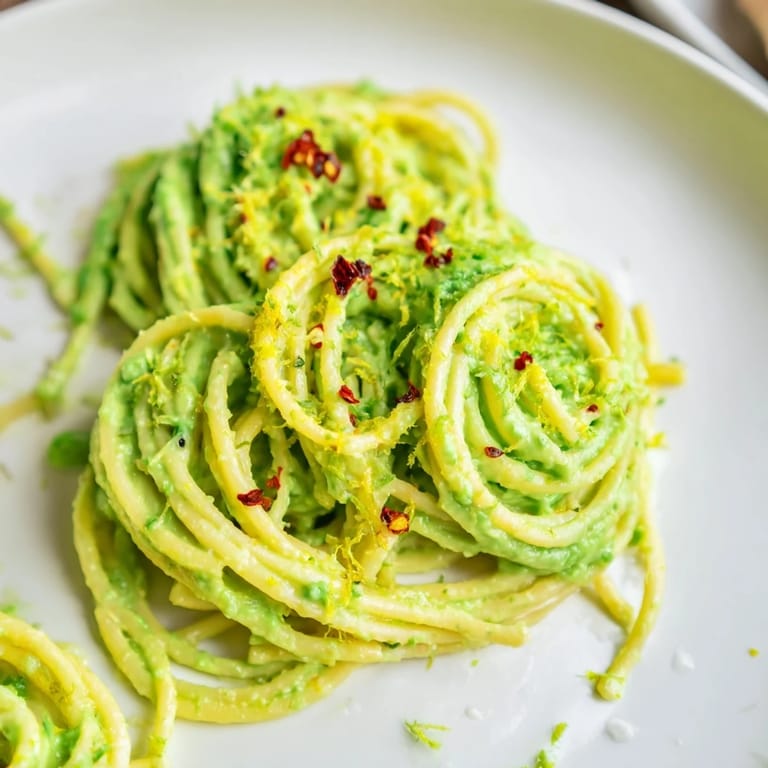
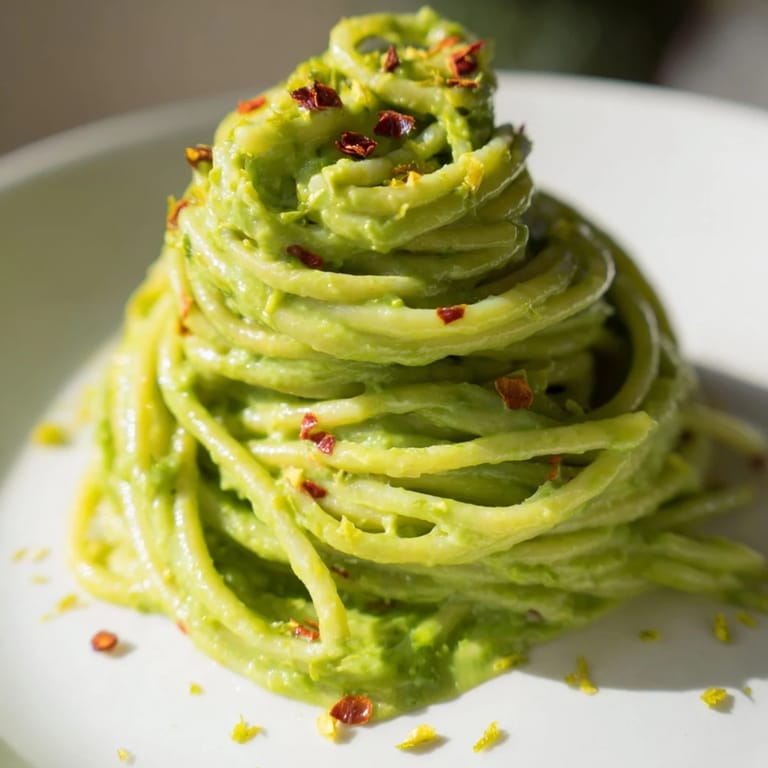
Save I discovered this pasta on a sweltering afternoon when my fridge held little more than two browning avocados, half a lime, and a box of spaghetti. What emerged was so unexpectedly silky and bright that I've made it countless times since, each bowl tasting like a small act of defiance against whatever chaos the day brought. The beauty of it is that the avocado becomes sauce without cream, olive oil, or pretense, just the fruit doing what it does best.
My partner came home starving one evening and watched skeptically as I mashed avocado into a bowl. By the third bite, they stopped talking and just kept twirling their fork, which I've learned is the highest compliment. That's when I realized this dish had moved from accident to repertoire.
Ingredients
- Spaghetti or linguine: 200 grams of thin, delicate pasta works best because it clings to the avocado sauce and doesn't weigh it down; thicker shapes like penne tend to overpower the subtle creaminess.
- Ripe avocados: Two are essential, and they must yield gently to thumb pressure without mushy brown spots; if you squeeze too hard you'll know you waited a day too long.
- Lime: Both juice and zest matter here, as the zest brings bitterness and brightness that keeps the dish from tasting flat or one-dimensional.
- Extra-virgin olive oil: One tablespoon is enough to help emulsify the avocado and prevent it from breaking into grainy bits when tossed with warm pasta.
- Garlic clove: Finely minced so it dissolves slightly into the sauce rather than creating hard little bits that feel like accidents.
- Chili flakes: A quarter teaspoon is my baseline, but it's easy to dial up or down depending on whether you like heat that creeps or heat that announces itself.
- Salt and black pepper: Taste as you go because avocado can mask seasoning until suddenly it can't, and you'll end up undersalted or surprised.
- Fresh basil or cilantro: Optional, but cilantro pairs with lime and chili in a way that feels intentional rather than decorative.
- Parmesan or vegan cheese: A small handful grated over the top adds savory depth, though some days I skip it entirely and the dish stands on its own.
Tired of Takeout? 🥡
Get 10 meals you can make faster than delivery arrives. Seriously.
One email. No spam. Unsubscribe anytime.
Instructions
- Boil your pasta water with intention:
- Fill a large pot about three-quarters full and salt the water generously so it tastes like the sea; this is your only chance to season the pasta itself. Let it roll at a full boil before you add the spaghetti so the pasta cooks evenly and finishes with a slight resistance when you bite it.
- Cook pasta to al dente:
- Follow the package timing but start testing a minute early because carryover cooking continues even after draining. When you bite a strand it should yield easily but have the gentlest firmness at its center.
- Reserve pasta water like liquid gold:
- Before draining, ladle out a quarter cup and set it beside your bowl; this starchy water is what transforms mashed avocado into sauce rather than guacamole. Don't skip this step or you'll end up tossing dry pasta with thick avocado paste.
- Halve and pit your avocados:
- Cut lengthwise around the pit, twist gently to separate, then tap the pit with your knife blade and twist to remove it without bruising the flesh. Scoop the creamy green interior into a bowl using a spoon, leaving the skin behind.
- Mash until mostly smooth:
- Use a fork and press firmly against the bottom of the bowl in circular motions, leaving behind a few small chunks for texture. You're aiming for the texture of chunky peanut butter, not baby food.
- Build your avocado base:
- Add lime juice and zest, olive oil, minced garlic, chili flakes, salt, and pepper all at once and fold them together gently so the garlic distributes evenly. Taste it before the pasta arrives and adjust the lime or salt because this is your moment to get the flavors right.
- Combine pasta with avocado while pasta is still warm:
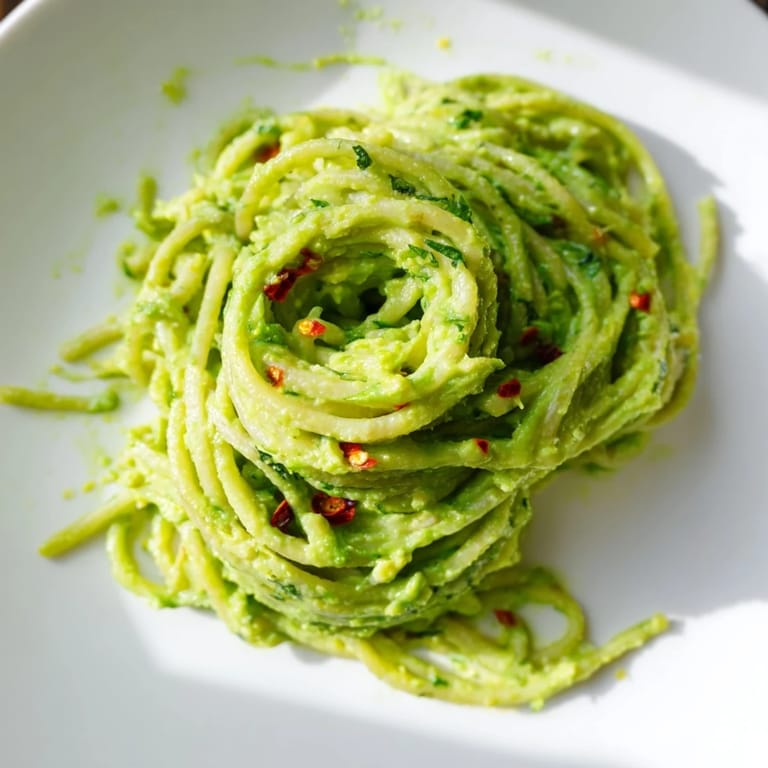
- Tip the drained pasta into the avocado mixture and toss with a fork and spoon, using lifting motions that coat every strand rather than smashing motions that bruise the avocado. Add reserved pasta water slowly, a splash at a time, until the sauce becomes glossy and creamy rather than chunky.
- Serve immediately while everything is warm:
- Divide between bowls and garnish with fresh herbs, extra chili flakes, Parmesan if using, and lime wedges for squeezing at the table. The warmth of the pasta combined with the coolness of avocado creates a texture that deteriorates the moment it sits, so eat right away.
 Save
Save A friend who claims she doesn't cook asked to watch me make this one afternoon, and by the time I finished she was already planning to make it for her own dinner that night. Watching someone realize they can feed themselves something beautiful in less time than ordering takeout often feels like the real victory.
When Avocados Disappoint
Sometimes you cut open an avocado expecting creamy gold and find dark strings or an interior that looks grainy instead of smooth. This happens when you buy fruit that looked perfect on the outside but ripened unevenly, which is infuriating but recoverable; if the flesh is still mostly creamy, mash it anyway and add an extra splash of lime juice and a teaspoon of Greek yogurt to smooth out the texture. If it's truly mealy or brown, order something else for dinner because no amount of sauce-making will fix the fundamental problem of fruit that never ripened properly.
Swaps and Variations That Work
The skeleton of this dish is flexible enough to absorb changes without falling apart. I've made it with crème fraîche stirred in for richness, with fresh chopped chili instead of flakes for people who prefer larger heat pockets, with arugula tossed in at the end for peppery brightness, and even with a handful of toasted breadcrumbs scattered on top for people who need texture. The only real constants are pasta, avocado, and lime; everything else exists in conversation with what you have and what you're craving that particular evening.
Timing and Reality
Twenty minutes is accurate if you start with everything in reach and avocados that cooperate, but real kitchens are messier than that. You might spend five minutes hunting for a knife sharp enough to cut avocado skin cleanly, another few minutes fishing for the pit, and if your water doesn't boil immediately your timeline shifts. Build in buffer time and don't stress if you're eating at twenty-five minutes instead of twenty; the dish still comes together faster than anything else worthy of the name dinner.
- Cut and pit avocados just before tossing so they don't oxidize and turn dark at the edges.
- If your pasta finishes before the avocado mixture is ready, drain it and toss it with a splash of olive oil so it doesn't clump while waiting.
- Taste and adjust seasoning right before serving because avocado and lime can taste different depending on what you had for lunch.
 Save
Save This pasta reminds me that the simplest meals often taste the most memorable, and that avocado, lime, and chili together are proof that you don't need a long ingredient list to feel cared for. Make it tonight if the mood strikes, or bookmark it for one of those evenings when hunger hits and inspiration hasn't.
Recipe FAQs
- → Can I make this ahead of time?
This dish is best served immediately after tossing to maintain the creamy texture and vibrant avocado flavor. However, you can prepare the avocado mixture up to 2 hours in advance and store it covered with plastic wrap directly on the surface to prevent browning.
- → What type of pasta works best?
Spaghetti or linguine are ideal as their surface area helps capture the creamy avocado sauce. You can also use penne, fettuccine, or any long pasta variety. For gluten-free options, use certified gluten-free pasta prepared according to package directions.
- → How do I prevent the avocado from browning?
Add the lime juice immediately after mashing the avocado, as citric acid prevents oxidation. If preparing ahead, press plastic wrap directly onto the surface of the mixture. Toss with warm pasta right before serving for best color retention.
- → Can I add protein to this dish?
Absolutely. Consider adding grilled chicken, crispy tofu, white beans, or pan-seared shrimp. You can also top with a poached egg for added richness. These additions pair wonderfully with the lime and chili flavors.
- → What can I use instead of chili flakes?
Fresh chopped red chili peppers, jalapeños, or cayenne pepper are excellent alternatives. For a milder version, reduce the quantity or omit entirely. You can also add heat with a pinch of black pepper or red pepper powder for a different flavor profile.
- → Is this suitable for vegans?
Yes, this dish is naturally vegan when you skip the Parmesan topping or use a dairy-free alternative. Ensure your pasta is egg-free, and avoid any Greek yogurt additions. All other ingredients are plant-based friendly.