 Save
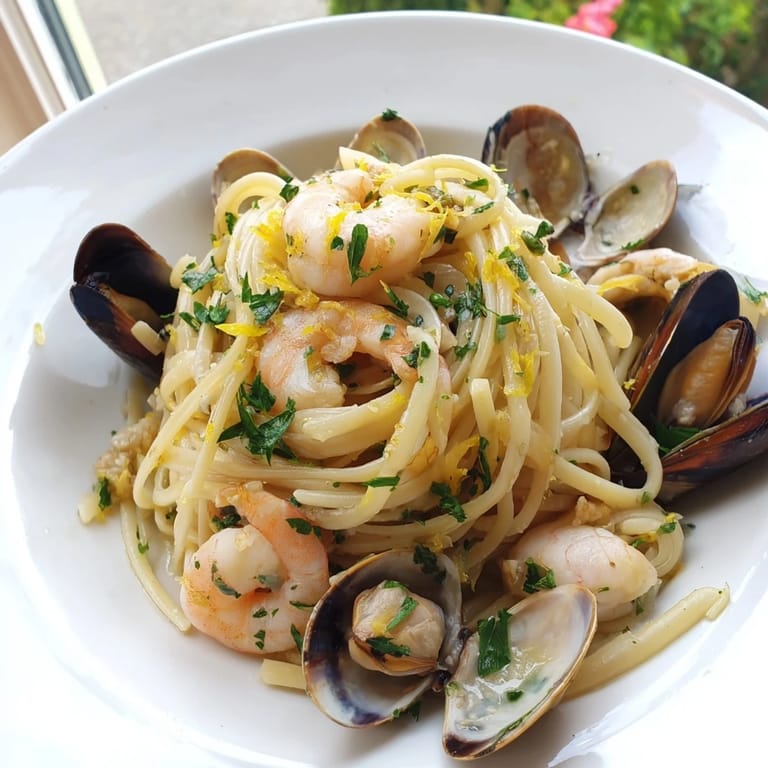
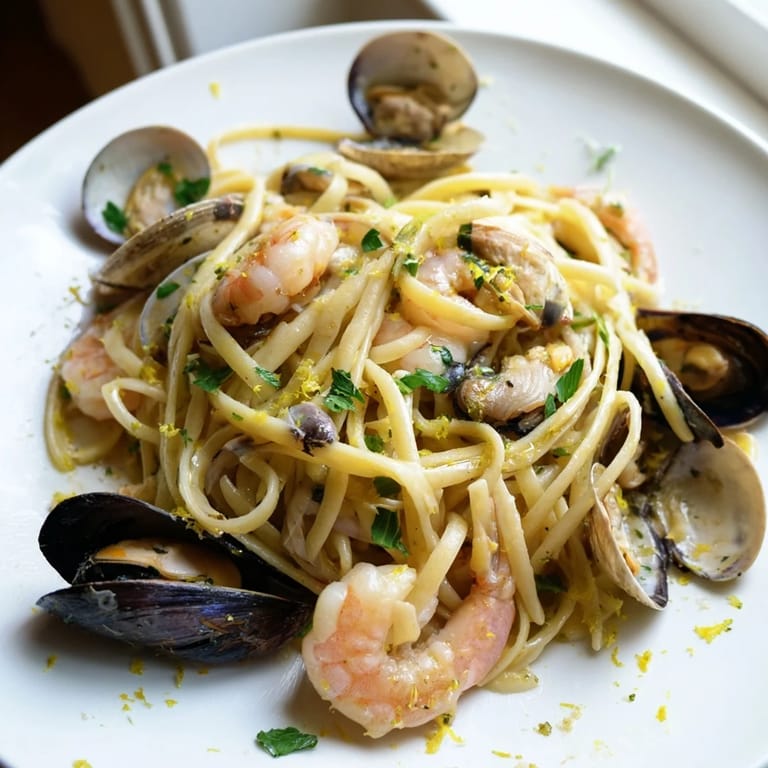
Save There's something about the sizzle of garlic hitting hot oil that signals dinner is about to be special. My friend Marco taught me this linguine years ago, not in Italy but in his tiny kitchen during a rainy evening when we decided the takeout menus could wait. What started as him casually tossing together whatever seafood the market had left turned into the most elegant thing I'd ever watched him cook, and honestly, the easiest too.
I made this for my parents last summer when they visited, and my mom—who's skeptical of anything involving shellfish—took one bite and went quiet in that way that means something just became a favorite. She kept asking questions between bites, not about the recipe but about why restaurants charge so much for something that feels this manageable to make at home. That's the real magic of this dish: it feels fancy but never pretentious.
Ingredients
- Large shrimp (200 g): Look for firm, translucent ones with a slight ocean smell; avoid anything mushy or gray, which signals they're past their prime.
- Fresh clams and mussels (250 g each): Buy them the same day you cook, tap any that are open and discard if they don't close, and rinse them under cold water while scrubbing gently with a brush.
- Dried linguine (400 g): Don't skip the quality here; cheaper pasta absorbs sauce differently and won't have the same silky texture.
- Extra virgin olive oil (3 tbsp): This is your flavor foundation, so use something you'd actually taste on its own, not the industrial stuff.
- Garlic and shallot: Slice the garlic thin so it softens evenly and chop the shallot fine for a gentle sweetness that won't overpower the seafood.
- Dry white wine (200 ml): Use something you'd drink; the flavor concentrates as it reduces, so bad wine makes bad sauce.
- Fish or chicken stock (250 ml): This adds body without heaviness; homemade is lovely, but quality store-bought works perfectly.
- Unsalted butter (2 tbsp): Added at the very end, this emulsifies everything into something silky and rich.
- Fresh lemon: The zest and juice brighten everything at the last second, cutting through richness and making the seafood taste briny and fresh.
- Red pepper flakes (optional): Just a whisper if you want heat, but the dish is beautiful without them too.
- Fresh parsley (3 tbsp): Chop it just before serving so it stays vibrant green and herbaceous.
Tired of Takeout? 🥡
Get 10 meals you can make faster than delivery arrives. Seriously.
One email. No spam. Unsubscribe anytime.
Instructions
- Get your water boiling and pasta cooking:
- Fill a large pot with salted water and let it come to a rolling boil while you prep everything else. Once it's hot, add linguine and stir occasionally so it doesn't clump; you want it al dente, which means it should still have a tiny bit of resistance when you bite it. About a minute before draining, scoop out half a cup of that starchy water and set it aside—this liquid is liquid gold for bringing everything together later.
- Build your sauce foundation with garlic and shallot:
- In a large, deep skillet over medium heat, warm the olive oil until it's shimmering and smells fruity and alive. Add your thinly sliced garlic and finely chopped shallot, letting them soften together for about two minutes until the kitchen smells sweet and garlicky; this is the moment you know you're on the right track.
- Sear the shrimp until just kissed pink:
- Turn the heat up to medium-high and add your shrimp, giving them just one minute per side—they'll look barely cooked and that's exactly right. Shrimp go from tender to rubbery fast, so the moment they turn opaque on the edges, slide them onto a clean plate and don't look back.
- Steam the clams and mussels open:
- Add your scrubbed clams and mussels directly to the pan, pour in the white wine, and cover everything with a lid. Let them steam for three to four minutes until their shells start cracking open; you'll see them gradually surrender. Discard any that stubbornly refuse to open—they're not worth the risk.
- Build the braising liquid:
- Pour in your stock and bring everything to a gentle simmer, letting it bubble away uncovered for a couple minutes to let the wine's sharp edges soften. This is when the kitchen fills with this incredible briny, garlicky aroma that makes you understand why people love coastal cooking.
- Bring it all together with pasta and butter:
- Return your shrimp to the pan along with the drained linguine, reserved pasta water, butter, lemon zest, and fresh lemon juice. Toss everything gently over low heat, letting the starch from the pasta water and the butter emulsify into something creamy and glossy that coats each strand. You're not cooking anymore at this point; you're just marrying everything together.
- Season and serve immediately:
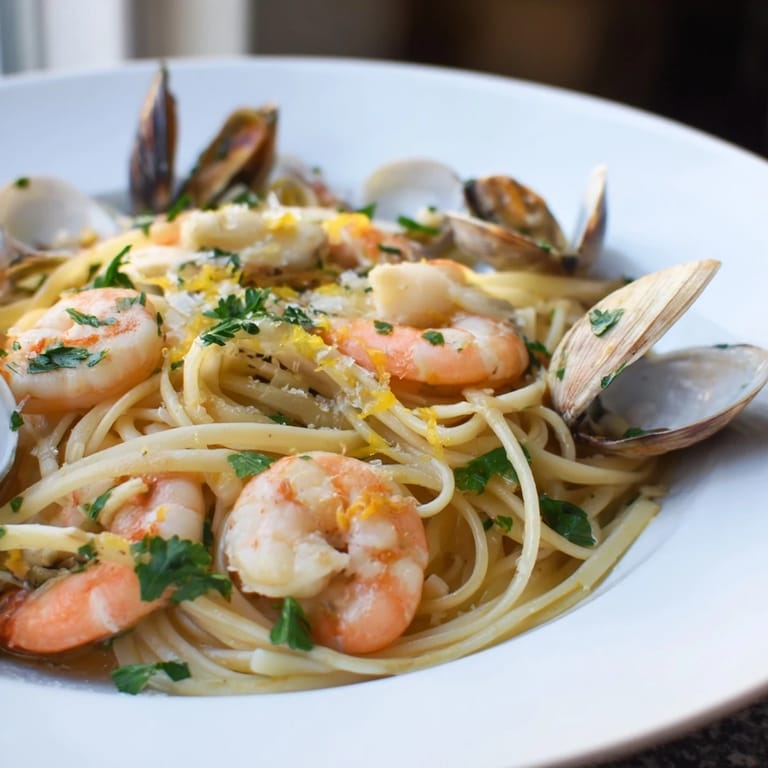
- Taste everything and adjust salt and black pepper to your liking, keeping in mind that the seafood already carries saltiness. Plate it up right away, garnishing generously with chopped parsley and placing lemon wedges on the side for anyone who wants to squeeze a bit more brightness onto their bowl.
 Save
Save I served this to a date once who spent the first bite looking skeptical and the rest of dinner looking grateful. There's something about a dish that requires attention, good ingredients, and nothing fancy about its technique that makes people feel genuinely seen at the table.
Timing Makes Everything
The beauty of this dish lives entirely in its pacing. Everything happens in one skillet in about twenty minutes, which means you need to actually be present and cooking, not checking your phone or wandering away. Start your pasta water first, then begin your sauce, and time everything so the pasta finishes right when the seafood is cooked through. This isn't a dish you can make ahead or reheat; it's meant to go from pan to plate while it's still steaming and alive.
Choosing Your Seafood
The best version of this dish uses whatever looked perfect at the market that day. If your fishmonger has beautiful scallops, use them alongside or instead of some shrimp. Calamari rings add texture if you want something different. The important part is buying from someone who actually knows their product and will tell you honestly if something came in that morning or yesterday. Frozen seafood works too if that's what's available to you; just thaw it gently in the refrigerator the night before.
Wine and Pairing
Cook with a wine you'd actually drink, because it matters. A crisp Pinot Grigio or Vermentino adds brightness without heaviness, and that same bottle pairs beautifully with dinner. If you want to add a splash of cream to the sauce, do it after everything else is combined—it rounds out the edges and makes the dish feel almost decadent. Everything here is flexible, but the principle stays the same: light, bright, and tasting like the sea.
- Taste as you season because salt levels vary wildly depending on your stock and how much liquid reduced.
- Lemon wedges aren't just decoration; let people squeeze as much as they want for brightness.
- Eat this while it's hot because cold seafood linguine is nobody's dream.
 Save
Save This is the kind of dinner that feels like a small celebration, even if it's just Wednesday night and you're cooking for yourself. Make it, share it, and watch the magic happen.
Recipe FAQs
- → How do I know if clams and mussels are fresh?
Fresh clams and mussels should have tightly closed shells or close when tapped. Discard any with cracked shells or that remain open after cooking. Store them in the refrigerator on ice and use within 1-2 days of purchase.
- → Can I prepare this dish ahead of time?
Cook the linguine up to 2 hours ahead and store it with a drizzle of olive oil to prevent sticking. Prepare the seafood and aromatics, then cook the entire dish fresh just before serving for the best flavor and texture.
- → What's the best way to avoid overcooked seafood?
Cook shrimp briefly—just 1 minute per side until they turn pink. Steam clams and mussels until shells open, then remove from heat. Overcooking makes shellfish rubbery. Timing is key: keep everything moving and taste as you go.
- → Can I substitute the white wine?
Yes. Use dry vermouth, additional fish stock, or a light broth as alternatives. The wine adds acidity and depth, so maintain that balance with lemon juice if needed. Avoid sweet wines, which will unbalance the delicate sauce.
- → What wine pairs well with this dish?
Crisp Italian white wines work beautifully—try Pinot Grigio, Vermentino, or Albariño. Their bright acidity complements the fresh seafood and cuts through the richness of the butter and olive oil sauce.
- → How do I store leftovers?
Store cooled seafood and sauce separately from the pasta in airtight containers for up to 2 days. Reheat gently on the stovetop with a splash of water or stock. The shellfish can become tough if overheated, so warm through slowly.