 Save
Save There's something about the smell of sausage hitting a hot skillet that makes you forget you're cooking on a Tuesday night instead of in some small Roman trattoria. I stumbled onto this pasta years ago when a friend mentioned she'd made it in twenty minutes flat, and I was skeptical until I tasted it myself—suddenly I understood why it shows up on every Italian-American dinner table worth its salt.
I made this for my partner during one of those stretches where we'd been eating the same three things on rotation, and the moment he took that first bite, the whole apartment smelled so good that even our neighbor poked their head in to ask what we were cooking. It became our go-to move when we wanted to impress without fussing, or when we just needed something that felt substantial and real.
Ingredients
- Italian sausage, 1 lb with casings removed: This is where the backbone of the whole dish lives—use mild if you want the peppers to shine, or go spicy if you like heat that builds as you eat.
- Red, yellow, and green bell peppers, one each, sliced: The mix of colors isn't just pretty; each pepper brings something slightly different in terms of sweetness and texture as they cook down.
- Large onion, thinly sliced: Onions mellow out into something almost jammy when they get time in that hot pan, so don't skip them or rush them.
- Garlic, 3 cloves minced: A minute of cooking in that oil is all it takes to fill your kitchen with the kind of smell that makes people want to stay for dinner.
- Penne or rigatoni pasta, 12 oz: These shapes grab sauce like they were made for it—the grooves and tubes hold everything in every bite.
- Crushed tomatoes, one 14 oz can: The foundation of the sauce, and honestly, canned is better here than trying to reduce fresh ones down in the time you have.
- Tomato paste, 2 tbsp: This concentrates all that tomato flavor into something deeper than the crushed tomatoes alone could do.
- Dried oregano and basil, 1 tsp and 1/2 tsp: Dried herbs work better than fresh here because the sauce needs time to carry their flavor.
- Red pepper flakes, 1/2 tsp optional: A small amount builds warmth without burning—add it if you like your comfort food with an edge.
- Olive oil, 2 tbsp: Use something you actually like the taste of; it shows here.
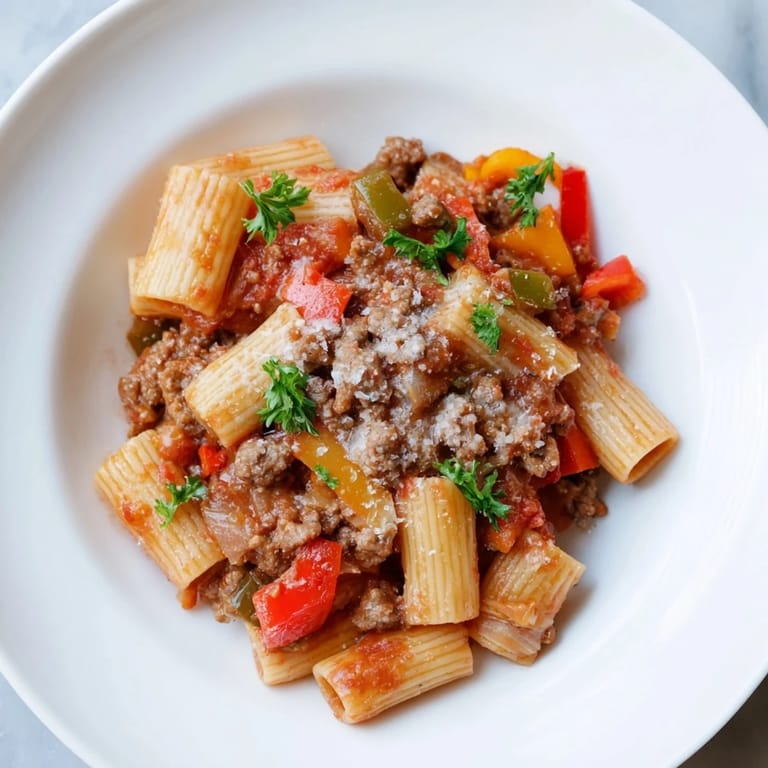
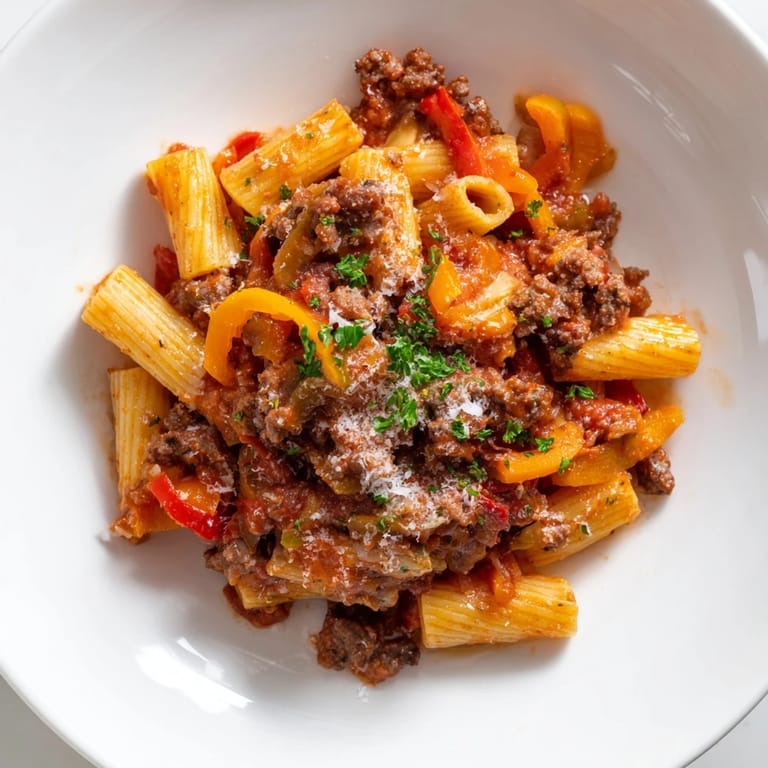
- Fresh parsley and Parmesan for serving: The final touches that make it look like you cared, even if the whole thing came together in less than an hour.
Tired of Takeout? 🥡
Get 10 meals you can make faster than delivery arrives. Seriously.
One email. No spam. Unsubscribe anytime.
Instructions
- Start the pasta first:
- Get salted water boiling in a large pot—this takes longer than anything else you'll do, so give it a head start. Cook the pasta to al dente according to the box, then drain it while reserving about half a cup of that starchy water; you'll need it later to loosen the sauce.
- Brown the sausage:
- Heat olive oil over medium heat in your largest skillet, then add the sausage. Break it into small pieces as it cooks, watching for the moment it loses all pink—around five to seven minutes—then move it to a plate.
- Get those peppers and onions soft:
- In the same skillet, add the sliced peppers and onions, letting them sit long enough to caramelize a little at the edges instead of staying too raw. You'll know it's right when they've shrunk down and turned golden at the tips, which takes about five or six minutes.
- Build the sauce with aromatics:
- Add the minced garlic and let it get fragrant for just a minute—no longer or it'll turn bitter. Then stir in the tomato paste first, letting it cook for a moment in all that oil before adding the crushed tomatoes.
- Season and simmer:
- Add the oregano, basil, red pepper flakes if you're using them, and salt and pepper to taste. Let everything bubble gently for about five minutes so the flavors can find each other.
- Bring the sausage back home:
- Return the cooked sausage to the skillet and let it all simmer together for another few minutes, tasting as you go and adding reserved pasta water if the sauce feels too thick.
- Toss it all together:
- Add the drained pasta directly to the skillet and turn everything to coat it evenly in sauce, heating through for a minute or two until the pasta and sauce feel like they belong together.
- Finish and serve:
- Top with fresh chopped parsley and a generous shower of Parmesan, then eat while it's hot enough to matter.
 Save
Save The night my partner's parents came over on short notice, this dish reminded me that some meals don't need advance planning to feel intentional. My mother-in-law asked for the recipe, which is always the moment you know you've cooked something that mattered.
The Sausage Question
Italian sausage comes in mild or spicy varieties, and choosing between them changes the entire personality of the dish. Mild sausage lets the sweetness of the peppers and tomatoes come through loud and clear, while spicy sausage adds a warmth that lingers through the whole meal. I've done both, and honestly, the choice depends on what your table needs that night. If you're cooking for people who balk at heat, go mild. If you want everyone to feel a little more awake, reach for spicy.
Why the Peppers Matter More Than You'd Think
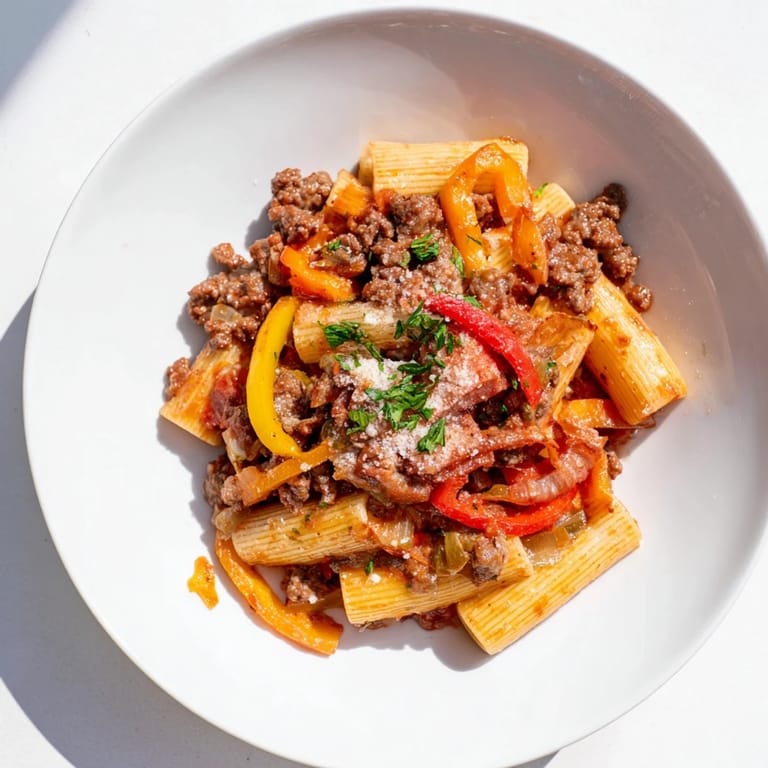
Three different colored peppers isn't decoration—it's actually a flavor strategy. Red peppers are sweetest when cooked, yellow ones bring a different kind of brightness, and green ones add just a whisper of something slightly more vegetal that keeps the whole thing from tasting one-dimensional. I once tried making this with just red peppers because that's all I had, and it was good but flatter somehow, missing the complexity that the mix brings. The time spent slicing three peppers instead of one is genuinely worth it.
Variations That Make Sense
This recipe is flexible in ways that matter and rigid in ways that matter too. You can absolutely use chicken or turkey sausage if you want something lighter, or add a splash of red wine to the sauce if you're feeling fancier than Tuesday night usually allows. Some nights I'll throw in a handful of mushrooms because I have them, and nobody complains about a little more to chew on.
- A quarter cup of heavy cream stirred in at the very end turns this into something almost luxurious without changing the core of what it is.
- If you have fresh basil on hand, save it to scatter over the top instead of using dried during cooking—you get completely different flavor.
- Sometimes I add a squeeze of balsamic vinegar in the final minute, just enough to deepen everything without making it taste like salad dressing.
 Save
Save This is the kind of pasta that belongs in regular rotation, not just on special nights. Make it when you need proof that good food doesn't always require advanced planning or complicated techniques.
Recipe FAQs
- → What type of sausage works best?
Italian sausage, either mild or spicy, provides the ideal balance of flavors and texture for this dish.
- → Can different pasta shapes be used?
Yes, penne or rigatoni work best as their shapes hold the sauce well, but other short pasta varieties are suitable.
- → How do I prevent the sauce from becoming too thick?
Reserving some pasta cooking water and adding it to the sauce helps achieve a smooth, well-coated consistency.
- → Can I make this dish spicier?
Increasing crushed red pepper flakes or choosing spicy Italian sausage adds more heat to the flavors.
- → What garnishes complement this dish?
Fresh chopped parsley and grated Parmesan cheese add brightness and depth, enhancing the overall taste experience.