 Save
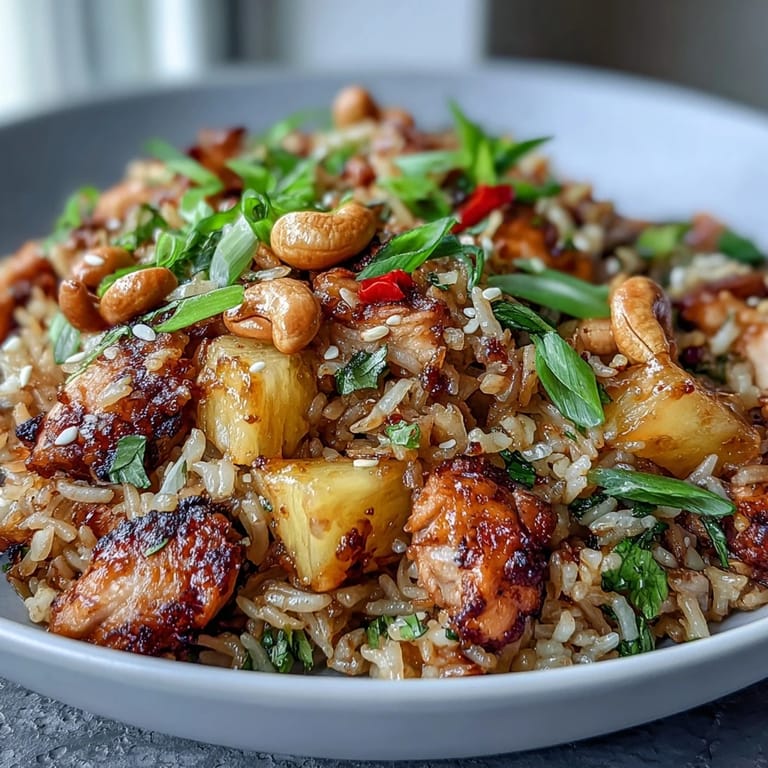
Save My coworker Sarah came back from Thailand raving about this fried rice she'd had at a street vendor, but the one thing she couldn't stop mentioning was the sweetness from the pineapple cutting through all the savory goodness. I'd never thought to put fruit in fried rice before, but something about her description stuck with me, so one random Tuesday night I decided to recreate it in my tiny apartment kitchen. The first bite proved her absolutely right—that balance of sweet, salty, and crunchy is genuinely addictive.
I made this for my sister's book club potluck on a whim, not expecting much fanfare since fried rice feels pretty standard. Within minutes people were coming back for seconds, and one of her friends actually asked if I was running a catering business out of my kitchen. That's when I realized this dish had something special—it's comforting enough to feel familiar, but surprising enough to actually impress.
Ingredients
- Boneless, skinless chicken breasts (350 g, diced): Cutting them into small, even pieces ensures they cook quickly and distribute evenly throughout the rice, so you get chicken in every bite.
- Large eggs, lightly beaten (optional): They add a silky richness and extra protein, but honestly the dish works beautifully without them if you want to keep things lighter.
- Cooked jasmine rice (4 cups, day-old): This is non-negotiable—day-old rice has less moisture so it gets crispy and doesn't clump up; freshly cooked rice will steam and become mushy.
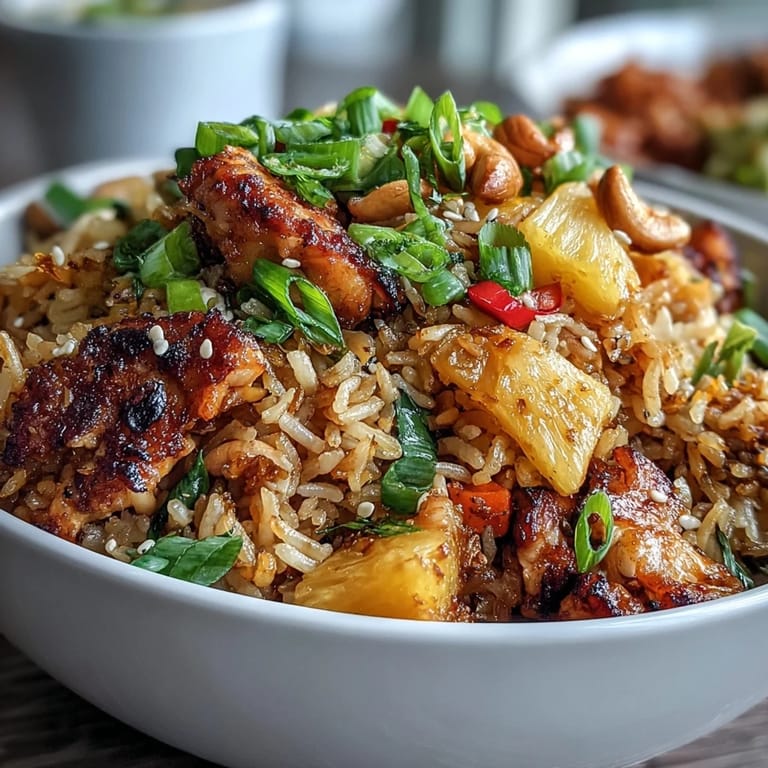
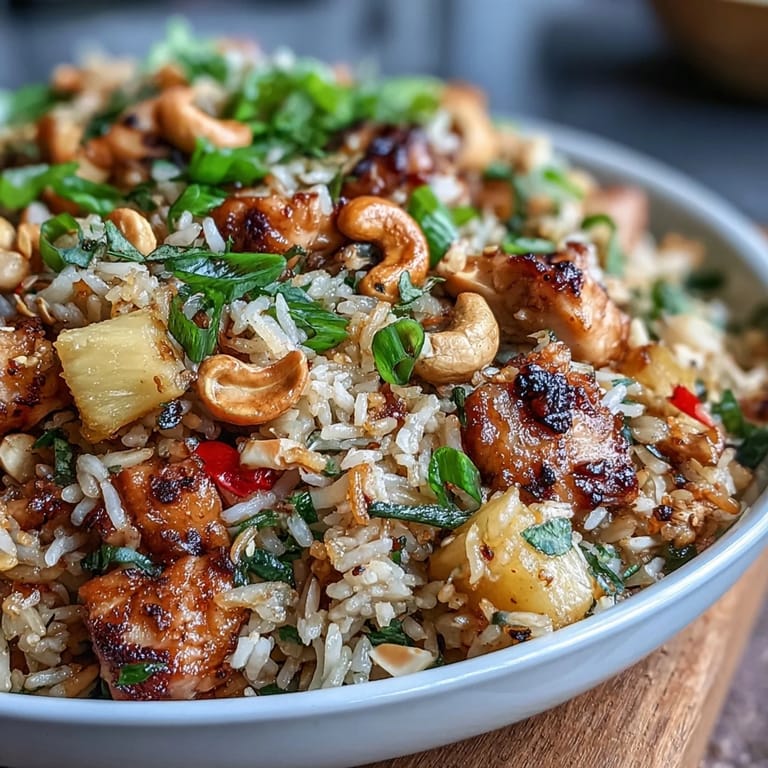
- Fresh pineapple, diced (1 cup): The star of the show, it brings natural sweetness and those little bursts of juice that keep the rice from feeling heavy.
- Red bell pepper and carrot, diced: These vegetables add sweetness, color, and a subtle crunch that carries through even after cooking.
- Green onions, sliced (3): Most go in during cooking, but save a small handful for garnish because their bright, fresh bite at the end elevates everything.
- Garlic, minced (2 cloves): The base flavor that makes people say 'this tastes like real fried rice' without quite knowing why.
- Frozen peas, thawed (½ cup): They stay tender and add a subtle sweetness that complements the pineapple without overwhelming it.
- Roasted unsalted cashews (½ cup): The textural contrast is crucial—they stay crunchy even after stirring and add an elegant earthiness that balances the sweetness.
- Soy sauce (3 tbsp): Use tamari if you need gluten-free, and don't skip tasting at the end because salt levels vary wildly between brands.
- Oyster sauce (1 tbsp, optional): It deepens the savory notes, but soy sauce alone absolutely works if you want to keep it simpler.
- Fish sauce (1 tsp, optional): A tiny amount adds an umami depth that makes people wonder what the secret ingredient is, but it's genuinely optional.
- Ground white pepper (½ tsp): White pepper has a slightly different heat profile than black—it's more delicate and doesn't leave visible specks.
- Vegetable oil (1½ tbsp): Use something neutral like canola or grapeseed oil so the other flavors stay center stage.
- Sesame oil (1 tsp): Added at the very end, it brings a toasted fragrance that makes the whole dish smell like something from a restaurant kitchen.
Tired of Takeout? 🥡
Get 10 meals you can make faster than delivery arrives. Seriously.
One email. No spam. Unsubscribe anytime.
Instructions
- Set yourself up for success:
- Lay out your ingredients in the order you'll use them—this is where fried rice goes from chaotic to flowing smoothly. If your rice has clumps, break them apart gently with your fingers or a fork so it fries evenly instead of in chunks.
- Get the chicken golden:
- Heat 1 tbsp oil in your wok or skillet over medium-high heat until it shimmers, then add chicken in a single layer. Let it sit undisturbed for a minute or two before stirring—this creates those caramelized edges instead of pale, steamed chicken.
- Scramble the eggs (if using):
- Push the cooked chicken to the side, add a touch more oil if needed, then pour in beaten eggs and let them sit just for a moment before gently scrambling until barely set. You want soft curds, not tough rubber bits.
- Build the aromatic base:
- Add remaining oil and let it warm for a breath, then toss in garlic, carrot, and bell pepper. The sizzle and smell that follows is your cue that flavor is developing—aim for 2 to 3 minutes until the vegetables soften slightly but still have some resistance.
- Break up and fry the rice:
- Add all your rice and stir-fry for 2 to 3 minutes, breaking up any remaining clumps as you go. The rice should start making a light crackling sound and separate into individual grains.
- Bring everything together:
- Return the chicken and eggs to the wok, then add pineapple, peas, and most of the green onions. Stir everything gently so the pineapple doesn't break down—you want those pieces to stay distinct.
- Season and finish:
- Drizzle in soy sauce, oyster sauce, fish sauce (if using), and pepper, then stir-fry for another 2 to 3 minutes so the seasonings coat everything evenly. Taste and adjust—you might want a touch more soy sauce depending on your rice's saltiness.
- Add the final aromatics:
- Turn heat to low, stir in sesame oil and cashews, then plate immediately. The cashews stay crunchiest this way, and the sesame oil's fragrance is strongest when the dish is hot.
 Save
Save I made this for my partner on a really exhausting Thursday when neither of us had the energy to figure out dinner, and watching their face light up when they tasted that first spoonful reminded me why I love cooking. Sometimes the simplest dishes carry the most joy.
The Magic of Rice Preparation
There's a reason every fried rice expert insists on day-old rice, and it took me three failed attempts to truly understand why. When rice is freshly cooked, the starches are still active and hold moisture like a sponge, so when you add heat and sauce, they clump together instead of separating. Day-old rice has had time to cool and firm up, so each grain is distinct and ready to get crispy at the edges. If you're in a pinch and only have fresh rice, spread it on a sheet pan and let it cool completely before using, though patience truly pays off here.
Building Layers of Flavor
One of my kitchen revelations was understanding that fried rice isn't just about throwing ingredients together—it's about layering aromatics and letting each one bloom before adding the next. Garlic needs to hit hot oil so it releases its fragrant compounds; vegetables need a moment to soften and caramelize; the rice needs time to fry so it absorbs those flavors instead of just sitting in sauce. This gradual approach is what separates restaurant-quality fried rice from the 'I reheated leftover rice with soy sauce' kind.
Customizing Without Losing Balance
The beauty of this recipe is that it's flexible enough to work with what you have, but intentional enough that swapping things out requires a little thought. If you go vegetarian, add extra vegetables or crispy tofu instead of chicken, and skip the fish sauce entirely. For heat lovers, a chopped bird's eye chili stirred in during the seasoning step adds genuine fire without overwhelming the pineapple's sweetness. The real trick is maintaining that sweet-salty-crunchy balance no matter what you're changing.
- If using canned pineapple, make sure it's packed in juice and drain it well, or the rice will get soggy.
- Cashews can be swapped for peanuts or macadamia nuts, though the final flavor will shift slightly.
- This keeps beautifully in the refrigerator for up to three days and reheats wonderfully in a hot wok or skillet.
 Save
Save This recipe taught me that sometimes the most satisfying meals come from the simplest combinations, and that sweet pineapple and savory soy sauce aren't opposites—they're actually best friends. Make this on a night when you need something warm, a little bit fancy, and ready in under thirty minutes.
Recipe FAQs
- → Can I use fresh pineapple or canned pineapple for this dish?
Both fresh and drained canned pineapple work well. Fresh pineapple offers a brighter flavor, while canned adds convenient sweetness.
- → Is it necessary to use day-old jasmine rice?
Day-old rice is ideal as it’s drier and prevents clumping, resulting in a better fried rice texture when stir-frying.
- → What can I substitute for cashews if unavailable?
Almonds or peanuts provide a similar crunch and nutty flavor as a substitute for cashews.
- → How can I make this dish vegetarian?
Simply omit the chicken and fish sauce, and add extra vegetables or tofu for protein while maintaining the dish’s savory balance.
- → What cooking oils are best for stir-frying this dish?
Neutral vegetable oils and a touch of aromatic sesame oil work best to sauté ingredients and add depth of flavor.
- → Can I add heat to this dish?
Yes, adding chopped chili or chili flakes during cooking will introduce a pleasant spicy kick.