 Save
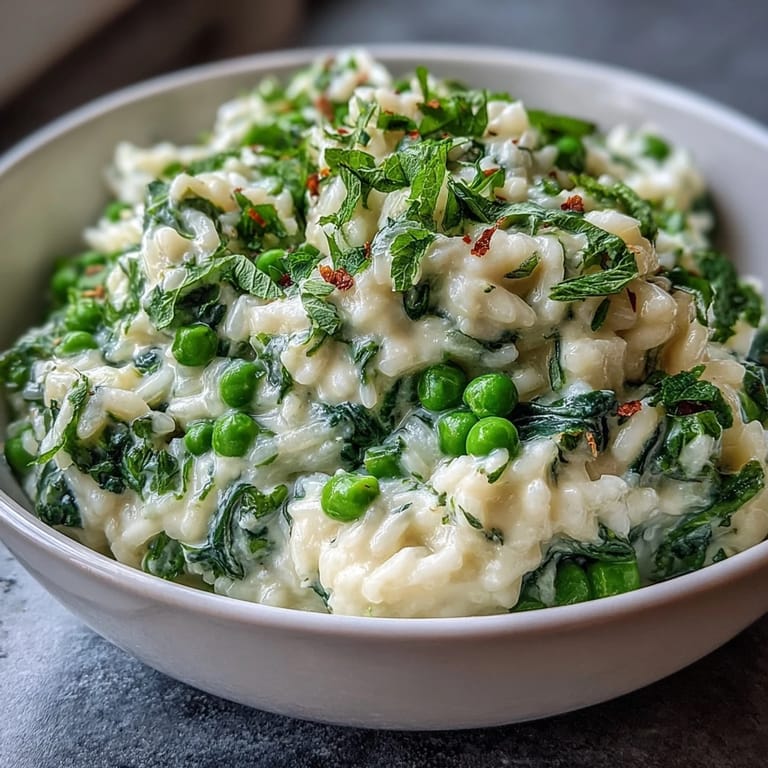
Save There's a moment every spring when I open the farmers market and catch that first whiff of fresh peas still in their pods, and I know exactly what needs to happen next. My neighbor asked me to make something green and bright for her dinner party last April, and I found myself stirring this risotto while standing in her kitchen, watching the cream come together and the mint release its fragrance into the steam. The whole thing felt like I was capturing the season in a bowl.
I'll never forget the look on my friend Sarah's face when she tasted this for the first time. She'd brought a bottle of crisp Sauvignon Blanc, and somehow that wine pairing, plus the lemon zest hitting just right, turned a simple dinner into something that felt a little celebratory. That's when I realized risotto isn't fussy—it's just generous.
Ingredients
- Fresh or frozen green peas (1 cup): Fresh is magical if you can get them, but frozen peas are honestly just as good and often fresher than the fresh ones that have been sitting around. They stay bright green and tender if you add them near the end of cooking.
- Arborio rice (1 1/2 cups): This short-grain rice releases starch as it cooks, which is what makes risotto creamy. Don't substitute long-grain rice or you'll end up with something closer to soup.
- Onion (1 small, finely chopped) and garlic (2 cloves): The onion should be soft and sweet before the rice goes in, which is your signal that the base is ready to build on.
- Warm vegetable stock (4 cups): Keep it warming on a back burner the whole time you're cooking so the rice stays happy and absorbs it smoothly. Cold stock will shock the rice and throw off your timing.
- Dry white wine (1/2 cup): This adds brightness and acidity that makes everything taste more alive. Sauvignon Blanc works beautifully if you're drinking some with dinner.
- Unsalted butter (3 tbsp divided): Butter is stirred in twice—first to cook the vegetables and rice, then again at the end to add silkiness to the final dish.
- Freshly grated Parmesan cheese (1/2 cup plus extra): Grate it yourself right before cooking. Pre-grated cheese has anti-caking agents that make it less melty and more grainy in the risotto.
- Fresh mint leaves (1/4 cup, finely chopped): This is the star herb and should be stirred in right at the end so it stays vibrant and aromatic, not cooked into submission.
- Lemon zest (from 1 lemon): A surprising little touch that brightens the whole dish and keeps it from feeling heavy, even though it's wonderfully creamy.
Tired of Takeout? 🥡
Get 10 meals you can make faster than delivery arrives. Seriously.
One email. No spam. Unsubscribe anytime.
Instructions
- Start the base:
- Melt 2 tablespoons of butter in a large saucepan over medium heat. Once it's foaming gently, add your chopped onion and let it soften for about 4 minutes until it's soft and turning translucent. You'll know it's ready when the kitchen smells sweet and savory at the same time, then add the minced garlic and stir for just 1 minute so it doesn't brown.
- Toast the rice:
- Pour in the Arborio rice and stir it constantly for about 2 minutes so every grain gets coated in butter. You want to hear a gentle crackling sound and smell a toasted, nutty aroma—that's when you know the rice is ready to drink in the wine.
- Add the wine:
- Pour in the white wine and keep stirring until it's almost completely absorbed and you can see the bottom of the pan when you drag your spoon through. This should take about 1 to 2 minutes.
- Build the creaminess:
- This is the rhythm that makes risotto magical. Add the warm stock one ladle at a time, stirring constantly and waiting until each addition is mostly absorbed before adding the next. You'll see the rice gradually transform from individual grains into something creamy and flowing, usually taking about 18 to 20 minutes total.
- Add the peas at the right moment:
- During the last 5 minutes of cooking, stir in your peas so they stay bright green and tender rather than dull and mushy. Taste a grain of rice—it should feel creamy around a core that's just barely firm to your tooth.
- Finish with richness and freshness:
- Remove the pan from heat and stir in the remaining 1 tablespoon of butter along with the freshly grated Parmesan, chopped mint, lemon zest, salt, and pepper. Fold everything together gently until the risotto looks luxurious and moves slightly when you tilt the pan.
- Taste and serve:
- Take a spoon and taste it—this is your moment to adjust the salt and pepper to your liking. Serve immediately into warm bowls and top each one with a little more Parmesan and a few fresh mint leaves.
 Save
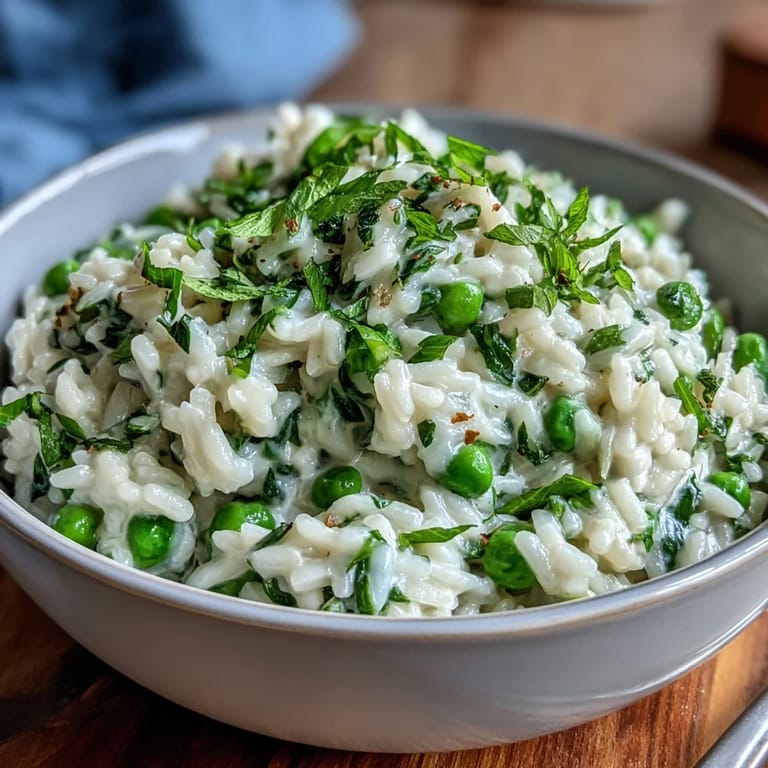
Save What I love most about this dish is that it's a conversation starter without trying to be one. People gather around a risotto because it feels special but also inviting, like you put actual thought into feeding them something beautiful. The green flecks of mint and the brightness of lemon make it feel hopeful, which is exactly what spring cooking should do.
The Mint Question
Fresh mint can be polarizing, and that's totally fair. I've served this to people who think mint belongs nowhere near savory food, and they've actually come around once they taste how it plays with the lemon and Parmesan. The key is using enough that you actually taste it as a flavor rather than just a vague herbal whisper. If mint really isn't your thing, you can lean entirely on the parsley and lemon zest instead, and it will still be delicious.
Wine Pairings Beyond the Recipe
Sauvignon Blanc and Pinot Grigio are the obvious choices, but I've also had this risotto with a dry Riesling and it was unexpectedly lovely. The acidity in the wine echoes the lemon zest in the dish, and that little spark makes both the food and the wine taste better. If you're not serving wine alongside dinner, at least use a crisp white wine in the cooking—it makes all the difference.
A Risotto Rhythm You Can Trust
The magic of learning risotto is realizing you don't need to measure stock perfectly or follow a timer religiously. You're watching for the rice to gradually transform, feeling the resistance in your wooden spoon as it gets creamier, tasting it frequently to know when it's done. Once you feel that, you can make risotto in any kitchen, with any proportions that are roughly in the right ballpark. This isn't precision cooking—it's responsive cooking, and that's what makes it feel less intimidating than it sounds.
- Prep your mise en place (all ingredients measured and chopped) before you start cooking so you're not scrambling while stirring.
- Use a wooden spoon because it's gentler on the rice grains and lets you really feel the texture of what's happening in the pan.
- Serve in warm bowls so the risotto stays creamy and hot all the way to the last spoonful.
 Save
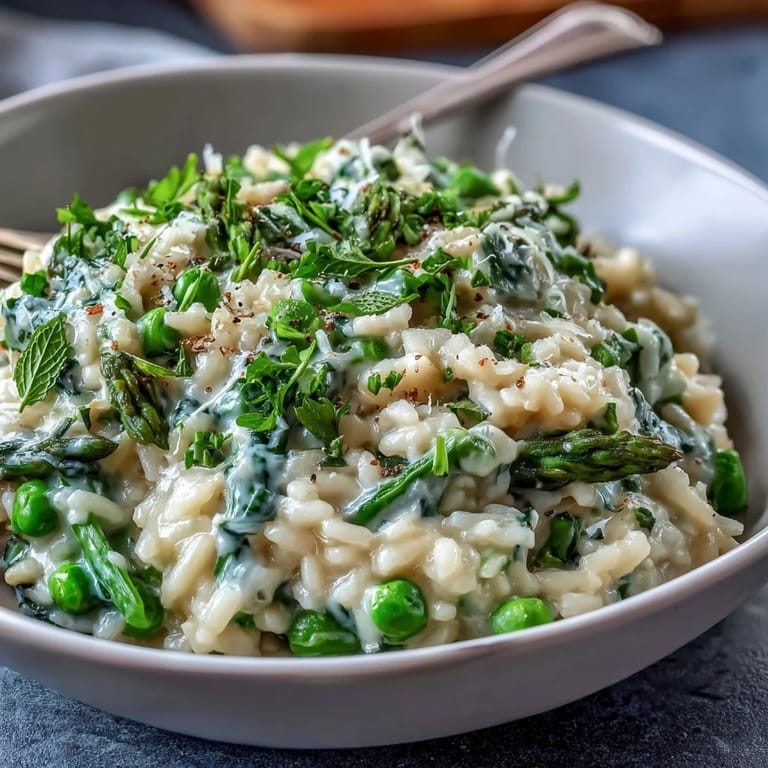
Save This risotto has become my spring dinner party default because it tastes like sunshine in a bowl and never fails to impress. Serve it with a simple salad and crusty bread, pour the wine, and let the conversation take care of itself.
Recipe FAQs
- → How can I keep the peas bright and tender?
Stir peas into the dish during the last few minutes of cooking to maintain their color and texture.
- → What type of rice is best for this dish?
Arborio rice is ideal for its creamy texture and ability to absorb flavors well.
- → Can I substitute the white wine?
Yes, you can replace white wine with additional vegetable stock or a splash of lemon juice for acidity.
- → How do I achieve a creamy consistency?
Slowly add warm stock ladle by ladle while stirring constantly until the rice is tender and creamy.
- → What herbs complement this dish?
Fresh mint gives brightness, while parsley adds a subtle freshness; both enhance the overall flavor.