 Save
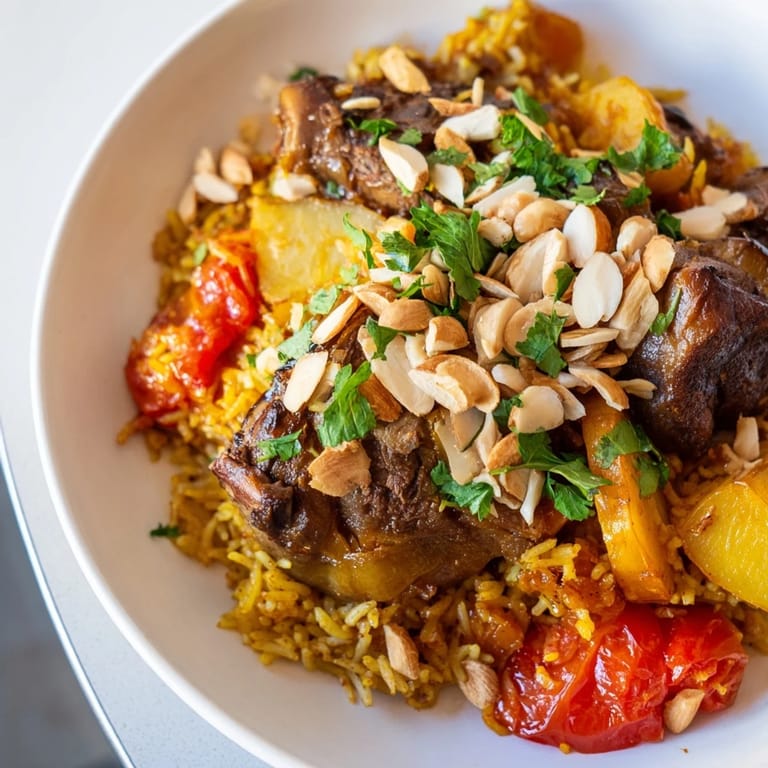
Save My neighbor Layla invited me over one Friday afternoon, and I watched her flip an entire pot of rice, meat, and vegetables onto a platter in one smooth motion. The kitchen filled with applause from her kids, and I realized I'd been missing out on something magical. Maqluba isn't just dinner; it's a performance, a tradition, and honestly, the most fun I've ever had with a heavy pot. The name means "upside down," and that moment of the flip never gets old.
I made this for my family the first time during a cold weekend, and my brother kept peeking into the pot, asking when we'd flip it. When I finally did, the golden crust of tomatoes on top made everyone go quiet for a second before digging in. My mom said it reminded her of a wedding she attended years ago, and suddenly we were all sharing stories over seconds and thirds. That's when I knew this dish had earned a permanent spot in my rotation.
Ingredients
- Bone-in lamb shanks or chicken pieces: The bone adds so much flavor to the broth, and the meat becomes fall-apart tender after simmering.
- Long-grain basmati rice: Soaking it makes the grains fluffy and separate, not mushy or clumped together.
- Eggplant: Roasting it first keeps it from turning soggy and gives it a slight caramelized edge.
- Potatoes: They crisp up in the oven and create a sturdy base when you flip the pot.
- Turmeric and cumin: These warm the broth and give the rice that golden color and earthy depth.
- Toasted almonds or pine nuts: A crunchy, nutty finish that makes the whole dish feel special.
Tired of Takeout? 🥡
Get 10 meals you can make faster than delivery arrives. Seriously.
One email. No spam. Unsubscribe anytime.
Instructions
- Prep the rice:
- Rinse it until the water runs clear, then let it soak for 30 minutes. This step is non-negotiable if you want fluffy, individual grains.
- Season and sear the meat:
- Rub the spices all over the lamb or chicken, then brown it in hot oil until each side has a deep, caramelized crust. Set it aside and don't skip this; it builds the flavor base.
- Simmer the meat:
- Sauté the onions in the same pot, then return the meat, cover with broth, and let it bubble gently for 30 to 40 minutes. The broth will become rich and aromatic, so save every drop.
- Roast the vegetables:
- Brush eggplant and potato slices with oil, spread them on baking sheets, and roast at 200°C until golden and tender. They should have a slight char on the edges.
- Layer everything:
- Start with tomato slices on the bottom of a heavy pot, then stack potatoes, eggplant, meat, onions, and finally the drained rice on top. Press gently to compact the layers.
- Add the spiced broth:
- Stir turmeric, cumin, and salt into the reserved broth, then pour it over the rice until just covered. Place a heatproof plate on top to keep everything snug.
- Cook low and slow:
- Cover tightly, bring to a simmer, then lower the heat and let it cook undisturbed for 35 to 40 minutes. Resist the urge to peek; steam is your friend here.
- Rest and flip:
- Let the pot sit off the heat for 15 minutes, then place a large platter over the top and flip it in one confident motion. The reveal is the best part.
- Garnish and serve:
- Scatter toasted nuts and fresh parsley over the top, and serve it hot with yogurt or a crisp salad on the side.
 Save
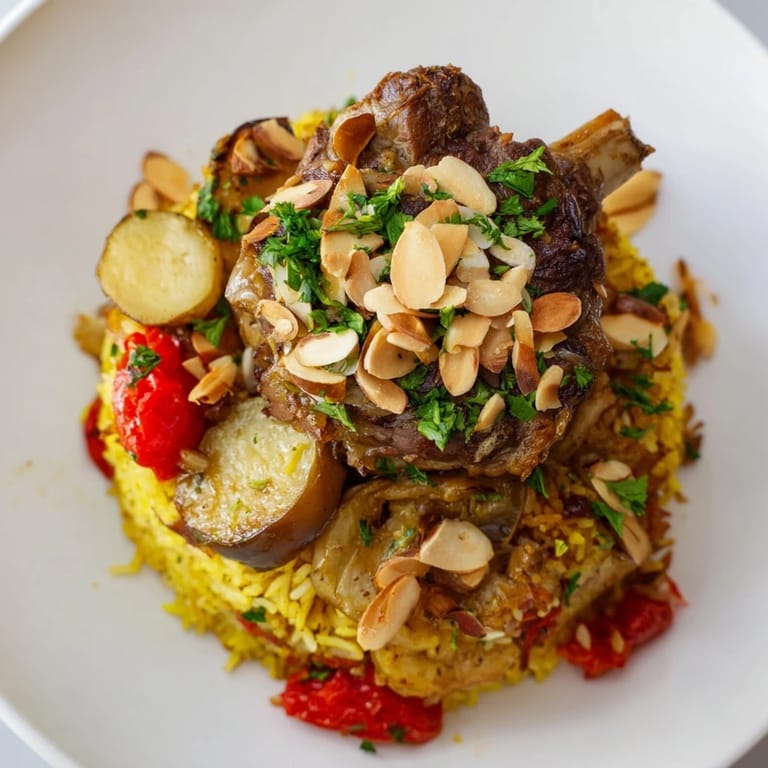
Save The first time I nailed the flip, my friend Sarah was over and she literally gasped when the golden tomato layer appeared on top. We ate standing up in the kitchen, pulling apart the tender lamb with our forks and talking about how food like this makes you feel connected to something bigger. It's not just a recipe; it's a reason to slow down and gather people you love around the table.
Swaps and Variations
I've tried this with boneless chicken thighs when I'm short on time, and it works beautifully, cutting the simmer down to about 20 minutes. Cauliflower florets roasted until golden make a great swap for eggplant if you want something a little sweeter and less rich. You can even add a layer of chickpeas for extra protein and a slightly nutty flavor that soaks up the broth.
Serving Suggestions
This pairs perfectly with a cool cucumber-yogurt salad that cuts through the richness of the spiced rice and meat. I also love setting out a bowl of tangy pickled turnips and a plate of fresh flatbread for scooping. Sometimes I'll drizzle a little extra olive oil and a squeeze of lemon over individual servings, which brightens everything up and makes each bite feel even more vibrant.
Make-Ahead and Storage Tips
You can roast the vegetables and simmer the meat a day ahead, then just layer and cook the rice when you're ready to serve. Leftovers keep in the fridge for up to three days, and I reheat portions in a covered skillet with a splash of broth to bring back the moisture. The flavors deepen overnight, so don't be surprised if day two tastes even better than day one.
- Freeze cooked Maqluba in individual portions for up to two months, then thaw and reheat gently.
- If reheating in the microwave, cover it with a damp paper towel to keep the rice from drying out.
- Always taste and adjust seasoning after reheating; sometimes it needs a pinch of salt or a squeeze of lemon.
 Save
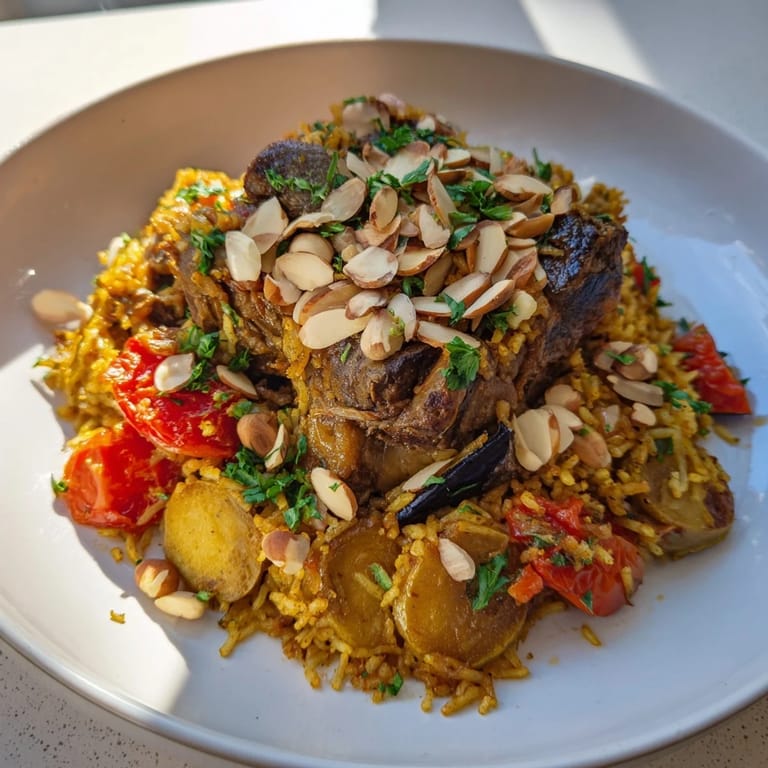
Save Every time I make Maqluba, I feel like I'm honoring a tradition that's been passed down through generations, even though I learned it from a neighbor on a random Friday. It's become my go-to for when I want to impress without pretending to be fancy, just real food that brings people together.
Recipe FAQs
- → What type of meat works best for Maqluba?
Bone-in lamb shanks offer deep flavor and tenderness, but chicken pieces can be used for a lighter variation.
- → How can I prevent the rice from sticking to the pot?
Using a heavy-bottomed nonstick pot and keeping the heat low during simmering helps prevent sticking and ensures even cooking.
- → Can vegetables be substituted in this dish?
Yes, cauliflower florets can replace eggplant to introduce a different texture and flavor profile.
- → What is the purpose of inverting the dish after cooking?
Flipping the pot reveals the intricate layers of meat, vegetables, and rice, creating a spectacular visual and enhancing the eating experience.
- → How long should the Maqluba rest before serving?
Allow it to rest covered for about 15 minutes after cooking to settle the layers and improve texture.
- → Are toasted nuts necessary for this dish?
Toasted almonds or pine nuts add a pleasant crunch and nutty flavor that complements the savory layers.