 Save
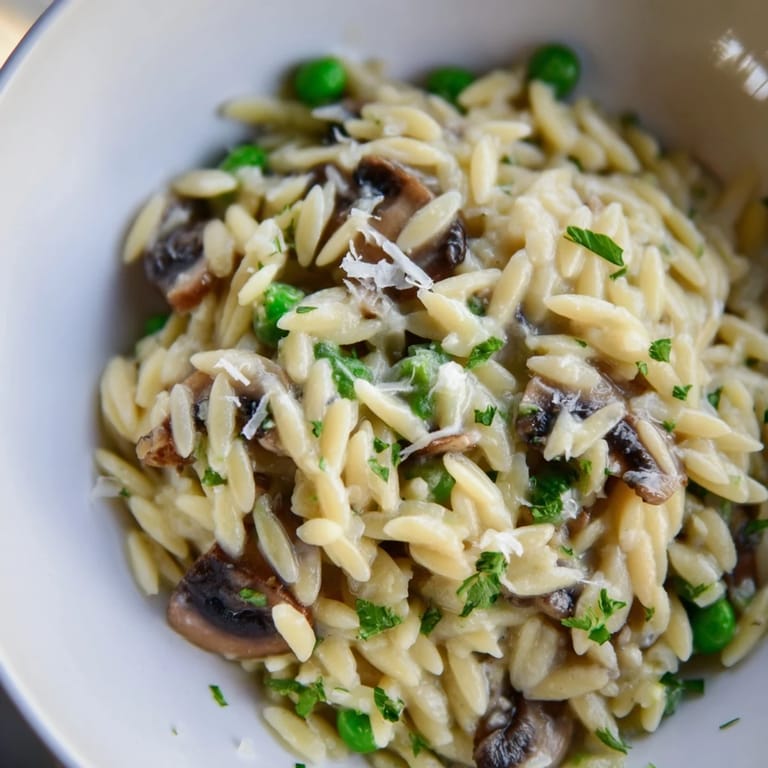
Save There's something about the sound of mushrooms hitting hot oil that signals comfort food is happening. I discovered orzo cooked risotto-style on a rainy Tuesday when I had pasta in the pantry but craved something that felt more intentional than just boiling and draining. The technique—adding broth slowly, stirring constantly, watching the grains plump and creamy—transformed a humble pasta into something that tasted like it had simmered for hours. It became my go-to when I wanted that risotto creaminess without standing over the stove quite as long.
I made this for my partner on a night when everything felt a bit stressful, and watching them eat quietly for a minute before asking for seconds told me something was right. That's when I realized this wasn't just a clever pasta hack—it was the kind of dish that makes people pause and actually taste what's in front of them. The creamy, savory combination somehow hits differently than regular pasta, maybe because your spoon feels heavier and the flavors linger.
Ingredients
- Orzo pasta: These tiny rice-shaped noodles absorb broth like a dream, releasing starch that creates the creaminess—don't use regular long pasta or the texture falls apart.
- Cremini or button mushrooms: Cremini have slightly more earthiness if you can find them, but honestly button mushrooms work just as well and won't break your budget.
- Olive oil: Use something you actually like tasting since it's not cooked to oblivion—it flavors the whole dish.
- Vegetable broth: Keep it warm in a separate pot so it doesn't shock the pan and slow down cooking; cold broth is the silent enemy of risotto-style dishes.
- Dry white wine: The acidity cuts through richness, but if you skip it, add a squeeze of lemon juice at the end instead.
- Parmesan cheese: Freshly grate it yourself—pre-grated cheese has anti-caking agents that make the sauce grainy instead of silky.
- Unsalted butter: This final addition is what transforms everything from good to creamy, so don't skip it or swap it for oil.
- Frozen peas: They add sweetness and color, but they're optional if you want to keep things simple and earthy.
Tired of Takeout? 🥡
Get 10 meals you can make faster than delivery arrives. Seriously.
One email. No spam. Unsubscribe anytime.
Instructions
- Sauté the aromatics:
- Heat olive oil over medium heat and cook the chopped onion until it's translucent and soft, about 3 minutes. You'll notice the kitchen starts smelling sweet and savory at the same time—that's your signal you're on the right track.
- Brown the mushrooms:
- Add minced garlic and sliced mushrooms, stirring occasionally until the mushrooms release their moisture and start turning golden, roughly 5-6 minutes. Don't rush this step; those browned bits are liquid gold for flavor.
- Toast the orzo:
- Stir in the dry orzo and cook for just one minute, letting it make contact with the hot oil. You'll hear a subtle crackling sound that means the grains are waking up.
- Deglaze if using wine:
- Pour in the white wine if you have it, and scrape the bottom of the pan while it sizzles down to almost nothing. This takes about a minute and smells absolutely wonderful.
- Add broth gradually:
- Pour in about 1 cup of warm broth and stir frequently, letting each addition absorb before adding more. This is the meditative part—keep stirring, keep adding, and watch the mixture go from soupy to creamy.
- Stir in peas and finish:
- After about 10 minutes, add frozen peas if using, and continue adding broth in half-cup increments, stirring constantly until the orzo is tender but still has a slight bite, about 18-20 minutes total. The whole mixture should look like loose, creamy pudding.
- Finish with butter and cheese:
- Remove from heat and stir in butter and freshly grated Parmesan until completely melted and silky. Taste and season with salt and pepper—you might need less salt than you think since the broth and cheese already contribute.
- Serve immediately:
- Divide into bowls and top with extra Parmesan and fresh parsley if you have it. The creaminess sets quickly as it cools, so eat this while it's still loose and luxurious.
 Save
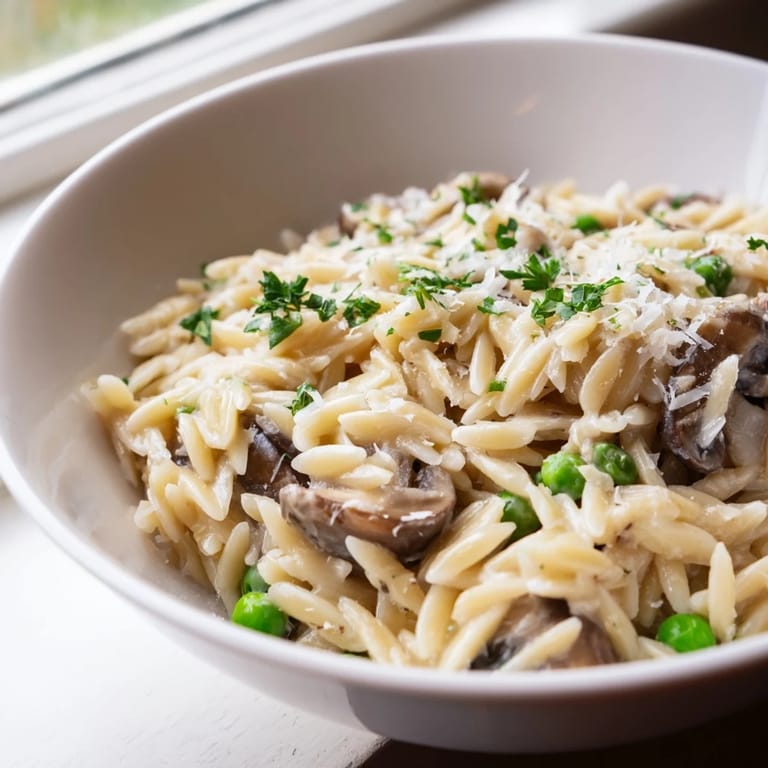
Save There was a moment when my friend mentioned she'd been eating the same sad desk lunch for weeks, so I sent her this recipe with a tiny note about how it travels okay in a container and tastes even better reheated. She texted me days later saying it was the first home-cooked thing she'd eaten in months, and suddenly this humble orzo dish felt like more than dinner. Food does that sometimes—it becomes proof that someone cares enough to share something good.
Why This Works So Well
The magic happens because orzo is basically tiny pasta that cooks faster than traditional risotto rice, but still has enough surface area to absorb broth and release starch. Unlike regular pasta dishes where you boil and drain, this method keeps all that starchy goodness in the pan where it creates a sauce without any cream. It's fooling your brain into thinking you're eating something decadent when really it's just patient cooking and good timing.
Flavor Combinations That Shine
The earthiness of mushrooms pairs perfectly with the slight acidity of white wine and the nuttiness of Parmesan—they're not competing, they're performing together. If you want to play around, sautéed spinach stirred in at the very end adds color and iron, or a single drop of truffle oil drizzled over the top will make people wonder what restaurant you're secretly trained in. Fresh lemon zest works beautifully too if you want brightness instead of richness.
Storage and Make-Ahead Notes
This dish is best eaten fresh because the orzo continues absorbing liquid as it sits, but leftovers keep covered in the fridge for about three days. Reheat gently on the stove with a splash of vegetable broth or warm milk to bring back the creamy texture—microwaving works in a pinch but tends to make it a bit clumpy. If you want to meal prep, cook everything except the butter and cheese step, then finish it fresh when you're ready to eat.
- Frozen peas can be swapped for corn, diced zucchini, or even artichoke hearts depending on what you have on hand.
- Vegetable broth can be replaced with chicken broth if you're not vegetarian, which adds a slightly deeper savory note.
- A drizzle of good olive oil and a shower of fresh parsley turns this humble dish into something that photographs well for your own kitchen memories.
 Save
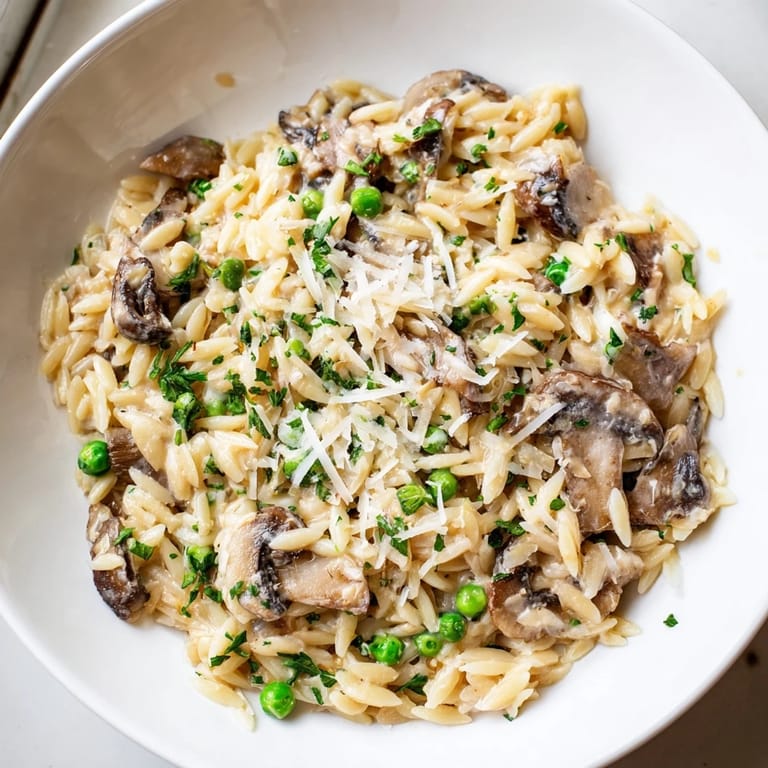
Save This recipe taught me that sometimes the most satisfying meals come from respecting a simple technique rather than complicated ingredients. It's the kind of dish that quietly becomes a regular in your rotation.
Recipe FAQs
- → What type of mushrooms work best for this dish?
Cremini or button mushrooms are ideal for their mild, earthy flavor and firm texture. However, you can use a mix of mushrooms like shiitake, oyster, or portobello for deeper, more complex flavors. Avoid very delicate mushrooms that break apart easily.
- → Can I make this ahead of time?
This dish is best served fresh and creamy immediately after cooking. However, you can prepare components ahead: chop vegetables and slice mushrooms earlier in the day. If you have leftovers, store them in an airtight container for up to two days and reheat gently with a splash of broth to restore creaminess.
- → What's the difference between this and traditional risotto?
Traditional risotto uses Arborio or Carnaroli rice and requires constant stirring to release starches for creaminess. This version uses orzo pasta, which naturally absorbs liquid differently and requires less frequent stirring, making it easier while achieving a similarly creamy texture.
- → Is the white wine necessary?
The white wine adds acidity and depth, but it's optional. If omitting, increase the vegetable broth slightly and add a splash of lemon juice for brightness. The alcohol cooks off completely, leaving only subtle flavor enhancement.
- → How do I achieve the perfect creamy consistency?
Stir frequently as you add broth gradually in small increments, allowing the pasta to absorb liquid evenly. The key is patience—don't rush by adding all broth at once. The starches from the orzo release into the liquid, creating natural creaminess without heavy cream.
- → What are good serving suggestions?
Serve in shallow bowls with extra Parmesan and fresh parsley. Pair with a simple green salad dressed with lemon vinaigrette, garlic bread, or roasted vegetables. A crisp Pinot Grigio or Sauvignon Blanc complements the earthy mushrooms beautifully.