 Save
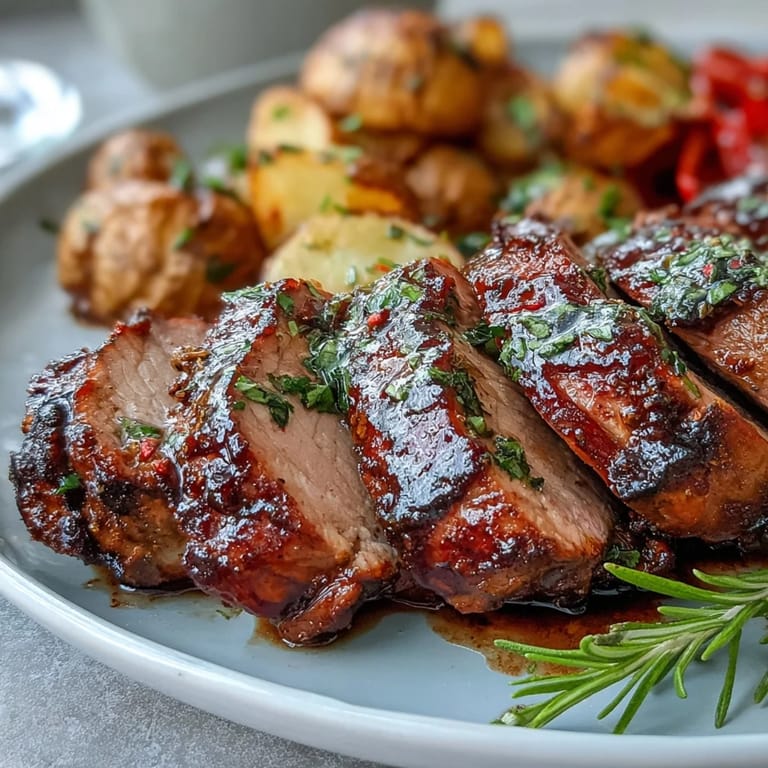
Save The smell of rosemary and smoked paprika hit me the moment I opened the fridge that morning. I had marinated the pork the night before, and somehow the scent had escaped the covered bowl, filling the whole kitchen with this warm, earthy promise. My neighbor knocked on the door asking if I was cooking something Spanish, and I hadn't even turned the oven on yet. That's when I knew this dish was going to be something special. The Ibérico pork sat there, dark and glossy, ready to become the kind of meal people remember long after the plates are cleared.
I made this for my sister's birthday last spring, and she still brings it up. She's the kind of person who orders chicken at every restaurant, but she took one bite of that pork and went completely silent. Then she looked up and said, "Why don't you cook like this more often?" I didn't tell her it was my first time making it. The potatoes had gone crispy at the edges, the peppers were jammy and soft, and the pork sliced like butter. It was one of those nights where the food just worked, and everyone felt it.
Ingredients
- Ibérico pork fillet: This is the star, with a rich, nutty flavor that regular pork just can't match, but if you can't find it, a good quality tenderloin will still give you a beautiful result.
- Extra virgin olive oil: Use the good stuff here because it carries all the marinade flavors into the meat and helps everything brown beautifully in the pan.
- Garlic: Minced fine so it melts into the marinade and doesn't burn when you sear the pork.
- Fresh rosemary: Chop it well or it'll feel like little pine needles, but when it's done right, it makes the whole dish smell like a Mediterranean hillside.
- Smoked paprika: This is your secret weapon for that deep, smoky sweetness that makes people think you've been cooking all day.
- Lemon zest and juice: Brightens everything up and cuts through the richness of the pork without being too sharp.
- Sea salt and black pepper: Season generously because the pork needs it, and don't be shy.
- Small new potatoes: Quartered so they get crispy on the cut sides and stay fluffy inside.
- Fresh thyme: Toss it with the potatoes before roasting so the leaves get crispy and almost nutty.
- Red bell peppers: They turn sweet and soft in the oven, almost like a jam, and add color to the plate.
Tired of Takeout? 🥡
Get 10 meals you can make faster than delivery arrives. Seriously.
One email. No spam. Unsubscribe anytime.
Instructions
- Marinate the Pork:
- Mix the olive oil, garlic, rosemary, smoked paprika, lemon zest, lemon juice, salt, and pepper in a bowl until it looks like a thick, fragrant paste. Rub it all over the pork fillet, cover it tightly, and let it sit in the fridge overnight so the flavors soak deep into the meat.
- Prepare the Oven:
- Crank your oven up to 220°C so it's blazing hot and ready to crisp those potatoes and caramelize the peppers.
- Roast the Potatoes:
- Toss the quartered potatoes with olive oil, salt, pepper, smoked paprika, and thyme, then spread them out on a baking tray in a single layer. Roast for 35 to 40 minutes, giving them a stir halfway through so they brown evenly and get crispy on all sides.
- Roast the Red Peppers:
- Toss the pepper strips with olive oil, sliced garlic, and a pinch of salt, then spread them on a separate tray. Roast for 20 to 25 minutes until they're soft, sweet, and just starting to char at the edges.
- Cook the Pork:
- Pull the pork from the marinade and pat it dry so it sears instead of steams. Heat a tablespoon of olive oil in an ovenproof skillet over medium high heat, then sear the pork for 2 to 3 minutes per side until it's golden brown, slide the whole skillet into the oven, and roast for 12 to 15 minutes until it hits 63°C inside, then let it rest for 5 minutes before slicing.
- Serve:
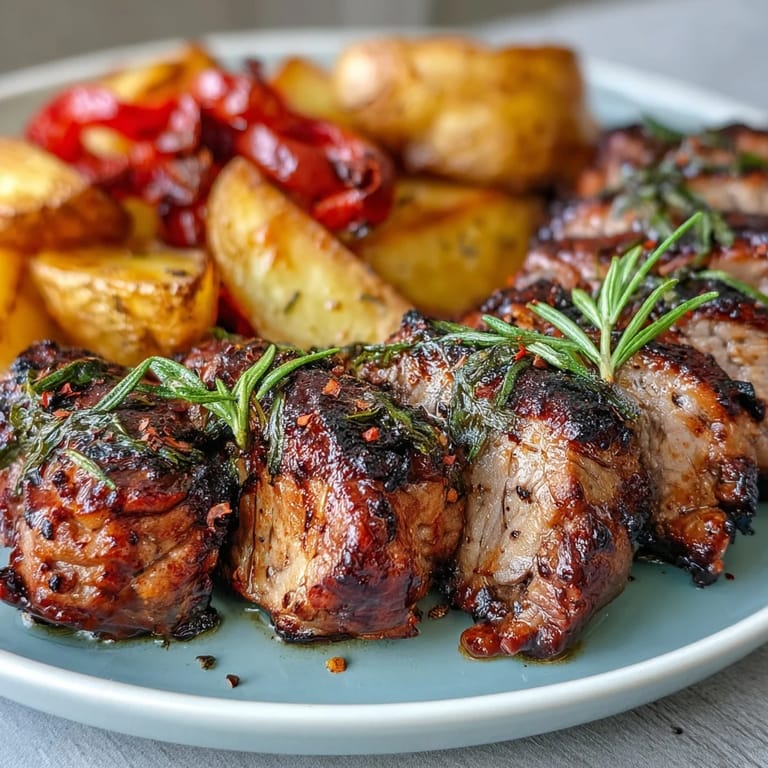
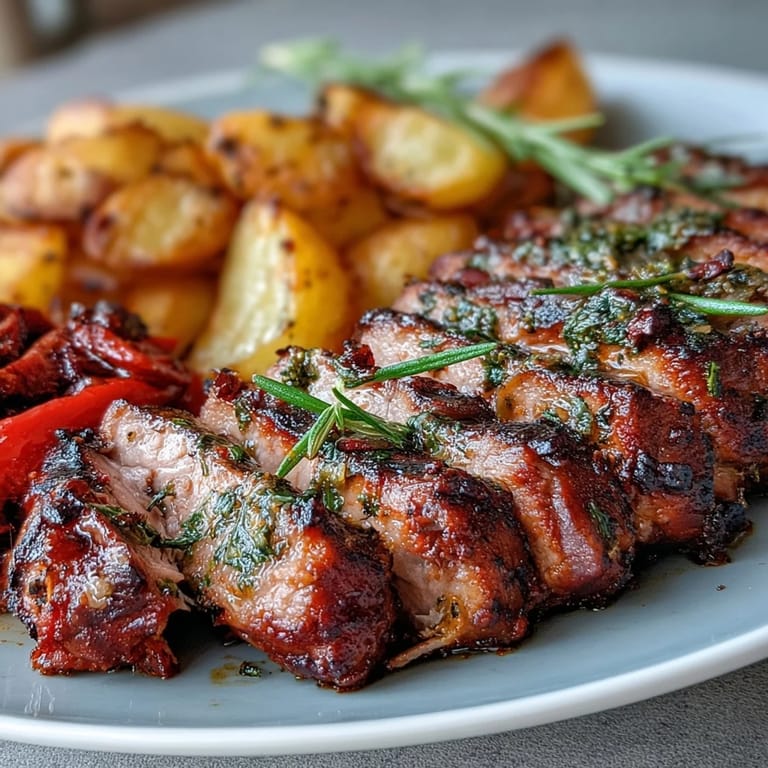
- Slice the pork into thick rounds and arrange them on plates with the crispy potatoes and sweet peppers. Drizzle any pan juices over the top for extra flavor.
 Save
Save There was a moment that night, after everyone had finished eating, when my sister leaned back in her chair and said, "This is the kind of meal that makes you feel like you're somewhere else." She meant Spain, I think, or maybe just anywhere that wasn't our usual weeknight routine. I realized then that some recipes don't just feed people, they transport them. The pork, the potatoes, the peppers, they all worked together to create something bigger than dinner. It became a memory we still talk about, and that's worth more than any fancy restaurant bill.
Choosing Your Pork
Ibérico pork is worth hunting down if you can find it because the fat melts differently, almost like it's been pre basted from the inside. It has this nutty, rich flavor that comes from the acorn diet the pigs eat, and it makes a difference you can taste. If you can't get Ibérico, look for a well marbled pork tenderloin from a good butcher, and avoid the super lean stuff that dries out in the oven. The marinade will still work its magic, but the meat itself needs a little fat to stay juicy and tender.
Getting the Potatoes Right
The secret to crispy roast potatoes is space and heat. If you crowd them on the tray, they'll steam instead of roast, and you'll end up with sad, pale potatoes that no amount of paprika can save. Spread them out so each piece has room to breathe, and make sure your oven is properly preheated before they go in. I also like to give the tray a shake halfway through so they brown evenly, and if you're feeling fancy, toss them with a little extra thyme right before serving.
Making It Your Own
This recipe is forgiving, and you can tweak it based on what you have or what sounds good. Swap the rosemary for oregano if that's what's in your garden, or add a pinch of chili flakes to the marinade if you like a little heat. I've done this with orange zest instead of lemon, and it was just as good, maybe even a little sweeter. The potatoes can handle other herbs too, sage works beautifully, and the peppers are happy with a drizzle of sherry vinegar at the end.
- Try adding a handful of cherry tomatoes to the pepper tray for extra sweetness and color.
- If you have leftovers, slice the pork thin and pile it onto crusty bread with the peppers for the best sandwich you'll eat all week.
- A squeeze of fresh lemon over the whole plate right before serving wakes everything up and adds brightness.
 Save
Save This dish has become my go to when I want to cook something that feels special without spending all day in the kitchen. It's the kind of meal that makes people linger at the table, pouring another glass of wine and talking long after the food is gone.
Recipe FAQs
- → Can I use regular pork tenderloin instead of Ibérico?
Yes, regular pork tenderloin works well as a substitute. Adjust the cooking time slightly as it may cook faster than Ibérico pork, and always check the internal temperature reaches 63°C (145°F).
- → How long should I marinate the pork?
The pork should marinate for a minimum of 8 hours, though overnight marinating is recommended for the best flavor development and tenderness.
- → What temperature should the pork reach when cooked?
The internal temperature should reach 63°C (145°F) for perfectly cooked, juicy pork. Use a meat thermometer for accuracy and let it rest for 5 minutes before slicing.
- → Can I prepare the vegetables ahead of time?
Yes, you can cut and season the potatoes and peppers a few hours ahead. Store them covered in the refrigerator, then bring to room temperature before roasting for even cooking.
- → What wine pairs well with this dish?
A Spanish red wine such as Rioja pairs beautifully with the marinated pork. The wine's oak and fruit notes complement the smoked paprika and rosemary flavors perfectly.
- → How do I know when the potatoes are done?
The potatoes should be golden brown and crispy on the outside after 35-40 minutes at 220°C. Stir them halfway through cooking to ensure even browning and test with a fork for tenderness.