 Save
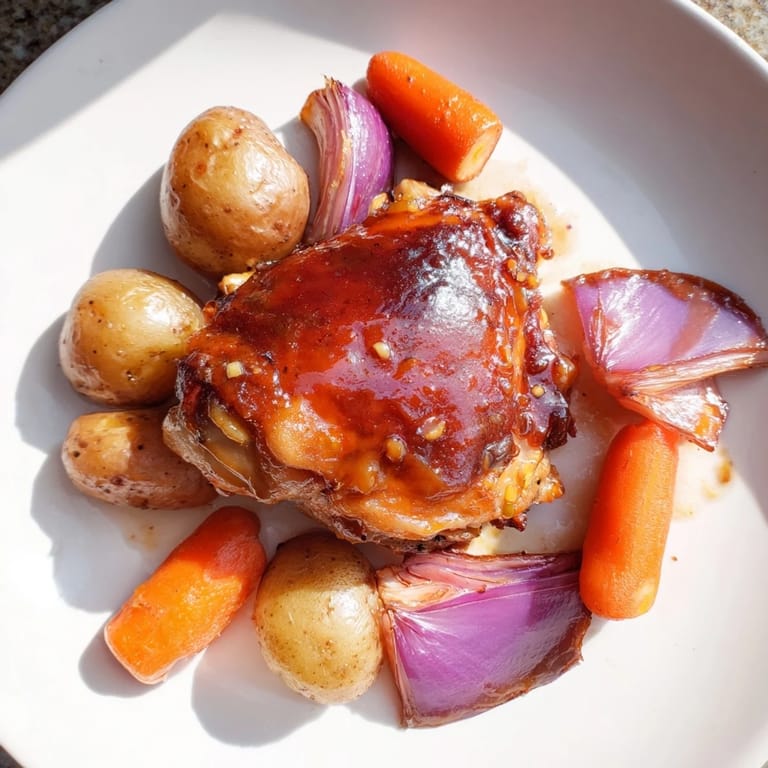
Save There's a particular Tuesday evening I keep coming back to—the kind where I'd spent the whole day in back-to-back meetings and came home absolutely depleted. I opened the fridge with zero inspiration, but there were chicken thighs staring back at me, and a bottle of maple syrup catching the kitchen light. Something clicked. Within twenty minutes, the oven was humming, the whole apartment smelled like caramelized maple and mustard, and I realized I'd made something so effortlessly good that my tired brain actually perked up.
I made this for a small dinner party last fall, and what stuck with me wasn't just the compliments—it was watching my friend cut into a thigh and let out this genuine sigh of satisfaction. She'd been stressed about something, and for a moment, she just got to enjoy good food without thinking about anything else. That's what I want from cooking: those small reprieves where flavor and comfort do the heavy lifting.
Ingredients
- Bone-in, skin-on chicken thighs (8 pieces, about 1.2 kg / 2.5 lbs): Dark meat stays moist through roasting, and the bones conduct heat beautifully—the skin crisps up in a way boneless thighs just can't match.
- Kosher salt (1/2 tsp) and freshly ground black pepper (1/2 tsp): Season generously; these are your baseline, and they set up everything that comes after.
- Pure maple syrup (1/4 cup): Real maple syrup caramelizes with complexity—imitation syrup will leave you with a flat, overly sweet result that tastes more chemical than special.
- Dijon mustard (3 tbsp): The sharpness cuts through richness and keeps the glaze from becoming cloying; it's the backbone that makes the whole thing sing.
- Olive oil (2 tbsp): Helps the glaze coat evenly and prevents sticking; use something you'd actually taste, not the cheapest bottle.
- Apple cider vinegar (2 tbsp): That tangy note prevents the dish from tasting one-dimensional—it's subtle but essential.
- Garlic (2 cloves, minced): Raw garlic in the glaze mellows as it roasts, adding depth without harshness.
- Fresh thyme leaves (1 tbsp, or 1 tsp dried): Fresh thyme has a brighter, more delicate flavor; dried works in a pinch but use less since it concentrates.
- Smoked paprika (1/2 tsp): A whisper of smoke that makes people ask what your secret ingredient is.
- Baby potatoes (400 g / 14 oz, halved): They roast in the same time as the chicken and soak up all that maple-Dijon goodness.
- Carrots (250 g / 9 oz, cut into 2-inch pieces): They add natural sweetness that complements the glaze without competing for attention.
- Red onion (1, cut into wedges): Turns jammy and mild when roasted; the color is a bonus.
Tired of Takeout? 🥡
Get 10 meals you can make faster than delivery arrives. Seriously.
One email. No spam. Unsubscribe anytime.
Instructions
- Get your oven ready and prep your pan:
- Preheat to 220°C (425°F) and line a large baking sheet with parchment paper or foil—this saves you from scrubbing caramelized maple glaze later, which is a gift you give your future self.
- Dry and season the chicken:
- Pat those thighs completely dry with paper towels; moisture is the enemy of crispy skin. Season both sides generously with salt and pepper and set aside while you make the glaze.
- Build the glaze:
- In a small bowl, whisk together the maple syrup, Dijon mustard, olive oil, apple cider vinegar, minced garlic, thyme, and smoked paprika until smooth and glossy. Taste it—it should hit you with sweetness, then mustard sharpness, then a subtle tang.
- Arrange and oil the vegetables:
- Scatter potatoes, carrots, and red onion across your prepared sheet pan in a single layer. Drizzle lightly with olive oil, season with salt and pepper, toss gently to coat, then spread them back out so they'll roast evenly rather than steam in a pile.
- Position the chicken and apply the first glaze:
- Nestle each chicken thigh skin-side up among the vegetables—they should sit mostly on the pan rather than piled on top of the vegetables. Brush each thigh generously with the maple Dijon glaze, reserving about 2 tablespoons for a second coat later.
- First roast:
- Slide into the oven for 30 minutes. You'll start to smell that maple-mustard caramelization, and that's your cue to feel confident this is working.
- Glaze and finish:
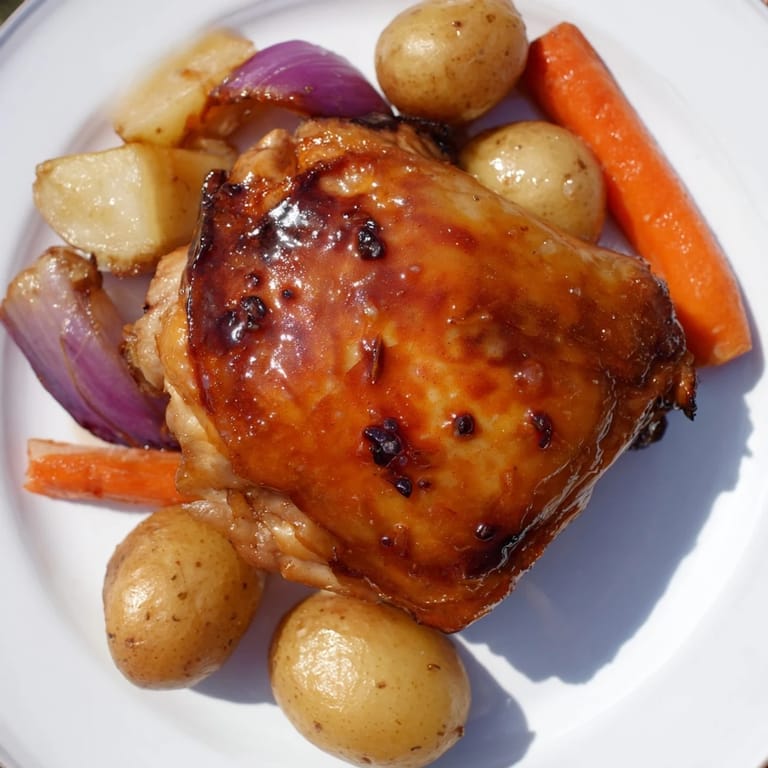
- Pull the pan out, brush the remaining glaze over each thigh, and return to the oven for another 5–10 minutes until the skin is mahogany-dark and crackly and the internal temperature reaches 74°C (165°F) at the thickest part of the thigh. The vegetables should be golden and tender.
- Rest and serve:
- Let everything rest on the pan for 5 minutes—this keeps the meat tender. Scatter extra fresh thyme on top if you want a final flavor pop.
 Save
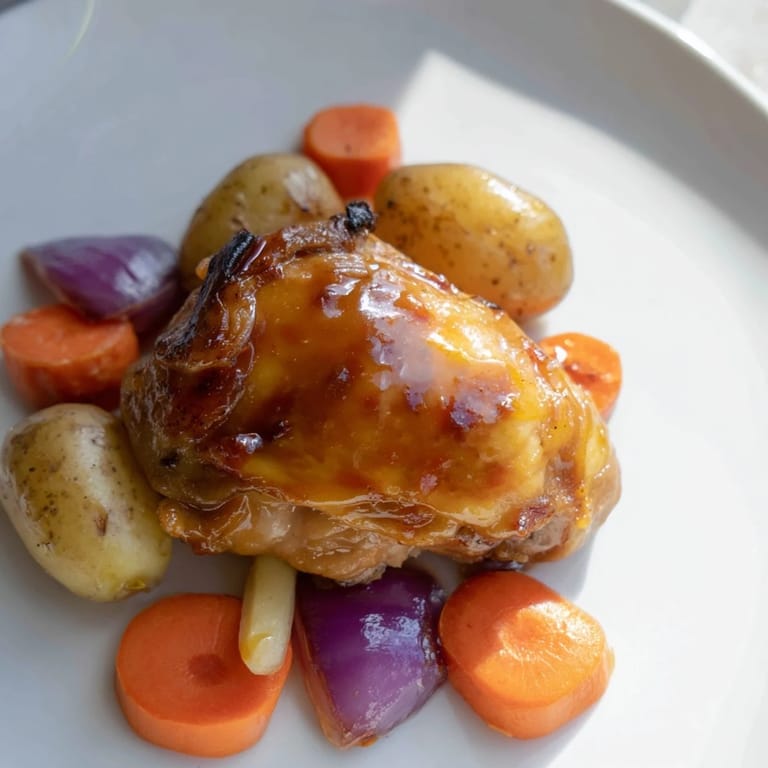
Save Last spring, I made this for someone who'd been avoiding chicken for months because they'd had a string of dry, forgettable versions at restaurants. Watching them taste this—the way they paused, then immediately cut another piece—I understood why home cooking still matters. No menu can replicate the care of knowing exactly how your ingredients were handled.
Why the Glaze Works
The maple-Dijon combination is almost deceptively simple, but the chemistry is what makes it memorable. Maple caramelizes as it roasts, developing deeper notes beyond simple sweetness, while Dijon's sharpness prevents the whole thing from tasting candy-like. The apple cider vinegar keeps everything bright, the thyme adds herbaceous warmth, and the smoked paprika whispers something savory underneath that ties the whole plate together. It's less about complexity and more about each element knowing its job.
Vegetable Flexibility
While the recipe calls for potatoes, carrots, and red onion, these are guidelines, not law. I've made this with Brussels sprouts in winter—they get almost crispy on the edges—and with parsnips in early fall when I found them at the farmer's market. The principle is the same: choose vegetables that roast in roughly 35 minutes and won't release too much water, so they caramelize rather than steam. Sweet potatoes work beautifully if you cut them slightly smaller since they take longer. The glaze cares only that something good is catching it.
Pairing and Timing Tips
This dish practically asks for a crisp white wine—Chardonnay brings enough body to stand up to the maple sweetness, while Riesling's slight residual sugar and bright acidity complement the glaze without competing with it. From a practical standpoint, everything roasts simultaneously, so you can have dinner on the table in 50 minutes from a cold start. I've started this on nights when I knew company was coming, and the timing lets you set the table, pour drinks, and actually sit down feeling unhurried.
- Prep your vegetables and make the glaze while the oven preheats—you'll gain back those 10 minutes of breathing room.
- If your oven runs hot, start checking the chicken at 28 minutes; it's better to pull it early than serve overdone meat.
- Leftovers shred beautifully for next-day salads or grain bowls, so cook with intention to have extras.
 Save
Save This is the kind of recipe that asks so little of you but gives back real satisfaction—the kind of meal that makes a regular Wednesday feel a little more intentional. That matters more than any restaurant version ever could.
Recipe FAQs
- → Can I use boneless chicken thighs instead?
Yes, boneless thighs can be used but reduce cooking time to prevent drying out, usually by 10–15 minutes.
- → What vegetables work well with this dish?
Baby potatoes, carrots, and red onions are recommended, but sweet potatoes, parsnips, or Brussels sprouts also complement the glaze nicely.
- → How do I ensure the chicken skin is crispy?
Pat the chicken dry before seasoning and roast skin side up at a high temperature. Brushing the glaze near the end helps caramelize the skin.
- → Is there a substitute for maple syrup in the glaze?
Honey or agave syrup can be used as alternatives, offering a similar sweetness to the glaze.
- → What wine pairs well with this meal?
A crisp Chardonnay or dry Riesling complements the sweet and tangy flavors without overpowering the dish.