 Save
Save My neighbor knocked on the door one Thursday with a bag of shrimp she couldn't use before leaving town. I had chicken thawing and a lemon on the counter, so I tossed it all into a skillet with pasta and called it dinner. The sauce came together so fast I thought I'd done something wrong, but when my kids asked for seconds, I knew I'd stumbled onto something worth keeping.
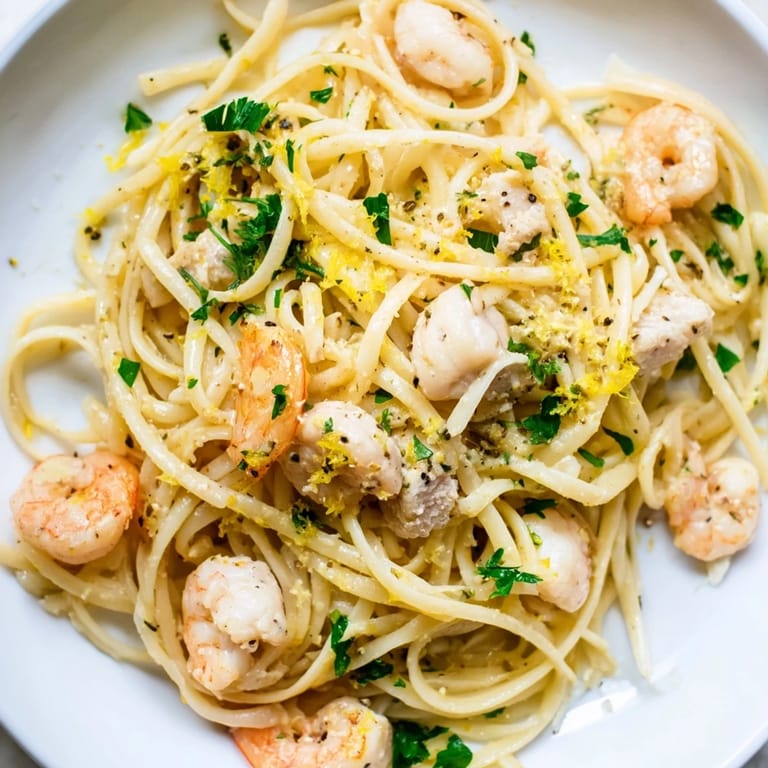
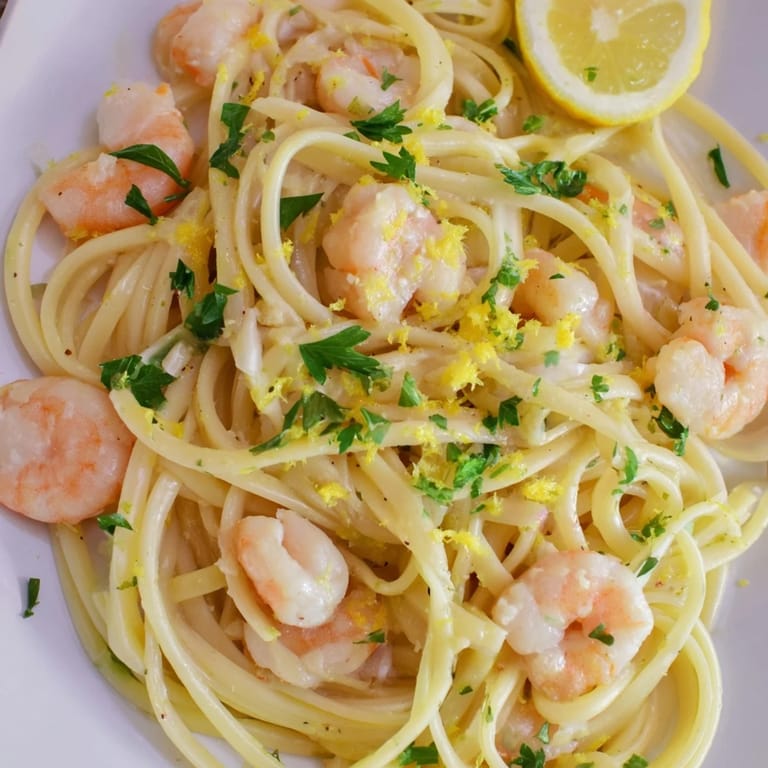
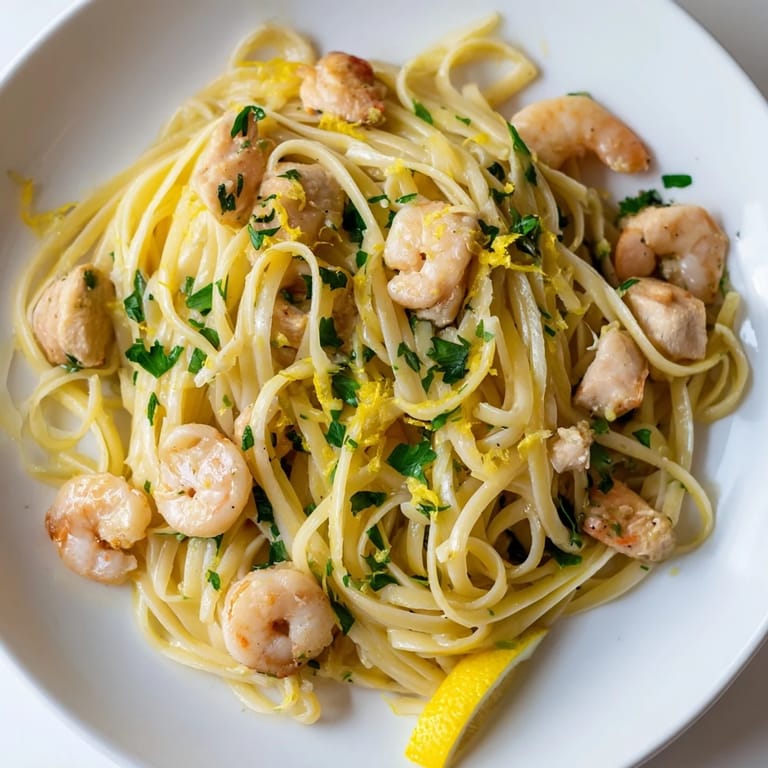
I made this for my sister's birthday last spring when she asked for something special but not fussy. She sat at the counter with a glass of wine while I cooked, and we talked the whole time. When I plated it with the lemon wedges and parsley, she said it looked like something from a restaurant, which made me feel like I'd finally figured out how to make weeknight food look intentional.
Ingredients
- Large shrimp, peeled and deveined: Pat them completely dry or they'll steam instead of sear, and you'll miss that golden edge.
- Boneless, skinless chicken breast: Cut into even pieces so everything cooks at the same rate and you don't end up with rubbery bits.
- Linguine or spaghetti: Long pasta holds onto the buttery sauce better than short shapes, and it twirls nicely on the fork.
- Garlic, minced: Fresh garlic is the backbone here, don't even think about the jarred stuff.
- Shallot, finely chopped: It brings a sweeter, milder onion flavor that doesn't overpower the lemon.
- Lemon zest and juice: Zest first before you juice, and use a microplane so you don't get any bitter white pith.
- Fresh parsley, chopped: The flat-leaf kind tastes better and looks prettier than the curly variety.
- Unsalted butter, divided: You'll use it in stages, so keep it nearby and don't dump it all in at once.
- Olive oil: Keeps the butter from burning when you sear the proteins over higher heat.
- Dry white wine: Optional but worth it for the depth, just use something you'd actually drink.
- Low-sodium chicken broth: Gives the sauce body without making it too salty when it reduces.
- Salt, black pepper, and red pepper flakes: Season in layers so the flavor builds instead of hitting you all at once.
Tired of Takeout? 🥡
Get 10 meals you can make faster than delivery arrives. Seriously.
One email. No spam. Unsubscribe anytime.
Instructions
- Boil the pasta:
- Salt the water like the ocean, it's your only chance to season the noodles from the inside. Reserve some pasta water before draining, it's liquid gold for loosening the sauce later.
- Prep the proteins:
- Dry them with paper towels and season both sides with salt and pepper. Wet chicken and shrimp won't brown, they'll just sit there and weep.
- Sear the chicken:
- Heat 1 tbsp olive oil and 1 tbsp butter over medium-high heat, then add the chicken in a single layer. Let it sit undisturbed for a few minutes so it gets a nice golden crust, then flip and cook through.
- Cook the shrimp:
- Add another tbsp of olive oil to the same skillet and cook the shrimp about 1 to 2 minutes per side. They're done when they curl into a C shape and turn pink.
- Build the sauce base:
- Lower the heat to medium and add 2 tbsp butter, then toss in the shallot and garlic. Stir constantly for a minute or two until it smells amazing but hasn't browned.
- Deglaze and simmer:
- Pour in the white wine if using and scrape up any tasty browned bits from the pan. Let it bubble for a minute, then add the broth, lemon zest, and juice and simmer for 2 minutes.
- Combine everything:
- Return the chicken and shrimp to the skillet along with the drained pasta. Toss it all together, adding splashes of reserved pasta water until the sauce clings to the noodles.
- Finish and serve:
- Stir in the parsley and red pepper flakes, taste and adjust the salt. Plate it hot with lemon wedges and extra parsley on top.
 Save
Save The first time I brought this to a potluck, someone asked if I'd ordered it from a restaurant and just plated it at home. I laughed, but honestly it felt good to make something that looked and tasted like I knew what I was doing. Now it's my go-to when I want to impress without losing my mind in the kitchen.
How to Make It Creamier
If you want a richer sauce, stir in 2 tbsp of heavy cream right after you add the chicken broth. It mellows the lemon's brightness just a little and makes the whole thing feel more indulgent. I do this when I'm serving it to people who aren't big on tangy flavors, and it always wins them over.
What to Serve Alongside
A simple arugula salad with shaved parmesan and a squeeze of lemon keeps the meal light and balances the richness of the pasta. Garlic bread is always a crowd pleaser, but honestly, you don't need it since the pasta itself is garlicky and buttery. A crisp white wine like Sauvignon Blanc or Pinot Grigio is perfect if you're pouring drinks.
Storage and Reheating
Leftovers keep in the fridge for up to 2 days in an airtight container. Reheat gently in a skillet over low heat with a splash of broth or water, because the microwave will turn the shrimp rubbery. If the pasta soaks up all the sauce overnight, just add a little butter and toss it until it loosens up again.
- Don't freeze this dish, the shrimp texture suffers too much when thawed.
- If you're meal prepping, cook the pasta separately and toss everything together right before serving.
- Taste before reheating and add a fresh squeeze of lemon to wake up the flavors.
 Save
Save This dish taught me that fancy doesn't have to mean complicated. Keep good butter and fresh lemons around, and you're halfway to something people will remember.
Recipe FAQs
- → Can I prepare the shrimp and chicken ahead of time?
Yes, you can peel and devein shrimp up to 24 hours in advance and store them in an airtight container. Cut the chicken into pieces and refrigerate in a separate container for up to 2 days. This makes the cooking process much quicker on the day you prepare the dish.
- → What type of pasta works best for this dish?
Linguine and spaghetti are classic choices that hold the sauce beautifully. You can also use fettuccine or pappardelle for a heartier presentation. Gluten-free pasta works wonderfully as a substitute and maintains the same cooking time.
- → How do I know when the shrimp is cooked perfectly?
Shrimp cooks quickly, typically 1-2 minutes per side depending on size. Look for a pink, opaque appearance throughout—the flesh should be firm and curled slightly. Overcooked shrimp becomes rubbery, so watch carefully and remove from heat promptly.
- → Can I make this sauce creamier?
Absolutely. Stir in 2-3 tablespoons of heavy cream or half-and-half along with the broth for a richer, silkier sauce. You can also use crème fraîche for a subtle tang. Add it after the initial sauce has simmered to maintain the emulsion.
- → What wines pair well with this dish?
Crisp white wines complement the lemon and garlic flavors beautifully. Sauvignon Blanc, Pinot Grigio, or Vermentino are excellent choices. Avoid heavy reds, as they overpower the delicate flavors of the seafood and bright citrus sauce.
- → How can I adjust the spice level?
Red pepper flakes are optional and can be adjusted to taste. Start with a pinch and add more during cooking if desired. For extra heat, include fresh chili peppers finely sliced into the garlic and shallot mixture at the beginning of sauce preparation.