 Save
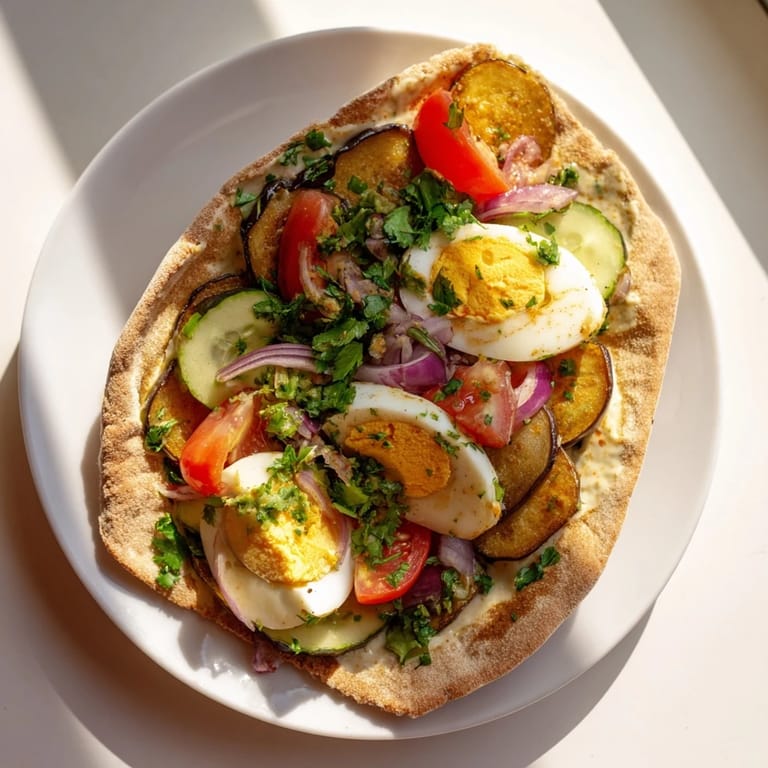
Save The first time I bit into a proper sabich on a humid Tel Aviv afternoon, I realized why this street food has been feeding people for generations. The warm pita gave way to layers of crispy fried eggplant, creamy tahini, and bright vegetables all at once, and I understood immediately that this wasn't just lunch, it was a philosophy about how good food should work. That moment stuck with me, and now whenever I make it at home, I chase that same feeling of everything coming together perfectly.
I made this for friends during a casual dinner party last summer, and I watched them pick up their first bite with curiosity and put down their plates completely transformed. One friend asked for the recipe immediately, and another kept going back for seconds even though she claimed she was too full. It became the unexpected star of the night, beating out the elaborate pasta I'd stressed over for hours.
Ingredients
- Eggplant: Two medium ones sliced thin are your foundation, and salting them first is the secret that removes bitterness and extra moisture so they fry up properly golden instead of soggy.
- All-purpose flour: Just a light coating, enough to catch the heat and create that crucial crispy exterior.
- Vegetable oil: A full cup seems like a lot, but deep frying eggplant demands it, and the high smoke point keeps everything clean and golden.
- Eggs: Hard-boiled and sliced, they add richness and protein that makes this feel like a complete meal.
- Tomatoes and cucumber: Fresh and diced small for the Israeli salad, where you really taste the quality of each vegetable.
- Red onion: Just a quarter of one finely chopped brings sharpness that cuts through all the richness.
- Fresh parsley: Two tablespoons chopped scattered through gives brightness and a hint of herbaceous flavor.
- Tahini paste: Half a cup whisked smooth with lemon juice and water becomes a creamy sauce that's nothing like the thick stuff from the jar.
- Garlic: One small clove minced into the tahini brings warmth without overwhelming.
- Lemon juice: Fresh squeezed in both the salad and sauce ties everything together with acidity.
- Pita bread: Large and ideally still warm, it should be sturdy enough to hold everything without falling apart.
- Amba and hot sauce: Optional but they're what give sabich its personality, adding complexity and heat.
Tired of Takeout? 🥡
Get 10 meals you can make faster than delivery arrives. Seriously.
One email. No spam. Unsubscribe anytime.
Instructions
- Salt the eggplant and wait:
- Spread your thin slices on a cutting board or paper towels, sprinkle generously with salt, and let them sit for fifteen minutes. You'll see moisture bead on the surface, which is exactly what you want. Pat them completely dry with paper towels so they fry crispy instead of steaming inside the pan.
- Flour and fry until golden:
- Coat each slice lightly in flour, shaking off excess, then slide them into hot oil one at a time. They should sizzle immediately and turn golden brown in about two to three minutes per side. Transfer them to fresh paper towels to drain while you handle the other elements.
- Boil eggs while eggplant cooks:
- Drop eggs into a pot of cold water, bring to a rolling boil, then reduce heat and simmer for exactly nine minutes. Ice water bath stops the cooking instantly and makes them easier to peel cleanly. Slice them once cooled and they're ready to go.
- Assemble the Israeli salad:
- Combine your diced tomatoes, cucumber, red onion, and parsley in a bowl, dress with lemon juice and olive oil, season with salt and pepper, and toss everything together gently so it stays fresh and doesn't get mushy.
- Mix tahini sauce until smooth:
- Whisk tahini with water, lemon juice, and minced garlic until it's creamy and pourable, adjusting water as you go because tahini can be unpredictable. Taste and season with salt, remembering you can always add more.
- Warm pita and assemble:
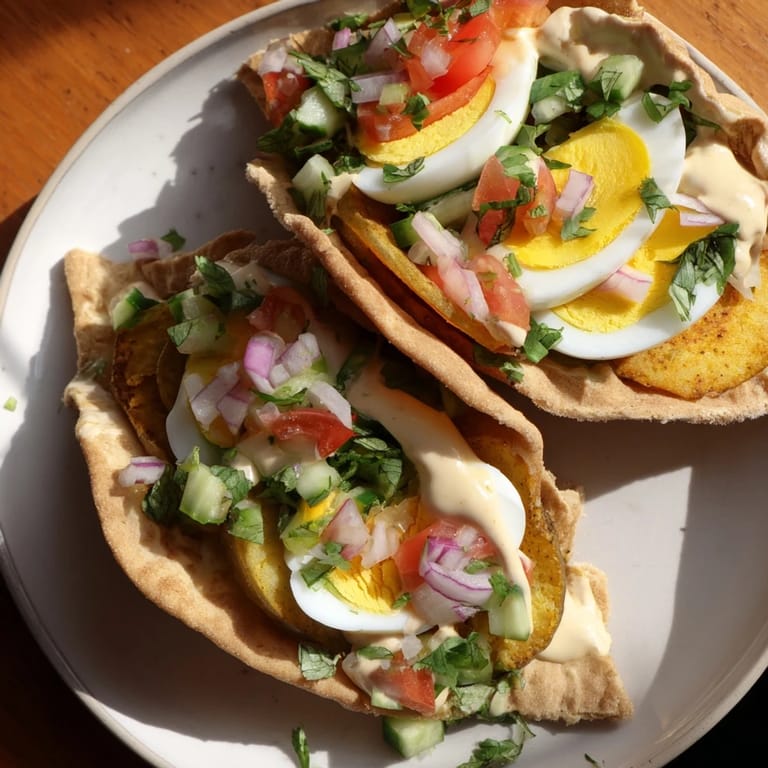
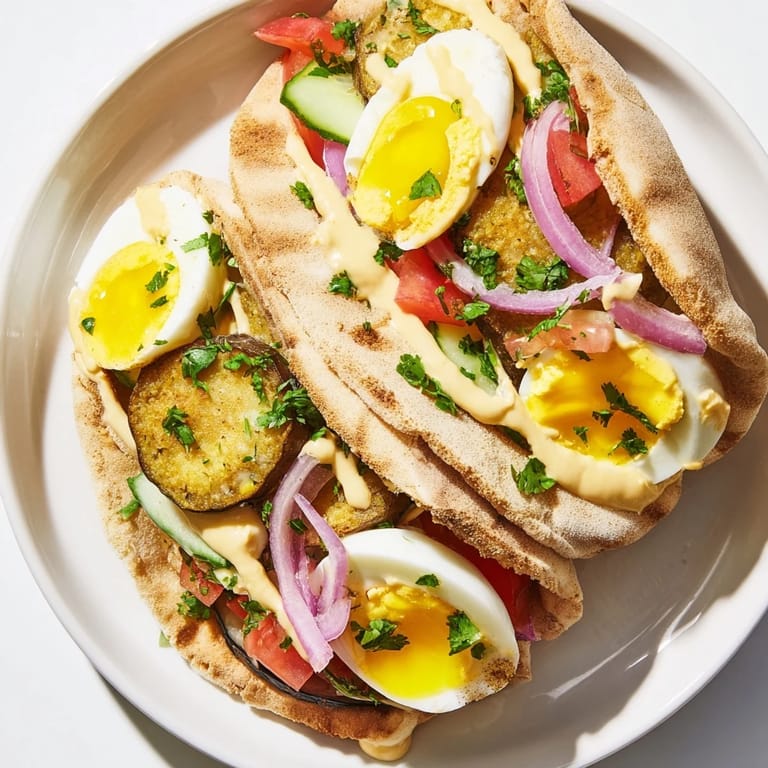
- Heat your pita breads, slice them open carefully to form a pocket, then layer in crispy eggplant, sliced eggs, bright salad, and a generous drizzle of tahini sauce. Add amba, pickles, hot sauce, and cilantro to taste, then serve immediately while everything is still warm.
 Save
Save There's something about watching someone taste sabich for the first time that never gets old. The moment when they realize this humble street food is actually sophisticated and delicious, when they understand why it matters in Israeli cuisine, feels like you've shared something important.
Why Fried Eggplant Changes Everything
Eggplant has a reputation for being bland or spongy, but that's only true when you haven't fried it properly. When you salt it, dry it, flour it lightly, and fry it in hot oil, something magical happens: the outside becomes crispy and golden, the inside becomes creamy and sweet, and suddenly you understand why eggplant has been beloved in Mediterranean and Middle Eastern cooking for centuries. The crispy exterior against the soft pita and creamy tahini is what makes sabich work, and it's what keeps people coming back.
Building Your Sabich Bar
The beauty of sabich is that it's infinitely customizable once you have the core components ready. You can set out all the elements separately and let people build their own, adjusting spice levels and condiment ratios to their preference. I've done this at casual gatherings and it turns a meal into an experience, everyone feels like they're creating something personal, and somehow it always tastes better when you've assembled it yourself.
Making It Your Own
Once you nail the basic sabich, the variations start suggesting themselves naturally. Some versions add roasted red peppers or cucumbers that are pickled instead of fresh, others layer in hummus or labneh for extra creaminess. I've experimented with grilled eggplant when I didn't want to fry, and while it's lighter, you lose that essential crispy contrast that makes the original so craveable.
- Try adding a thin layer of hummus under the eggplant for extra richness and flavor.
- Substitute grilled eggplant if you want something lighter, though you'll miss the crispy texture that makes it special.
- Make the tahini sauce ahead of time and store it in the fridge, it actually gets better as the flavors meld overnight.
 Save
Save Sabich is the kind of dish that reminds you why cooking matters, why feeding people matters, why taking time to do something properly tastes better. Make it for yourself, make it for friends, and let it become part of your kitchen repertoire.