 Save
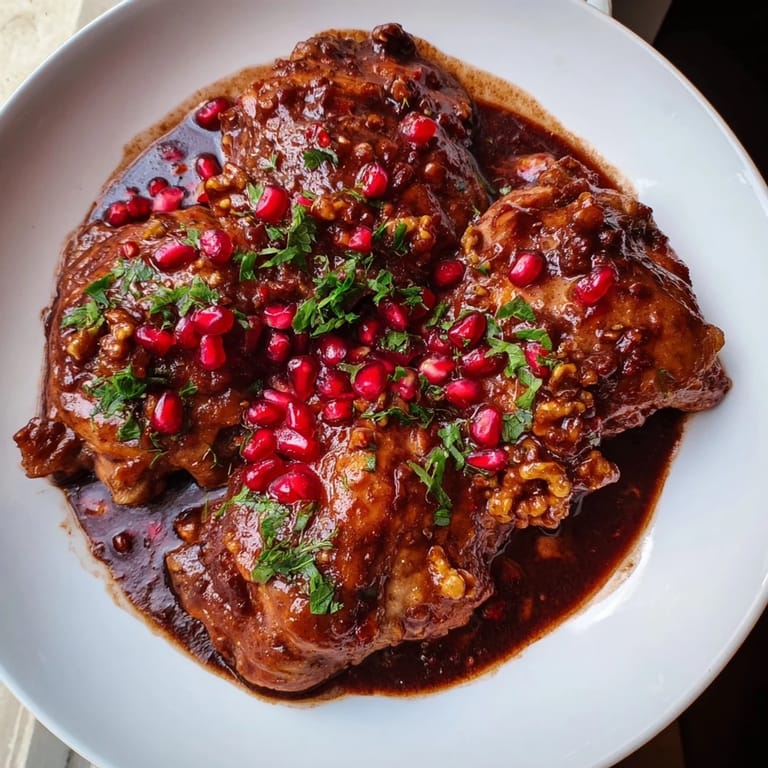
Save My friend Maryam brought a pot of fesenjan to a dinner party years ago, and the aroma alone stopped everyone mid-conversation. That deep, complex smell—pomegranate and walnuts mingling with warm spices—filled the entire apartment and made everything else feel ordinary by comparison. When she lifted the lid, the sauce gleamed like dark silk, and I watched people instinctively lean closer. I asked her for the recipe that night, and she laughed, saying it was her grandmother's way of turning a simple stew into something that felt like ceremony.
I made this for my partner's birthday dinner on a cold March evening, and we ate it straight from the pot while sitting on the kitchen counter, too impatient to move to the table. The meat was so tender it fell apart with just a spoon, and we kept going back for more sauce, soaking it into rice we'd hastily thrown together. By the time we actually sat down to eat properly, we'd already finished half of it—a good problem to have.
Ingredients
- Boneless chicken thighs or duck (700 g / 1.5 lbs), cut into large pieces: Thighs stay juicy and tender through the long simmer, unlike breast meat which can dry out; duck is traditional but chicken works beautifully and costs less.
- Salt and black pepper (1/2 tsp each): Season generously because the long cooking time mellows the heat, and you want it present in every bite.
- Vegetable oil (2 tbsp): Keep it neutral so the walnuts and pomegranate stay the stars; I use light olive oil sometimes when I want a subtle background note.
- Large onion, finely chopped: The onions essentially dissolve into the sauce, adding sweetness and body that grounds all those spices.
- Walnuts, finely ground (250 g / 2 cups): This is the soul of fesenjan—grind them yourself if you can, and watch for that moment when they release their oils into the sauce, creating richness that feels almost luxurious.
- Pomegranate molasses (500 ml / 2 cups): This tangy, concentrated juice is non-negotiable; it creates that signature sweet-sour balance that makes people ask what the secret ingredient is.
- Water (500 ml / 2 cups): Use good water or even unsalted broth; it dilutes the sauce to the right consistency and lets all the flavors breathe.
- Sugar (2 tbsp, adjust to taste): Start with this amount and taste as you go—every pomegranate molasses brand tastes slightly different, so you might add more or less.
- Ground cinnamon, turmeric, and cardamom (1/2 tsp, 1/4 tsp, 1/4 tsp): These three spices create warmth and depth; cardamom is optional but it adds a haunting floral note if you're feeling adventurous.
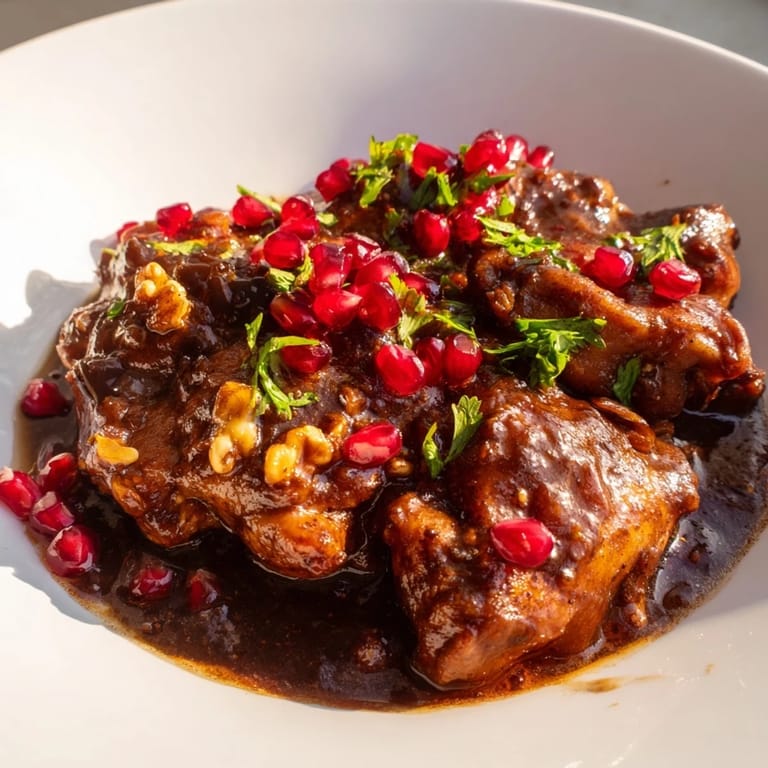
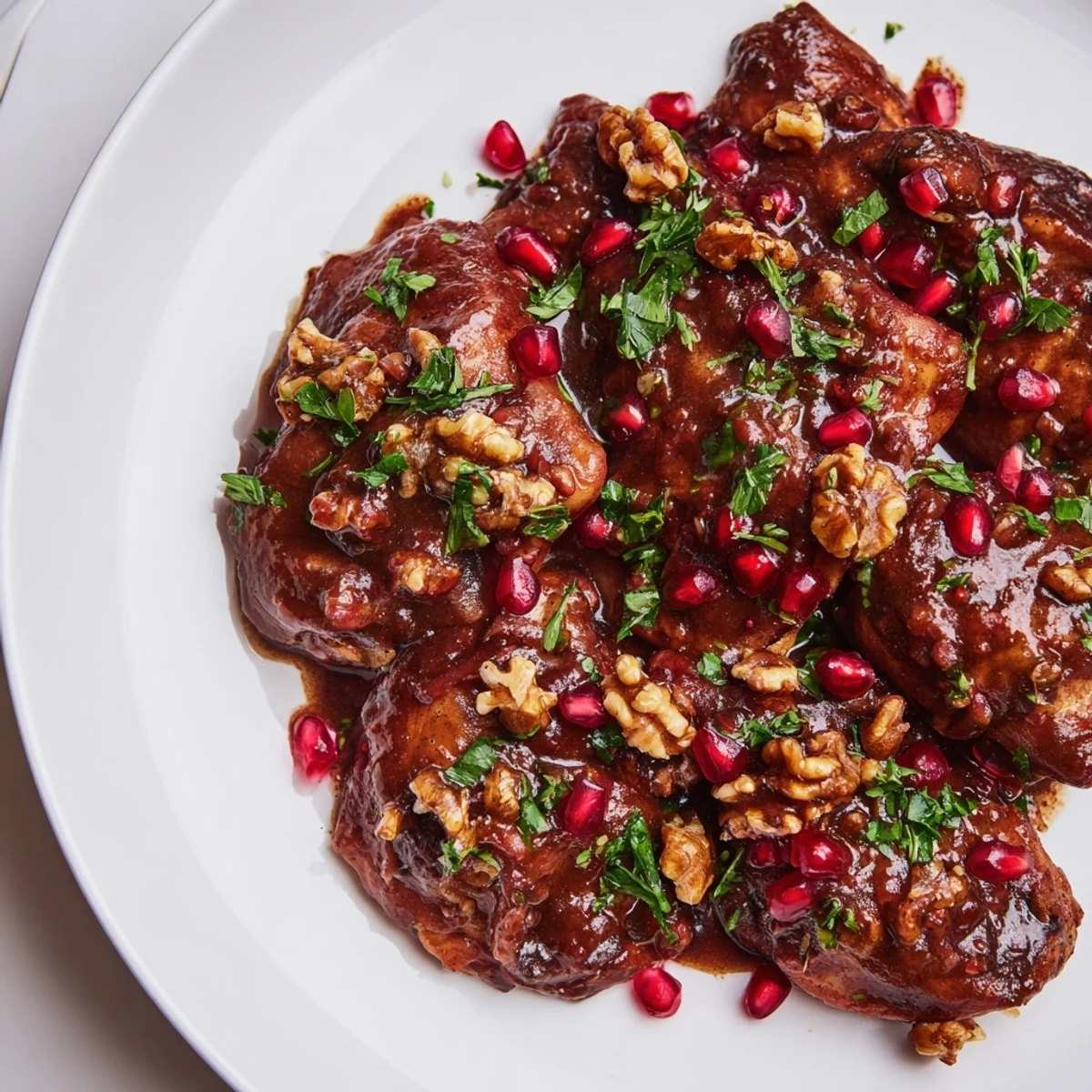
- Pomegranate seeds and fresh parsley for garnish (optional): Save these for the very end—their brightness and crunch contrast beautifully with the silky sauce.
Tired of Takeout? 🥡
Get 10 meals you can make faster than delivery arrives. Seriously.
One email. No spam. Unsubscribe anytime.
Instructions
- Season your meat and get ready:
- Pat your chicken or duck dry with paper towels, then season generously with salt and pepper; this matters because moisture prevents browning, and browning adds depth to the final dish.
- Build your flavor base with onions:
- Heat oil in a large heavy pot over medium heat and add your onions, stirring often until they turn golden and smell sweet—this takes about 8 to 10 minutes and is worth the patience because caramelized onions are the foundation of everything that follows.
- Brown the meat thoroughly:
- Increase heat slightly and add your meat pieces, letting them sit undisturbed for a couple minutes so they develop a golden crust; this should take 5 to 7 minutes total, and you'll know it's working when the pot smells savory and concentrated.
- Toast the walnuts briefly:
- Stir in your ground walnuts and cook for 2 to 3 minutes while constantly stirring; you'll watch them darken slightly and release their oils, which is exactly what you want—stop before they burn, which happens faster than you'd expect.
- Build the sauce with liquid and spices:
- Pour in the pomegranate molasses, water, sugar, cinnamon, turmeric, and cardamom if using; stir until everything is dissolved and you have a thick, fragrant mixture.
- Simmer gently until the meat is tender:
- Bring the pot just to a boil, then lower the heat to the gentlest simmer you can manage and cover it; let it bubble quietly for 1 hour, stirring occasionally to prevent sticking on the bottom.
- Finish by reducing the sauce:
- Remove the lid and continue simmering for another 30 minutes, stirring more frequently now as the sauce thickens; you're waiting for that moment when walnut oil rises to the surface in small pools, which means the sauce has concentrated enough and the flavors have fused.
- Taste, adjust, and serve:
- Before serving, taste and adjust sweetness or tang by adding more sugar or pomegranate molasses as needed; then ladle it over steaming basmati rice, scatter pomegranate seeds and parsley on top if you have them.
 Save
Save The first time I served this to my family, my mother took one bite and went quiet—the kind of quiet where you know something has landed right. She later told me it reminded her of meals from her own childhood, not because I'd described them to her, but because the combination of flavors triggered something deep. That's when I understood that fesenjan isn't just about technique; it's about creating a moment where everyone at the table feels cared for.
The Magic of Pomegranate Molasses
Pomegranate molasses is the heart of this dish, and it's not something you can easily swap out. It's intensely tangy and slightly sweet, with a depth that fresh pomegranate juice can't replicate—the molasses has been reduced and concentrated, which changes everything about how it tastes. If you can't find it at your local grocery store, Middle Eastern markets almost always carry it, and once you have a bottle, you'll start finding uses for it everywhere: drizzled over roasted vegetables, mixed into salad dressing, or even whisked into plain yogurt.
Why Chicken Thighs Over Breast
Chicken thighs have more fat running through them, which means they don't dry out during the long simmering process and they actually absorb more flavor from the sauce. Breast meat can work in a pinch, but you have to watch it carefully and pull the pot off heat the moment it's cooked through. Duck is the traditional choice in Iran and tastes incredible if you can find it—richer, with a deeper flavor that pairs beautifully with the walnuts—but I keep chicken thighs in rotation because they're reliable and most people have them in their freezer.
Adapting Fesenjan for Different Tastes and Diets
This recipe is naturally gluten-free, which makes it easier than you'd think to serve a mixed table. For vegetarians, mushrooms or eggplant soak up the sauce beautifully and create their own kind of richness—increase cooking time slightly so they have time to fully soften and meld with the flavors. The spice balance can shift depending on who you're cooking for: some people love more cinnamon warmth, others prefer to taste the pomegranate more clearly, so trust your instincts and your taste buds.
- For extra depth, toast your walnuts in a dry pan for a minute before grinding them.
- Leftovers freeze well for up to three months, and reheating brings all the flavors back to life.
- Serve alongside saffron rice, plain yogurt, or even roasted potatoes if you want to break tradition.
 Save
Save Fesenjan teaches you something about cooking that extends far beyond this single dish: that the best meals come from patience, balance, and understanding that complexity doesn't require many ingredients—it requires time and attention. Make this once, and you'll want to make it again.
Recipe FAQs
- → What type of meat works best for Fesenjan?
Traditionally duck is used, but chicken thighs are a common and convenient alternative that absorb the sauce well.
- → How can I adjust the flavor balance of the stew?
The sweetness and tanginess can be fine-tuned by adjusting the amount of sugar and pomegranate molasses to suit your taste.
- → Can this dish be made vegetarian?
Yes, substituting mushrooms or eggplant for meat provides a flavorful vegetarian option with similar textures.
- → What spices are essential in the sauce?
Ground cinnamon, turmeric, and optionally cardamom are key spices that provide depth and warmth to the sauce.
- → How is the sauce texture achieved?
Grinding the walnuts finely and simmering the stew slowly allows the sauce to thicken and develop an oily sheen from the nuts.
- → What side dishes complement this stew?
Steamed basmati or Persian saffron rice (chelow) pairs ideally, balancing the rich and tangy flavors of the main dish.