 Save
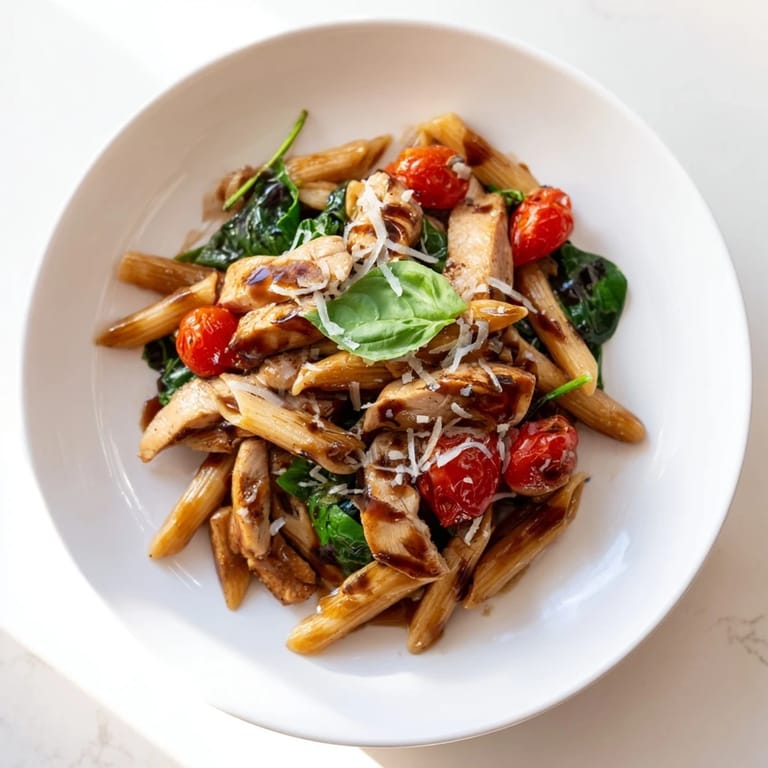
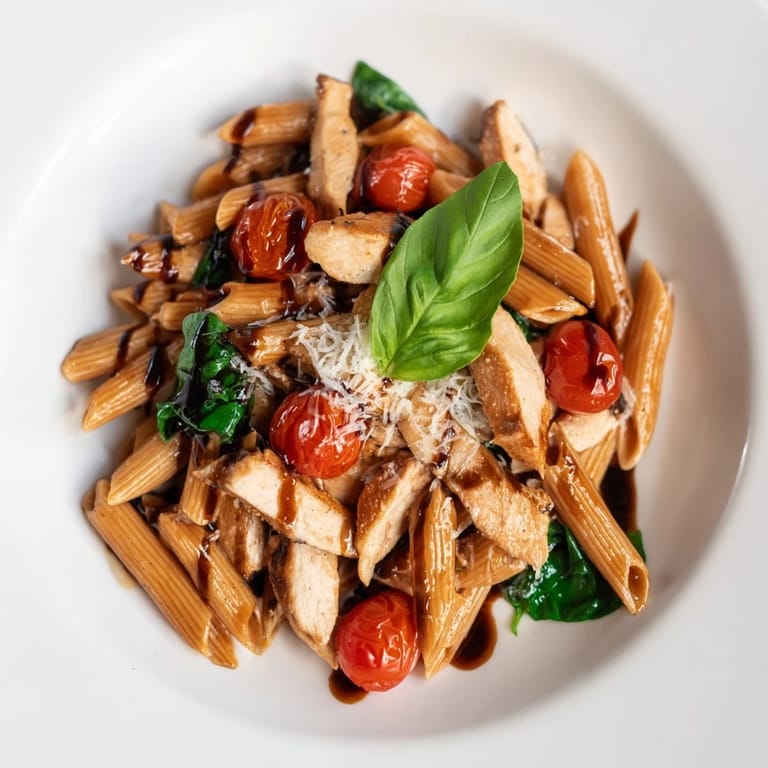
Save The skillet was still warm from breakfast when I decided to throw together something quick for dinner guests who texted they were running early. I had chicken, pasta, and a bottle of balsamic vinegar that had been sitting in my pantry since a farmers market trip months ago. What started as a panic dinner became the dish everyone asked me to make again. The way the balsamic reduced into that glossy, tangy glaze while the chicken soaked up every bit of flavor taught me that some of the best meals come from trusting your instincts and a hot pan.
I made this for my sister after she moved into her first apartment, and she called it her new comfort food. We sat on her tiny balcony with bowls in our laps, and she told me it tasted like celebration and home at the same time. That night, with the city lights flickering below and the basil still fragrant on our fingers, this dish became more than dinner. It became the recipe I reach for when I want to show someone I care without making a fuss about it.
Ingredients
- Boneless, skinless chicken breasts: Slicing them thin ensures they cook fast and soak up the glaze without drying out, and I always pound them lightly for even thickness.
- Penne or spaghetti: Penne holds the sauce in its ridges, but spaghetti twirls beautifully with the glaze, so pick what makes you happiest.
- Garlic: Fresh minced garlic is the aromatic backbone here, and I learned to add it after the chicken so it doesn't burn and turn bitter.
- Cherry tomatoes: They burst into sweet little pockets of juice that balance the tangy balsamic, and halving them speeds up the process.
- Baby spinach: It wilts down in seconds and adds color and a subtle earthiness without overpowering the dish.
- Olive oil: Use a good one since it carries flavor throughout, and dividing it across steps keeps everything from sticking.
- Balsamic vinegar: The star of the glaze, it reduces into a syrupy coating that clings to every bite.
- Honey: Just a tablespoon smooths out the acidity and adds a gentle sweetness that makes the glaze irresistible.
- Dijon mustard: It adds a subtle sharpness and helps emulsify the glaze so it coats the chicken evenly.
- Dried Italian herbs: A quick shake gives the chicken warmth and familiarity without needing a spice cabinet full of jars.
- Parmesan cheese: Freshly grated melts slightly into the hot pasta and adds a salty, nutty finish that ties everything together.
- Fresh basil: Torn at the last second, it brings a pop of color and a sweet, peppery aroma that makes the dish feel alive.
Tired of Takeout? 🥡
Get 10 meals you can make faster than delivery arrives. Seriously.
One email. No spam. Unsubscribe anytime.
Instructions
- Boil the pasta:
- Cook your pasta in generously salted water until it still has a bit of bite, then save some of that starchy water before draining. That reserved liquid is gold for bringing the sauce together later.
- Sear the chicken:
- Heat your skillet until a drop of water sizzles, then add the chicken strips seasoned with salt, pepper, and herbs. Let them sit undisturbed for a minute so they get golden and caramelized before flipping.
- Sauté the aromatics:
- In the same skillet, cook the garlic just until it smells amazing, then toss in the tomatoes. They will start to soften and release their juices, creating the base for your sauce.
- Whisk the glaze:
- Combine the balsamic vinegar, honey, mustard, and a drizzle of olive oil in a small bowl. Whisk it smooth so the honey dissolves completely.
- Glaze the chicken:
- Pour the balsamic mixture over the chicken and tomatoes, then let it bubble and thicken for a few minutes. The sauce will turn glossy and coat everything beautifully.
- Toss it all together:
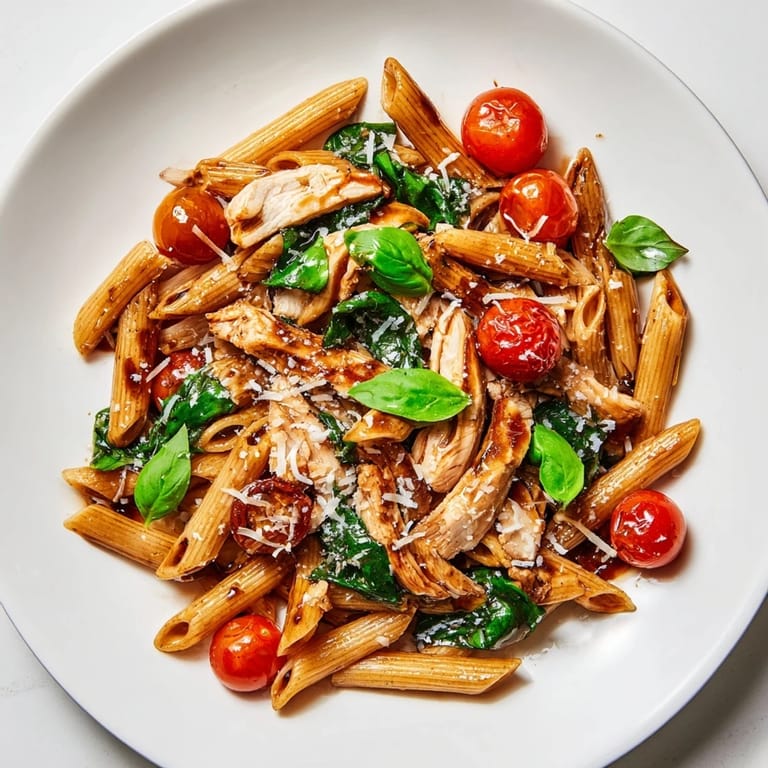
- Add the pasta and spinach to the skillet, tossing gently so the spinach wilts and the pasta gets coated in that sticky, flavorful glaze. Add splashes of pasta water to loosen it up if it looks dry.
- Serve hot:
- Plate it up while it is still steaming, then shower it with Parmesan and torn basil. The heat will release the basil oils and make your kitchen smell like an Italian trattoria.
 Save
Save One evening, I plated this for a friend who swore she did not like balsamic anything. She took one bite, paused, and then finished her entire bowl without saying a word. When she finally looked up, she just said, Okay, I was wrong. That moment reminded me that food has a way of changing minds and creating little surprises, even when you think you know what someone will like.
Making It Your Own
This recipe is forgiving and loves to be adapted. Swap the spinach for peppery arugula if you want a bit of bite, or use kale if you have some wilting in the fridge. I have made it with mushrooms instead of chicken for vegetarian friends, and the earthiness soaks up the glaze just as well. You can even toss in sun dried tomatoes or artichoke hearts if you are feeling adventurous. The balsamic glaze is the anchor, so as long as you keep that, the rest can shift with your mood or your pantry.
Pairing and Serving Ideas
I love serving this with a simple side salad dressed in lemon and olive oil to cut through the richness of the glaze. A crusty baguette for mopping up every last bit of sauce is non negotiable in my house. For wine, a light Pinot Noir brings out the sweetness of the balsamic, but a crisp Sauvignon Blanc works beautifully if you prefer white. If you are feeding a crowd, double the recipe and use two skillets, because this disappears fast and no one ever complains about leftovers.
Storage and Reheating
Leftovers keep well in an airtight container in the fridge for up to three days, and they taste even better the next day once the flavors have had time to marry. Reheat gently in a skillet with a splash of water or broth to bring the sauce back to life, because microwaving can make the pasta rubbery. I have even eaten this cold straight from the fridge as a quick lunch, and the balsamic tang is surprisingly refreshing. Just give it a stir and maybe a fresh grating of Parmesan to wake it up.
- Add a squeeze of lemon juice before serving if you want extra brightness.
- Toss in a handful of toasted pine nuts or walnuts for crunch and richness.
- If the glaze gets too thick while reheating, a tablespoon of pasta water or chicken broth will loosen it right up.
 Save
Save This dish has become my go to when I want to impress without the stress, and it never lets me down. I hope it finds a spot in your rotation and brings as much joy to your table as it has to mine.
Recipe FAQs
- → Can I use chicken thighs instead of breast?
Yes, chicken thighs work wonderfully and stay juicier. Increase cooking time slightly to 8-10 minutes to ensure they're fully cooked through.
- → How do I prevent the sauce from becoming too thick?
Reserve pasta water and add it gradually while tossing. The starch helps create a silky coating. You can always add more water to achieve your desired consistency.
- → What's the best way to glaze the chicken evenly?
Ensure the balsamic mixture is well whisked before pouring it over the chicken. Simmer for 2-3 minutes while stirring occasionally to coat each piece uniformly with the glaze.
- → Can I make this dish ahead of time?
Prepare components separately—cook pasta, glaze chicken, and sauté vegetables. Combine just before serving to maintain the pasta's texture and the glaze's intensity.
- → What wine pairs best with this dish?
A crisp Sauvignon Blanc or light Pinot Noir complements the balsamic's tanginess. The wine's acidity balances the rich glaze and creamy pasta sauce beautifully.
- → How can I adapt this for dietary restrictions?
Use gluten-free pasta for celiac diets, dairy-free cheese for lactose intolerance, and substitute chicken with mushrooms or tofu for vegetarian versions. Always verify product labels for allergens.